A farm on a varied world
Saleucami is a world of mixed environments, and that diversity is central to the Lawquane family story. The Star Wars Databank identifies arid deserts alongside swamps filled with unusual bulbous vegetation. These are not uniform landscapes. Settlers had to adapt to the conditions around them rather than rely on a single way of life across the planet. The family farm shown in The Clone Wars provides a particular example of rural settlement. The on-image topics focus on the people and structures actually documented, without claiming that the series depicts every farming district or that the homestead has a published map coordinate.
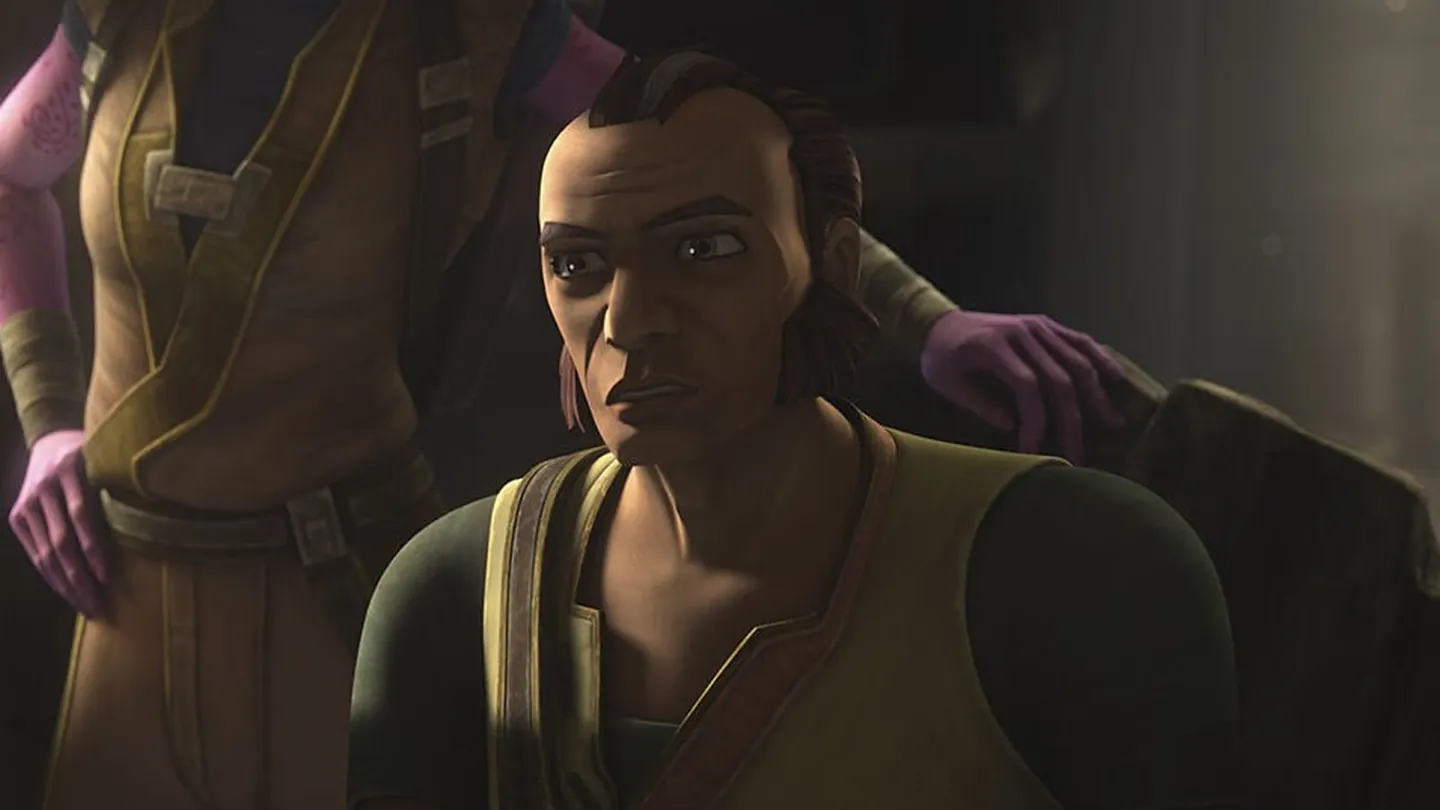
Cut Lawquane came to this life after deserting the Grand Army of the Republic. His rejection of military service followed years of combat and the loss of fellow clone soldiers. Farming with his wife Suu and their children gave him a different identity: a family member and a civilian rather than a soldier. The episode makes the contrast visible through domestic tasks, household conversations and the threat that war may intrude again. The experience therefore opens with a family setting rather than reducing Saleucami to a battleground.
Suu, Cut and the meaning of family
Suu Lawquane is a Twi'lek who worked to protect and sustain the family. Official descriptions identify her as trained for combat even while she preferred the relative peace of the farm. This combination is important because civilian residence did not mean a lack of skill or the absence of danger. Suu and Cut raised Jek and Shaeeah in a household where the children knew the familiar rhythms of rural life but also the risks outside their immediate surroundings. The family was neither a military unit nor a completely isolated group: visitors and threats could still reach them.
In The Clone Wars episode The Deserter, Captain Rex encountered Cut and learned how a clone might choose a domestic life outside the army. Their discussions concern personal obligation, service and family, not simply whether one soldier should return to a battlefield. The homestead is consequently a useful place to explore competing forms of loyalty. The account need not invent additional members of the household or a history of ownership that the episodes do not establish.
Childhood and security
The Lawquane household was also defined by its children. Official records identify Shaeeah as the elder of the two and Jek as her brother. They appear in a life shaped by both the safety of the farm and the knowledge that danger exists beyond it. This offers a different view of the Clone Wars from the perspective of armies and senators. The family grew up near the conflict without making the war its organizing purpose. When soldiers arrived, the home became a place of shelter and conversation rather than a command post that should be plotted as a military facility.
The visible household scenes support discussion of kinship, care and everyday security. They do not establish every detail of Twi'lek custom or clone family law on Saleucami. Suu's heritage and Cut's origin as a clone create a family crossing backgrounds, but the source does not invite a general claim about all such households. The interpretation stays with this documented family and the choices portrayed onscreen.
The imperial transition
The newly formed Empire challenged the limited refuge the family had achieved. In The Bad Batch episode Cut and Run, Hunter and his companions traveled to Saleucami and met Cut and Suu. Captain Rex had recently visited and warned them about the clone soldiers' sudden change in behavior. This is a documented continuation of the family story beyond The Clone Wars. It is important to keep the sequence clear: Rex's earlier conversation with Cut occurs before the Republic's fall, while The Bad Batch visit belongs to the new imperial period. They are not one continuous meeting.
The episode presents departure as a response to increasing danger. The family no longer regarded their home as secure once Imperial control extended to the world. The account does not establish a general evacuation of every Saleucami household, nor the exact legal details imposed at every checkpoint. It shows how a galaxy-wide institutional change could reach a family that had tried to stay away from conflict.
What belongs on the map
Saleucami's environment helps explain how a homestead can stand apart from major military centers while still remain within political reach. The world includes deserts and swampy terrain, but the source does not provide climate maps or a precise distance from the Lawquane farm to a landing zone. The page therefore does not invent a travel itinerary or establish fictional roads to connect the homestead to a town. Visitors can switch between household figures and the world context without treating each picture as a photograph of adjacent structures.
The visual archive includes portraits of Cut, Suu and Shaeeah and images connected to the episode. These are official references to people and events, not substitutes for the missing city plan. A linked market image may reveal local commerce, but it should not be described as lying beside the family farm without evidence. The difference between a planet-wide setting and a documented home is explicit in the captions and introductory text.
Documentation and scene choices
The Lawquane story is supported by the Cut and Suu Databank entries, The Deserter and Cut and Run episode guides, and the broader Saleucami world file. Those sources establish the family members, Cut's history as a deserter, the household's desire for peace and the pressure to leave after the Empire arrived. They do not identify every farm structure by name or provide a measured coordinate system. On-image controls therefore act as contextual investigations: select a family member, the visit by other clones or the change from Republic to Empire.
This page preserves a distinction between source images, visual interpretation and unknown details. Its responsive panels and photo gallery are intended to give visitors routes into documented material, not merely to decorate long paragraphs. The parent world provides geographic and political context, while the separate Saleucami campaign investigation follows Stass Allie and Commander Neyo. Those two narratives coexist on the same planet without requiring the homestead to be placed beside the battle.