Capturing a strategic airbase
The Republic's Umbara campaign brought clone units into a world of poor visibility, aggressive local resistance and unfamiliar weapons. Anakin Skywalker initially commanded the 501st, but he was recalled and General Pong Krell assumed control. Krell's methods demanded costly direct advances and dismissed the lives of soldiers who questioned his orders. The clone officers found themselves fighting an enemy that knew the terrain while also facing increasing hostility from their own commander.
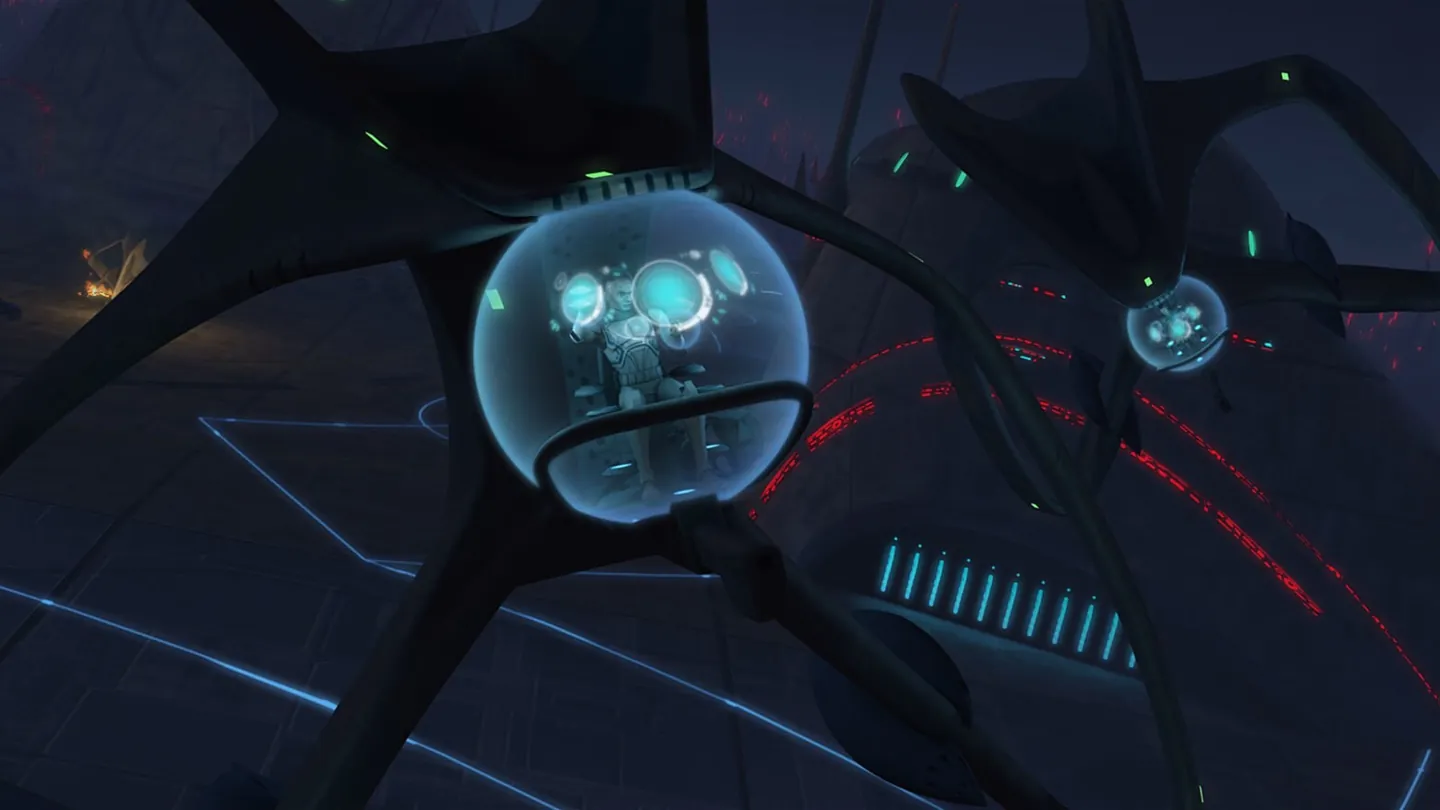
After the Republic took an Umbaran airbase, the captured facility provided an opportunity to examine and use native starfighters. The official Plan of Dissent episode guide records that Krell then ordered Rex and his men toward a heavily fortified capital. Several clones concluded that another plan could reduce losses. Their dispute with Krell centered on an immediate military decision rather than the existence of a map-proven landing strip.
Fives, Jesse and Hardcase defy orders
Fives and other clone soldiers proposed using captured Umbaran fighters to destroy a Separatist supply ship. The attack relied on learning unfamiliar cockpit controls, approaching the target without permission and conducting an operation Krell had forbidden. Hardcase sacrificed himself to complete the strike. The ship was destroyed, but Krell reacted to the disobedience rather than treating the mission as justification for the risk taken.
The incident made an institutional problem unavoidable. Military discipline was essential to a coherent clone force, yet Krell was using authority to impose tactics that needlessly killed his own troops. Fives and Jesse were arrested and threatened with execution. The page does not interpret their action as an overthrow of Republic authority; it was a limited refusal of an order from a specific commander under unusual circumstances.
A firing squad that refuses
Krell ordered Fives and Jesse executed for disobeying him. Captain Rex and other clones brought the prisoners before a firing squad, which refused to fire. The moment showed that military training had not eliminated the clones' capacity to judge the acts demanded of them. Rex had to confront the commander's orders against the bonds of trust among soldiers who had fought together for years.
The official account describes the failed execution and the fact that the two men were not immediately killed. It does not establish that every soldier rejected Krell or that the larger Republic command issued a formal ruling protecting dissent. The page separates the decision of the specific soldiers present from later events in which the commander took still more dangerous action.
Engineered fratricide in the darkness
During a later movement through the Umbaran forest, clone soldiers encountered forces apparently wearing captured Republic armor. Rex's men fired on what they believed to be an enemy deception. As the fighting continued, they discovered that the bodies they were unmasking belonged to fellow clones. Krell had arranged for Republic units to attack each other while believing they were fighting Umbarans.
Umbara's dark conditions made the deception easier, but the underlying cause was the general's deliberate manipulation of orders and information. It would be wrong to describe this simply as a natural accident of low visibility. The episode's moral and political stakes emerge from a commander knowingly exploiting the soldiers' expectation that orders came from a legitimate leader.
Krell's motives become clear
Pong Krell had foreseen the Republic's collapse and intended to win favor with Count Dooku. He no longer regarded the clone troopers as lives entrusted to him. Once confronted, he demonstrated how deadly he could be with two double-bladed lightsabers and four arms, using his abilities against the soldiers who had served under him. He was eventually captured by his own troops.
His conduct was a betrayal of the clones rather than ordinary battlefield ruthlessness. The distinction matters because other Jedi commanders also took difficult military decisions without secretly working for a Separatist leader. The page connects Krell's individual actions to the official biography rather than converting his behavior into a general claim about all Jedi or all Republic officers.
The end of the command crisis
Rex hesitated to kill Krell while the former general was defenseless. Dogma, who had been one of Krell's fiercest defenders, shot him after learning that his loyalty had been manipulated. The Republic subsequently secured Umbara, but the victory left Rex questioning the purpose of the conflict and the soldiers' place within it. The outcome gave the clones reason to reconsider obedience without making them fully aware of the future inhibitor-chip conspiracy.
The official four-part Umbara narrative documents the airbase, fighter mission, failed execution, fratricide and Krell's death. It does not supply a precise floor plan of the base, positions of every platoon or an authoritative path between all encounters. The interactive scenes use different images of the fighters, Krell and the condemned soldiers. Topic controls remain inside the picture region at phone sizes and lead to separate, source-backed investigations.