
Fives, designated CT-27-5555, began as an ordinary clone cadet in Domino Squad and rose to become an Advanced Recon Commando in the 501st Legion. His service included the defense of Kamino, the Citadel rescue, and the campaign on Umbara. When his friend Tup unexpectedly killed a Jedi, Fives investigated and uncovered the bio-chips that would allow Palpatine to turn the clone army against the Jedi. He died trying to make Captain Rex and Anakin Skywalker understand the threat.
Domino Squad and the making of a soldier
Fives trained on Kamino with Echo, Hevy, Cutup, and Droidbait. Together they formed Domino Squad, a group of cadets that initially failed to cooperate well enough to pass its exercises. Their identical origins did not produce identical personalities. The soldiers argued, disagreed over responsibility, and learned how to depend on one another through repeated practice.
Fives and Echo considered leaving the squad, but remained and helped the group qualify. The experience shaped the way Fives later understood military service. A soldier's value could not be reduced to an assigned number or to how closely he resembled other clones. Success depended on judgments and relationships developed within a particular unit.
Rishi Moon and the losses that formed the 501st veteran
Domino Squad was assigned to a listening station on the Rishi Moon. When Separatist commando droids attacked the outpost, the surviving clones cooperated with Captain Rex and Commander Cody, who had arrived for an inspection. The defense prevented the enemy from using the installation to threaten Kamino.
Hevy sacrificed himself during the operation, while Cutup and Droidbait had already been killed. Fives and Echo survived and were transferred to the 501st Legion. The loss of their squadmates gave their shared history particular significance, distinguishing them from newer troopers who had not yet experienced combat.
Defending the place where the clones were made
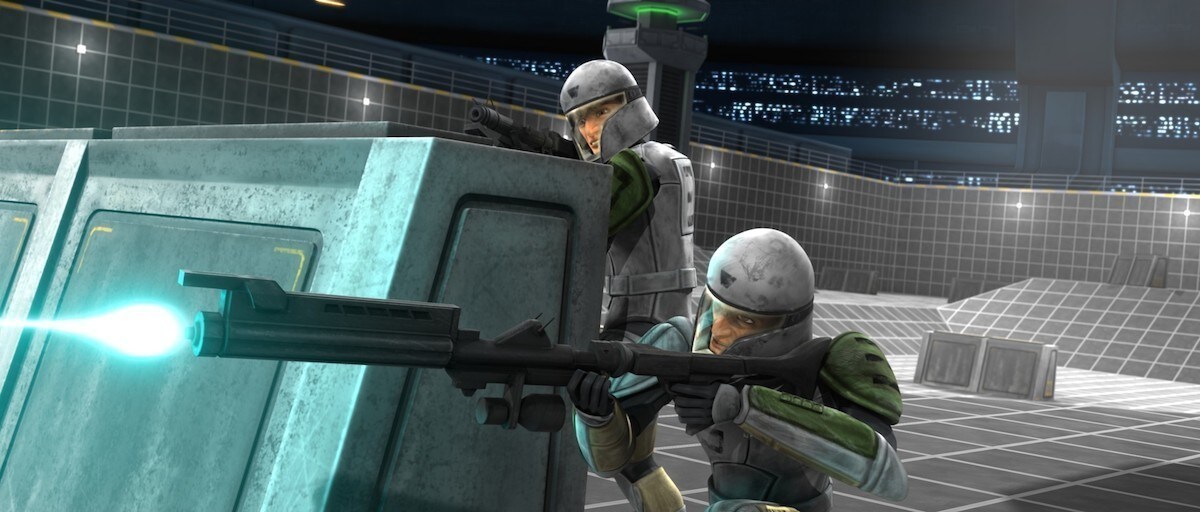
Fives and Echo later returned to Kamino during a Separatist assault on the cloning facilities. They fought alongside cadets, veteran soldiers, and maintenance clone 99. Their defense of the installation showed that Kamino was more than a supply point in a military network. It was where the clones had been raised, trained, and given the only institutional home many of them knew.
After the battle Fives and Echo were promoted to ARC troopers, a recognition of their initiative and ability to handle difficult assignments. The distinction gave them a public role within a force that had been created through standardized production. It also reinforced the importance of individual skill inside a system designed to reproduce soldiers on an industrial scale.
The Citadel mission and the death of Echo
Fives took part in the attempt to free Jedi Master Even Piell and Captain Tarkin from the Separatist prison known as the Citadel. The rescue team was frozen in carbonite to pass through the facility's biological scanners before entering a heavily defended environment where every movement risked alerting the guards.
During the escape, battle droids destroyed the shuttle that the rescuers were attempting to reach. Echo was believed killed in the explosion, leaving Fives as the sole apparent survivor of his original squad. Although Echo's later survival would become known, Fives lived the remaining part of his own story with the loss of his closest Domino Squad companion.
Umbara and the right to question orders
On Umbara, Jedi General Pong Krell directed the 501st into dangerous frontal assaults that killed large numbers of clones. Fives objected because he could see the difference between military discipline and orders that used soldiers' lives recklessly. Captain Rex faced the difficult task of respecting the chain of command while protecting his troops.
Fives and other troopers captured Umbaran aircraft, and Fives proposed an unauthorized strike against a Separatist supply ship. The attack succeeded but Krell ordered Fives and Jesse executed for insubordination. The clones refused to carry out the sentence. When Krell later manipulated clone units into fighting one another, the 501st recognized that obedience to a commander could become a threat to the soldiers it was meant to coordinate.
The experience mattered because the clone army was trained to treat orders as foundational to military life. Fives demonstrated that a soldier could remain committed to the Republic while questioning whether a superior was acting in the interests of the army or the civilians it defended.
Tup kills Tiplar on Ringo Vinda
During a campaign on Ringo Vinda, Tup unexpectedly turned his weapon on Jedi General Tiplar, killing her without a clear explanation. Fives saw the attack and refused to accept that his friend had simply chosen to murder an ally. Tup was sent to Kamino for medical examination, and Fives persuaded Rex to allow him to accompany the distressed trooper.
The journey grew more dangerous when Separatist forces intercepted Tup's transport. After helping recover him, Fives continued to insist that investigators consider what had happened inside Tup's body. His determination was partly personal loyalty and partly professional skepticism: the official explanations did not fit the behavior he had witnessed.
AZI-3, Nala Se, and the hidden bio-chips
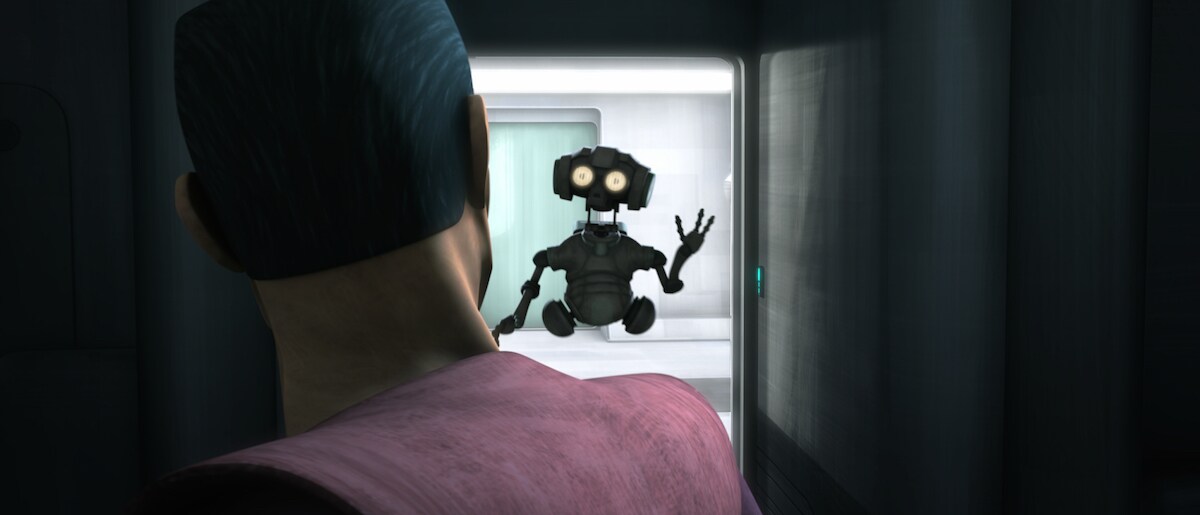
On Kamino, medical droid AZI-3 helped Fives investigate an unusual structure in Tup's brain. The droid discovered what looked like a tumor and removed it during surgery, but Tup died. Nala Se and other authorities tried to control the examination and its results. Fives saw signs that medical evidence was being concealed and pursued the inquiry against orders.
Fives and AZI-3 discovered that the tissue was a bio-chip and that the chips were implanted in all clones. AZI-3 subsequently removed Fives's own chip. The existence of these devices meant that the army's biological design included a concealed means of controlling soldiers' actions. The men being examined had not been informed of this intervention or given a meaningful choice about it.
The failed warning on Coruscant
Fives traveled to Coruscant with Shaak Ti and Nala Se in the hope that the Chancellor could be made to understand his discovery. Nala Se secretly injected him with a drug, and Palpatine then accused the clone of attacking him. Fives fled, knowing that his unusual account would be difficult to establish without the original evidence or access to officials who could independently verify it.
He contacted Kix and arranged to meet Rex and Anakin Skywalker in the lower levels of Coruscant. During the confrontation Fives tried to explain the chips and the conspiracy, but his behavior and the official account of his supposed attack made him appear dangerous. Commander Fox arrived with shocktroopers, and Fives was fatally shot while attempting to resist arrest.
He died in Rex's arms before he could stop the operation that would later become Order 66. His death was not evidence that his discovery had been wrong. It showed the difficulty of transmitting accurate information when the people responsible for an institution also control the records and explanations used to judge a witness.
Rex, Order 66, and the warning that endured
Fives never saw Palpatine issue Order 66. When the command was activated, the chips compelled many clones to turn on their Jedi commanders. Rex's earlier encounter with Fives became important during the Siege of Mandalore, when Ahsoka Tano learned about the implants and removed Rex's chip, allowing him to resist the order.
Fives's story shows how knowledge can survive through a trusted relationship after the person who first identified a threat has been silenced. Rex did not understand every part of his friend's warning at the time, but the memory helped provide a path toward recognizing what had been done to the clone army.
Armor, a name, and clone identity
Fives's designation, CT-27-5555, supplied the nickname through which comrades recognized him. His armor, marks of experience, and later ARC equipment distinguished his role within the 501st, but his identity was also made through friendships, choices, and losses. The Kaminoan system could produce genetically similar bodies without making the soldiers' lives socially interchangeable.
His investigation exposed a hidden bodily intervention that treated every clone as subject to a future command beyond ordinary military discipline. This distinction is essential: the clones had learned skills and formed loyalties as people, even while their creators had built in a mechanism that could override their judgment.
Anthropological assessment: bodies, obedience, and institutional truth
Fives's career exposes the political consequences of a military institution that controls not only training and deployment, but also undisclosed aspects of soldiers' bodies. He had earned status by displaying initiative and courage, yet his investigation revealed a mechanism intended to make the entire army obey a command without informed consent.
His attempt to warn Rex and Anakin also demonstrates that information does not become effective simply because a witness has discovered it. Institutions decide which testimony is credible, who may access evidence, and whose behavior will be described as dangerous. Fives's legacy lies in the persistence of his warning through the personal relationships those institutions failed to extinguish.
Lucasfilm Databank: ARC Trooper Fives · Captain Rex · AZI-3 · Echo · Kix
Material fandom · Collector reference
Collecting this Character
Explore related Star Wars media
Browse Star Wars books and collectibles related to this character.
Search Amazon for Fives ↗As an Amazon Associate I earn from qualifying purchases. Check the product, maker and edition before buying; searches may include unrelated items.