Faith is not Force sensitivity
The Church of the Force and Guardians of the Whills show that devotion to the Force does not require Jedi-style supernatural ability.
The Force · Religion · Ritual · Worldview · Sacred place
Star Wars contains many ways of understanding the Force, death, ancestry, destiny, moral obligation, sacred place, and legitimate authority. This archive treats religion as lived social life: beliefs matter, but so do rituals, institutions, pilgrimage, objects, persecution, teachers, families, and the places communities call sacred.
Archive method
IDS distinguishes organized religion, Force traditions, political ideology, cultural worldview, ritual practice, and sacred memory instead of collapsing them into one category.
Some communities have explicit religious institutions, such as the Jedi, Sith, Church of the Force, or Guardians of the Whills. Others carry sacred ideas through kinship, burial, ancestral memory, prophecy, civic myth, or relationships to land. Where current canon does not establish a specific religion, the site says so rather than inventing one.
Major files
These files focus on the internal logic of religious communities rather than treating every Force user as part of the same belief system.

The Force is a shared reality interpreted through very different traditions. Some communities train to sense and use it directly, while others approach it through devotion, ritual, philosophy, ancestral practice, or collective memory.
Open religion file →The Jedi Order combines religion, education, ethics, martial discipline, public service, and institutional life. Jedi belief is not only doctrine: it is reproduced through training, mentorship, ritual, architecture, archives, vows, and everyday practice.
Open religion file →
Sith tradition joins dark-side practice with hierarchy, initiation, lineage, relics, sacred places, political ambition, and competing claims to legitimate succession. Different Sith institutions vary greatly, but they repeatedly define power as something to seize, cultivate, and transmit.
Open religion file →
Nightsister religion is embedded in coven life, ancestry, ritual expertise, place, death, healing, transformation, and the Force practices they call magick. It cannot be reduced to either Jedi or Sith categories.
Open religion file →
The Church of the Force shows that belief in the Force is not limited to trained Force users. Its adherents preserve Jedi ideals and devotional life even when they do not belong to the Jedi Order or wield the Force themselves.
Open religion file →
The Guardians of the Whills were an ancient order devoted to protecting the Temple of the Kyber in Jedha's Holy City. They represent a Force tradition outside the Jedi Order with its own spiritual discipline, sacred place, and material practices.
Open religion file →
Mandalorian religion is not one universal creed shared identically by all Mandalorians. The Children of the Watch treat the Way as a binding sacred discipline, while other Mandalorians relate to armor, ancestors, homeland, the Mythosaur, and the Living Waters through different combinations of history, politics, and belief.
Open religion file →
The Brendok coven interprets the Force through the Thread, a cosmology that emphasizes connection, collective power, and a religious community outside Jedi authority. Their conflict with visiting Jedi turns competing Force traditions into a question of autonomy and institutional power.
Open religion file →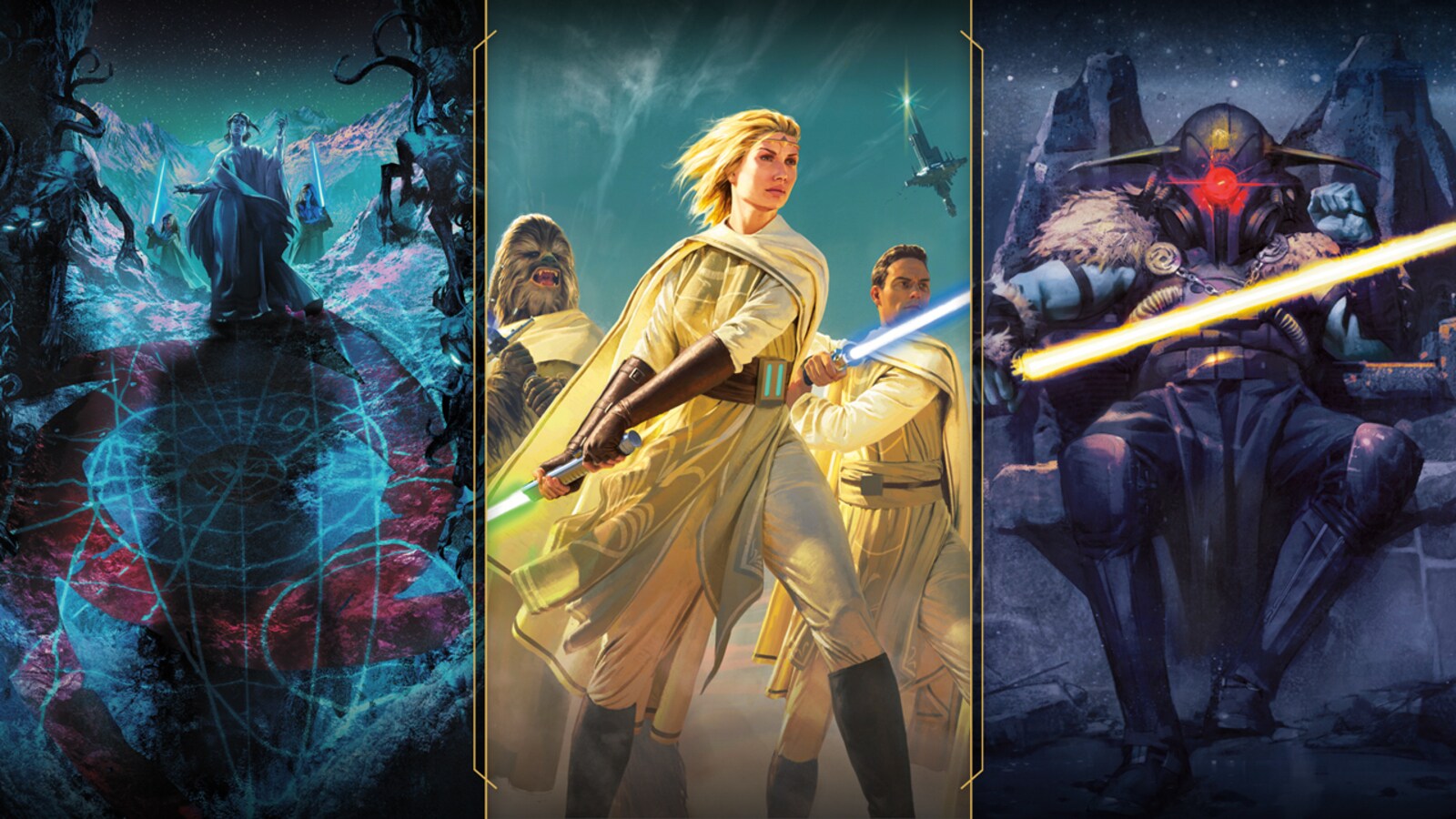
The Path of the Open Hand is a High Republic religious movement built around the belief that the Force should not be manipulated. Its members oppose Jedi use of the Force because they believe taking from it creates imbalance and suffering elsewhere.
Open religion file →
Lasat spirituality offers another vocabulary for the Force: the Ashla. In surviving Lasat tradition, religion, ancestral memory, prophecy, and navigation become central to the community's survival after near-destruction.
Open religion file →Sacred geography
Temples, tombs, vergences, pilgrimage centers, ancestral homelands, and persecuted religious communities make belief visible on the landscape.
A sacred moon where multiple Force traditions, pilgrimage, occupation, and Imperial extraction collide.
Open planet file → Origins · JediAhch-ToAn ancient Jedi sacred landscape maintained by Caretakers and later reinterpreted through Luke Skywalker's exile.
Open planet file → Ancestry · MagickDathomirNightsister homeland where ritual, kinship, death, magick, and sacred geography remain inseparable.
Open planet file → Sith memory · TombsMoraband / KorribanAncient Sith ruins and tombs preserve religious memory and legitimize later claims to Sith inheritance.
Open planet file → Cult · SecrecyExegolA hidden Sith redoubt where ritual devotion, political restoration, science, and military production converge.
Open planet file → Vergence · CovenBrendokA Force vergence and protected coven community where religious autonomy collides with Jedi institutional authority.
Open planet file → Creed · HomelandMandaloreA homeland whose mines, Living Waters, myths, armor, and memory carry sacred weight for some Mandalorian communities.
Open planet file → Ancestry · MigrationPerideaAn extragalactic ancestral landscape tied to Great Mothers, Dathomiri migration, purrgil, exile, and death.
Open planet file →Anthropology of religion
Religion becomes most useful when it is connected to ordinary life, institutions, power, material culture, and historical change.
The Church of the Force and Guardians of the Whills show that devotion to the Force does not require Jedi-style supernatural ability.
Jedi, Sith, Nightsisters, Lasat, the Path, and the Brendok coven interpret cosmic power through different ethical and institutional frameworks.
Orders, states, councils, cult leaders, clan authorities, and occupying powers can recognize, suppress, regulate, or criminalize belief.
Kyber, lightsabers, armor, relics, holocrons, tombs, staffs, temples, and ritual weapons make religious ideas tangible.
Imperial repression of Jedi memory and the Church of the Force shows how communities preserve practice under surveillance and prohibition.
Mandalorians, Nightsisters, Lasat survivors, and displaced communities remake religious identity away from damaged or lost homelands.
Force spirits, Nightsister ancestors, funerary practice, tombs, relics, and collective memory keep relationships with the dead politically and spiritually active.
Vergences, temples, pilgrimage routes, caves, ruins, mines, and ancestral worlds create religious geographies that institutions struggle to control.
Continue across IDS
The Religion archive is designed to send readers outward into culture, planets, characters, lore, technology, and history.
Every culture file now includes worldview and religious ideas, including explicit notes where no shared religion is established.
Browse cultures → PlaceSacred landscapesPlanet files connect geography to pilgrimage, ritual, funerary memory, religious diversity, or the absence of a documented shared faith.
Browse planets → LoreForce traditionsFollow the wider history of how communities understand and institutionalize the Force.
Read lore → Material cultureSacred objects & technologyLightsabers, kyber, holocrons, armor, and relics show how religion becomes material.
Explore technology →