
01 · Orientation
Tradition in context
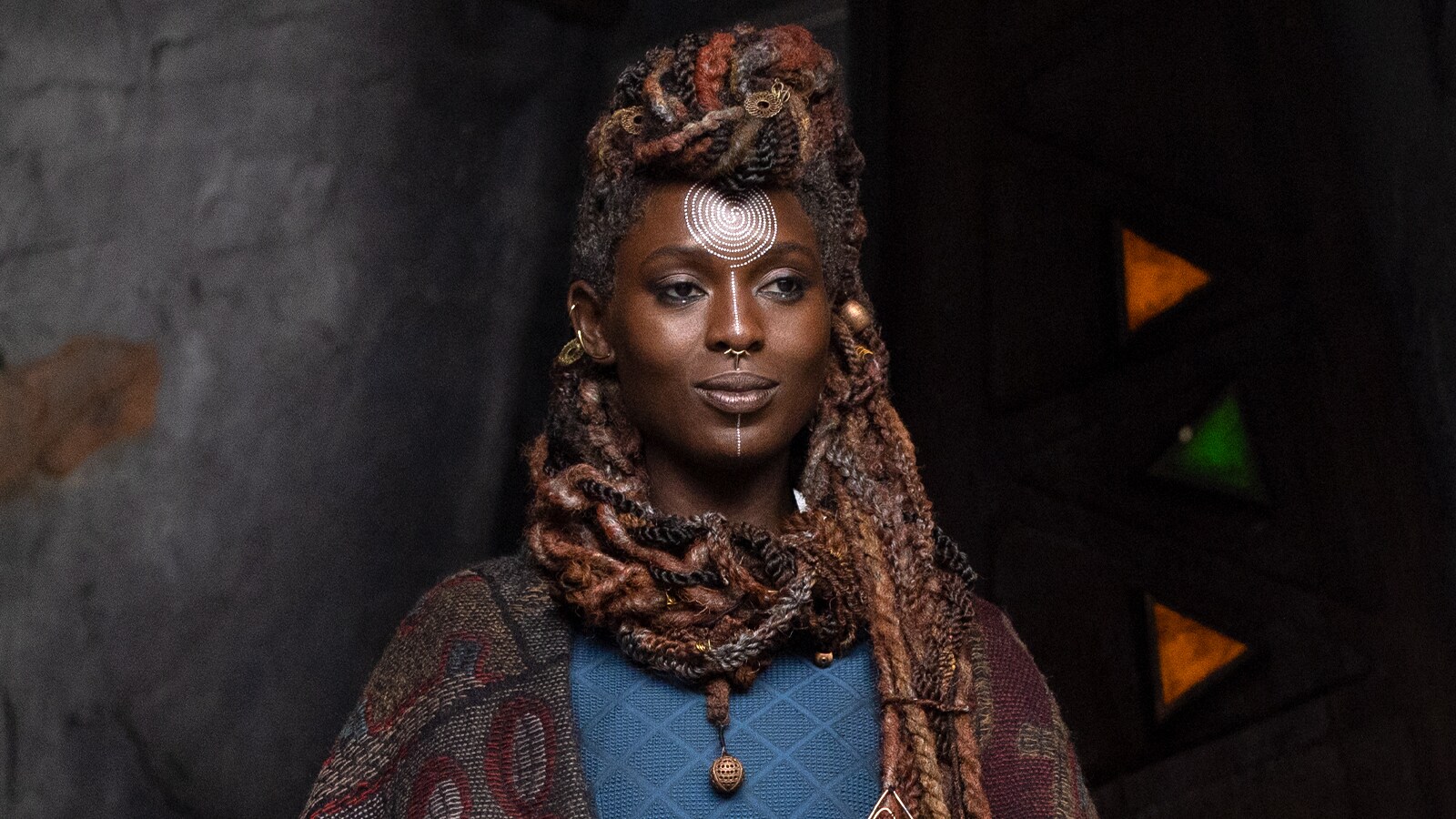
The Brendok coven interprets the Force through the Thread, a cosmology that emphasizes connection, collective power, and a religious community outside Jedi authority. Their conflict with visiting Jedi turns competing Force traditions into a question of autonomy and institutional power. The Brendok Coven & the Thread is treated as a lived tradition rather than a list of supernatural claims. The file identifies it as Independent Force religion and kinship community with a primary setting of Brendok and communities described as Mother Aniseya's coven, Mae, Osha, ritual participants. The IDS focus is the thread, communal power, ritual reproduction, religious autonomy, so belief is connected to institutions, social relationships, material practice, sacred place, historical change, and competing forms of authority.
02 · Cosmology
Worldview and religious ideas
Mother Aniseya teaches that all living things are connected by the Thread. The coven's interpretation overlaps with broader Force cosmology but uses its own vocabulary, ritual framework, and understanding of how power is shared and reproduced. Cosmology in The Brendok Coven & the Thread is read through its own setting, Brendok, rather than treated as interchangeable with Jedi doctrine. IDS distinguishes explicit teachings from later interpretation and asks how ideas about sacred power, reality, destiny, and moral order become socially meaningful.
03 · Ritual & practice
Ritual, discipline, and everyday religion
Communal chanting, initiation, ceremonial gathering, instruction of children, embodied ritual, and the coven's unusual creation or birth of the twins mark a religious life distinct from Jedi training. Ritual and everyday practice include repeated disciplines, prayer, teaching, pilgrimage, bodily techniques, initiation, mourning, service, storytelling, and communal observance where canon documents them. IDS distinguishes the practices of ordinary participants from those of elite specialists.
04 · Sacred spaces
Sacred places, pilgrimage, and religious geography
Brendok's isolation and the coven's fortress create protected ritual space. The planet's vergence in the Force adds a sacred-landscape dimension that both the coven and Jedi interpret through different institutional assumptions. Sacred geography for The Brendok Coven & the Thread is connected to Brendok. Temples, tombs, homes, ruins, pilgrimage sites, landscapes, vergences, or protected community spaces can become religiously important when communities use them to preserve memory or authority.
05 · Authority
Institutions and religious leadership
Mother Aniseya leads the coven as both spiritual and communal authority. Mother Koril and the wider community also participate in teaching and protection, making the group a kinship institution as well as a religious one. Religious authority among Mother Aniseya's coven, Mae, Osha, ritual participants may come from office, lineage, training, charisma, ritual knowledge, control of sacred places, or recognized experience. IDS asks how authority is accepted, contested, transferred, and limited rather than assuming one leader represents every believer.
06 · Ethics
Moral obligation and the good life
The Brendok coven's ethics center on communal survival, protection of children, loyalty to the coven, and preservation of religious autonomy. Mother Aniseya's decisions show that protecting the group can conflict with outsiders' expectations about individual choice or institutional oversight. IDS treats those tensions as ethical disagreements between communities rather than assuming Jedi norms automatically define legitimate family or religious practice.
07 · Death & afterlife
Death, mourning, spirits, and afterlife
The Brendok story is shaped by catastrophic death, but canon provides limited evidence for a formal coven doctrine of the afterlife. The archive therefore distinguishes mourning and collective loss from unsupported theology. The deaths at the fortress nevertheless transform how Mae and Osha understand family, blame, identity, and the Jedi, making death a historical force even without a fully documented funerary system.
08 · Ancestors & memory
Ancestors, predecessors, lineage, and sacred memory
The coven speaks and acts as a community with inherited teachings, but current canon gives limited detail about named ancestors or formal ancestor veneration. IDS preserves that uncertainty. What can be documented is a strong emphasis on continuity of the coven itself, collective motherhood, and transmission of the Thread. Institutional ancestry is therefore clearer than specific ritual relationships with the dead.
09 · Material religion
Objects, clothing, texts, weapons, and sacred substances
The fortress on Brendok, ceremonial clothing, ritual chambers, markings, the vergence, bodies arranged in collective ceremony, and spaces controlled by the coven give the religion a strong material setting. These environments are not neutral backdrops. They allow the community to practice privately and protect knowledge from outsiders, making architecture and location part of religious autonomy.
10 · Competing interpretations
Disagreement, reform, and religious pluralism
The coven's understanding of the Thread differs from Jedi descriptions of the Force, even though both traditions engage the same larger cosmic reality. Mae and Osha also develop divergent relationships to their upbringing and to Jedi authority. The Brendok conflict therefore demonstrates that competing interpretations can become politically dangerous when one institution assumes it has superior authority to classify another.
11 · Religion & politics
Government, autonomy, persecution, and political authority
The Jedi investigation on Brendok turns religious difference into a dispute over authority, children, training, and institutional jurisdiction. The coven understands itself as an autonomous community; the Jedi arrive with their own responsibilities concerning Force-sensitive children. The tragedy that follows shows how religious institutions can clash even without either side initially seeking a war, especially when trust and information fail.
12 · Historical change
Rupture, migration, reform, and continuity
The Jedi investigation of Brendok ended in catastrophe. Competing interpretations of child welfare, Force practice, institutional jurisdiction, and danger turned a religious encounter into violent collapse and later contested memory. Historical change within The Brendok Coven & the Thread is shaped by migration, persecution, war, institutional collapse, reform, generational succession, and changing relations with political power. IDS treats continuity as active reproduction rather than automatic survival.
13 · IDS anthropology lens
Why this tradition matters analytically
Brendok is one of the clearest Star Wars examples of religious pluralism becoming a power struggle. The key question is not simply which group understands the Force correctly, but who has authority to define legitimate practice. The IDS focus on the thread, communal power, ritual reproduction, religious autonomy treats The Brendok Coven & the Thread as lived social life. The analytical goal is to connect cosmology to people, institutions, objects, places, ethics, politics, memory, and historical change without presenting interpretation as official doctrine.
Source record
Official sources used for this file
The factual baseline for this The Brendok Coven & the Thread file comes from the linked official Star Wars source and the canon settings identified throughout the dossier. IDS uses those materials to establish documented teachings, communities, sacred places, institutions, and historical events. The discussion of cosmology, ritual, authority, material religion, and social change is independently written analysis. Where canon leaves belief or ordinary practice unclear, the page preserves that uncertainty rather than presenting interpretation as an official doctrine.