
01 · Orientation
World overview
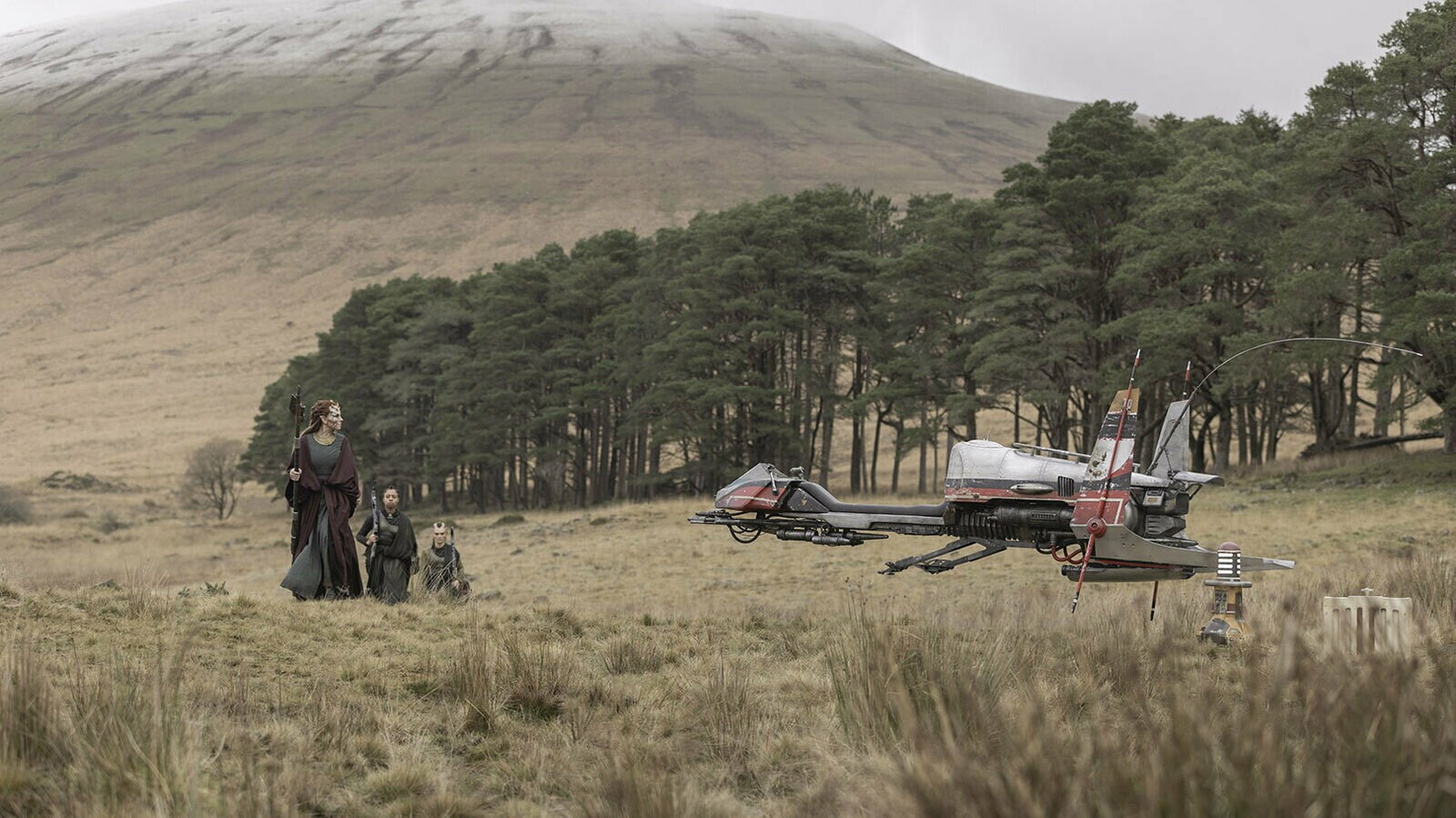
Brendok is a once-devastated world that became unexpectedly lush again, a transformation associated with a vergence in the Force. Its isolation allowed a coven of witches to establish a community beyond ordinary Republic institutions. IDS treats Brendok as a lived world rather than background scenery. Its location in Outer Rim, its classification as Reclaimed world and Force vergence site, and its association with Brendok coven and visiting Jedi create a social setting shaped by geography, institutions, mobility, and historical change. The purpose of the file is to connect those conditions instead of reducing the planet to a single battle, character, or visual landmark.
02 · Environment
Landscape, climate, and adaptation
Mountains, dense green forests, distinctive vegetation, twin moons, and abandoned mining structures define Brendok. The planet had previously suffered during the Emergences connected to the Great Hyperspace Disaster before life dramatically returned. Quick Facts identifies the climate as Temperate and the terrain as Mountains, mossy forests and abandoned industrial structures. Those environmental conditions affect where settlements can develop, how people travel, what resources become politically important, and which forms of infrastructure are practical. Environment does not mechanically determine culture, but it places real constraints on labor, architecture, transportation, defense, and everyday life.
03 · Built environment
Settlement, architecture, and infrastructure
Brendok’s most important inhabited structure is the former mining complex repurposed by the coven. Industrial architecture becomes domestic space, ritual center, school, refuge, and defensive position. That reuse matters because it shows a community adapting inherited infrastructure rather than building a settlement from nothing. Surrounding forests and restored ecosystems create a sharp contrast with the compound, linking built space to the planet’s unusual recovery and to the coven’s desire for autonomy from outside institutions.
04 · Society
People, community, and everyday life
The Brendok coven, led by Mother Aniseya, built a protected community in a former mining fortress. The group maintained its own beliefs, rituals, authority, and approach to the Force while attempting to preserve its traditions through a new generation. The communities most closely associated with this file are Brendok coven and visiting Jedi. The IDS focus is religious autonomy, force traditions, contested memory, which means the planet is read through differences in institution, class, occupation, migration, and political experience rather than as a single unified culture. A world can contain neighboring populations with distinct languages, religions, histories, and relationships to state power.
05 · Economy & labor
Resources, work, and political economy
Canon provides little evidence for a large formal economy on Brendok. The coven appears relatively self-contained, organizing resources around communal life, training, ritual, and maintenance of its settlement. The abandoned mining history indicates that outside economic extraction preceded the community, but the witches give the site a new social purpose. Brendok therefore illustrates how landscapes can move from commercial use to refuge, with value defined by safety, spiritual meaning, and collective continuity rather than market production.
06 · Religion & worldview
Sacred landscape, belief, and moral order
Brendok is both a Force vergence and the home of Mother Aniseya's coven. The coven understands cosmic connection through the Thread and maintains its own ritual life, authority, teaching, and reproductive traditions outside Jedi institutions. Religion and worldview are treated as parts of social life rather than decorative lore. Sacred places, collective memory, ritual, moral authority, and relationships to land can influence how communities understand belonging and legitimate power. Where canon documents no shared planetary religion, IDS keeps that absence visible instead of inventing a uniform belief system for everyone living on the world.
07 · Institutions
Government, authority, and power
Brendok was outside the Republic's united planets, creating uncertainty about the authority of visiting Jedi. The resulting conflict centered on competing claims: the coven's right to protect its children and traditions, and the Jedi's belief that they had obligations concerning Force-sensitive children and an unusual vergence. The major eras associated with Brendok are High Republic. Political authority can therefore change as governments, militaries, occupations, local elites, resistance movements, or outside institutions gain and lose control. The archive uses religious autonomy, force traditions, contested memory to ask who can make decisions, who bears the costs of those decisions, and how planetary institutions connect local communities to larger galactic systems.
08 · Mobility
Movement, travel, and connection
Brendok is remote enough for the coven to establish a protected community away from major political centers, yet Jedi can still arrive while investigating the vergence. Movement therefore creates the central political tension. The witches value control over access, while the Jedi interpret their own mobility and investigative authority differently. The children’s potential departure raises another layer: who has the right to decide whether younger members remain inside an isolated community or enter wider institutions.
09 · Conflict & security
War, policing, occupation, and defense
The tragedy on Brendok grows from mistrust, competing authority, fear, and an inability to manage contact between institutions. The coven views outsiders as a potential threat to autonomy and family continuity, while Jedi interpret the situation through responsibilities tied to Force-sensitive children and the vergence. Security decisions escalate rapidly because each side reads ambiguous actions through different assumptions. The resulting deaths show how institutional confidence can turn uncertainty into irreversible violence even without a planned war.
10 · Points of interest
Places that make Brendok legible
Places inside Brendok make large planetary histories concrete. Cities, temples, factories, homes, bases, ruins, and landscapes show where institutions actually operate and where people work, worship, govern, travel, fight, remember, and build community. IDS treats these locations as evidence of social life rather than as a sightseeing checklist. Each point is included because it helps explain how geography, political authority, material culture, religion, or historical change becomes visible on the ground.
Brendok fortress
The witches transformed an abandoned mining facility into a protected home, ritual center, and political refuge, showing how communities can repurpose industrial ruins into sacred and domestic space.
Open connected IDS file →Ascension chamber
The coven’s Ascension ceremony connected leadership succession, family continuity, religious authority, and collective identity, making ritual central to how the community imagined its future.
Open connected IDS file →Bunta tree and vergence landscape
Brendok’s unusual recovery after disaster and the suspected vergence make natural regeneration part of the planet’s spiritual and scientific significance.
Open connected IDS file →11 · Change over time
Historical significance
A Jedi investigation brought Indara, Sol, Kelnacca, and Torbin into contact with the coven and the twins Osha and Mae. The encounter ended in tragedy. Later accounts revealed how fear, incomplete information, institutional assumptions, and conflicting memories shaped what happened. The principal appearances listed for Brendok are The Acolyte. Those stories capture particular moments rather than the complete history of the world. IDS reads wars, occupations, migrations, regime changes, reconstruction, and institutional continuity as processes that reshape social life over time. Historical significance therefore comes from what changes for communities, not only from whether a famous event happened there.
12 · IDS lens
What this world reveals
Brendok is a study in cultural misunderstanding. Groups can interpret the same practice through incompatible moral frameworks, and unequal institutional power can turn misunderstanding into irreversible intervention. The archive emphasis for Brendok is religious autonomy, force traditions, contested memory. That focus is useful because it connects geography to social organization instead of treating the world as scenery. IDS asks how people experience institutions differently depending on class, community, mobility, political status, access to resources, and historical circumstance, and how those differences become visible in the built and natural environment.
13 · Sources & continuity
Official primary source
The factual baseline for this Brendok file comes from official Star Wars reference material and the canon appearances listed in Quick Facts. IDS uses those sources for names, geography, political events, communities, and chronology, while the surrounding discussion of institutions, religion, settlement, labor, and social change is independently written analysis. Some aspects of everyday life on this world remain undocumented in current Canon.