
01 · Orientation
World overview
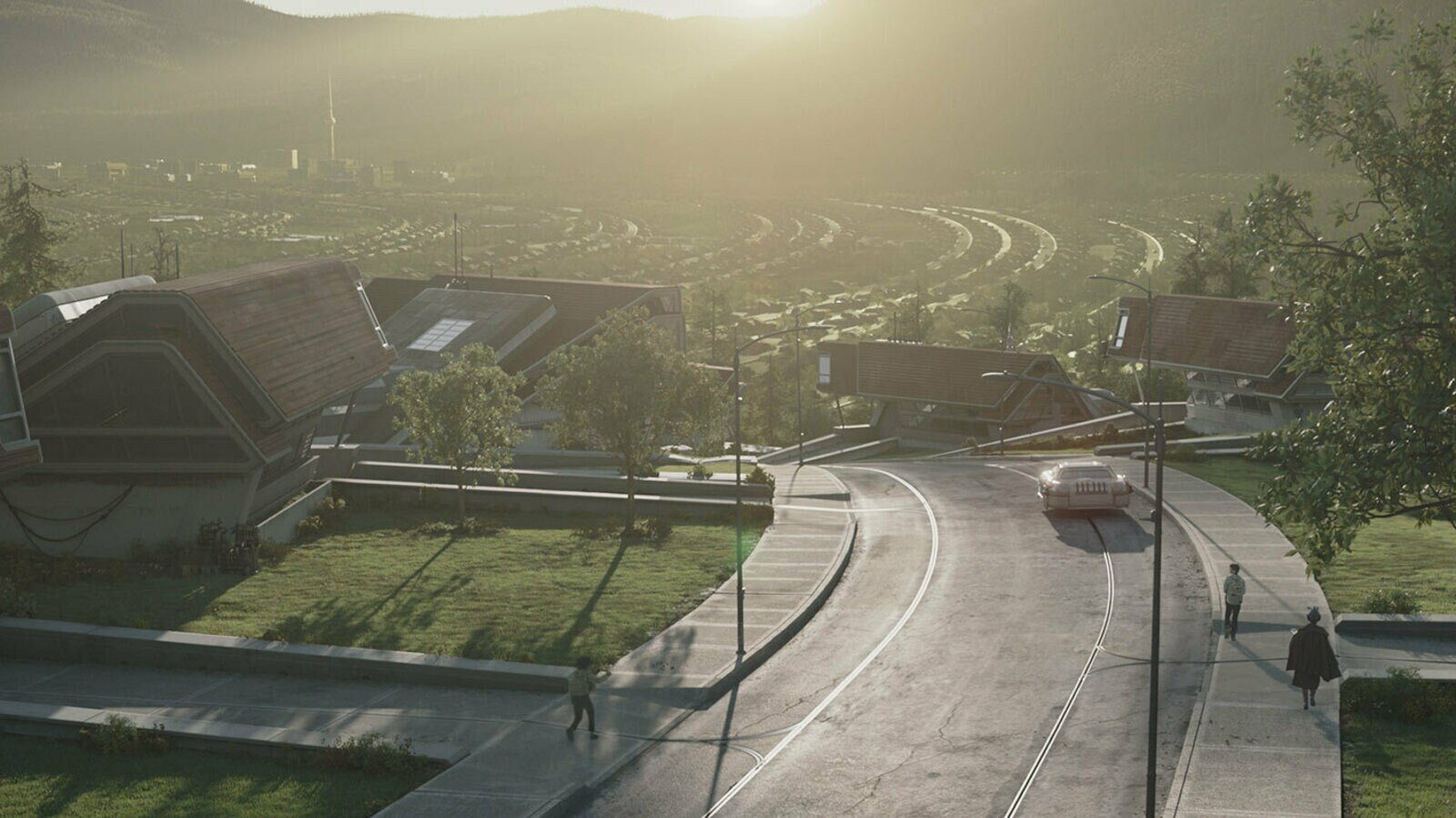
At Attin appears to be a peaceful, orderly suburban world, but its isolation is deliberate. The planet preserves an Old Republic social project through controlled information, structured education, service droids, and a hidden economic purpose unknown to most citizens. IDS treats At Attin as a lived world rather than background scenery. Its location in Hidden world · Old Republic network, its classification as Secluded managed society, and its association with At Attin citizens, children and service droids create a social setting shaped by geography, institutions, mobility, and historical change. The purpose of the file is to connect those conditions instead of reducing the planet to a single battle, character, or visual landmark.
02 · Environment
Landscape, climate, and adaptation
Residential neighborhoods, schools, transit routes, forests, and civic facilities create a carefully maintained landscape that feels unusually stable compared with the wider galaxy. A barrier and concealed coordinates keep the planet physically and informationally separate from outsiders. Quick Facts identifies the climate as Temperate and the terrain as Forests, suburbs, civic infrastructure and hidden industrial facilities. Those environmental conditions affect where settlements can develop, how people travel, what resources become politically important, and which forms of infrastructure are practical. Environment does not mechanically determine culture, but it places real constraints on labor, architecture, transportation, defense, and everyday life.
03 · Built environment
Settlement, architecture, and infrastructure
At Attin’s planned neighborhoods, schools, administrative systems, transport routes, and hidden financial infrastructure present a carefully managed version of ordinary middle-class life. The environment appears safe and prosperous because uncertainty is minimized through planning and institutional control. That same design limits what residents know about the wider galaxy. Built space therefore supports both comfort and isolation, creating a society where stability is materially real but depends on secrecy and restricted information.
04 · Society
People, community, and everyday life
Children are educated within a highly structured system and directed toward future professional roles. Service droids handle many routine functions, reinforcing the sense that the planet is orderly and protected. Most citizens understand their world through institutions that rarely expose them to the political changes that transformed the rest of the galaxy.
05 · Economy & labor
Resources, work, and political economy
At Attin’s economy is tied to its hidden Old Republic role and unusually stable institutions. Families pursue careers through structured education and assessment, while financial or mint-related functions connect the world to a legacy system larger than residents fully understand. Prosperity is therefore administrative as well as productive. The population benefits from reliable public order, but that reliability depends on a closed system in which work, education, and future status are strongly coordinated by institutions.
06 · Religion & worldview
Sacred landscape, belief, and moral order
No organized religion is clearly established on At Attin. The Great Work, trust in the Supervisor, structured education, and belief in social order function as civic worldview rather than demonstrated theology. Their moral authority still shapes how citizens understand duty and purpose. Religion and worldview are treated as parts of social life rather than decorative lore. Sacred places, collective memory, ritual, moral authority, and relationships to land can influence how communities understand belonging and legitimate power. Where canon documents no shared planetary religion, IDS keeps that absence visible instead of inventing a uniform belief system for everyone living on the world.
07 · Institutions
Government, authority, and power
Authority is centralized through the Supervisor and a bureaucratic system inherited from the Old Republic. The population's security depends on secrecy, but that same secrecy limits public knowledge about the world's purpose and about events beyond the barrier. The major eras associated with At Attin are Old Republic legacy, New Republic era. Political authority can therefore change as governments, militaries, occupations, local elites, resistance movements, or outside institutions gain and lose control. The archive uses isolation, education, managed information to ask who can make decisions, who bears the costs of those decisions, and how planetary institutions connect local communities to larger galactic systems.
08 · Mobility
Movement, travel, and connection
Movement off At Attin is heavily restricted by secrecy, protective systems, and the belief that the wider galaxy is dangerous or inaccessible. Children experience the world as bounded until accidental departure exposes the gap between local knowledge and external reality. Inside the planet, movement appears orderly and routine because infrastructure is designed for predictable civilian life. The contrast makes mobility educational: leaving the world reveals information that institutions have withheld and destabilizes assumptions about what normal life means.
09 · Conflict & security
War, policing, occupation, and defense
At Attin’s security model depends on concealment more than visible militarization. The world survives because outsiders do not know how to reach or exploit it, while internal systems discourage residents from challenging the boundaries of the society. Once pirates and other external actors gain access, secrecy collapses into direct vulnerability. The central security question is therefore whether a population protected through isolation can respond effectively when the institutions responsible for protection also limited what people knew about outside threats.
10 · Points of interest
Places that make At Attin legible
Places inside At Attin make large planetary histories concrete. Cities, temples, factories, homes, bases, ruins, and landscapes show where institutions actually operate and where people work, worship, govern, travel, fight, remember, and build community. IDS treats these locations as evidence of social life rather than as a sightseeing checklist. Each point is included because it helps explain how geography, political authority, material culture, religion, or historical change becomes visible on the ground.
Residential neighborhoods
At Attin’s planned suburbs present stability, education, and prosperity as ordinary life while also revealing how tightly institutions can organize childhood expectations, work, and mobility.
School and assessment system
The educational system channels children toward future careers and helps reproduce the hidden world’s social order, making schooling central to how the society sustains itself across generations.
Supervisor complex and vault
The Supervisor’s control system and hidden financial infrastructure connect security, automation, institutional authority, and the secrecy surrounding At Attin’s role within an Old Republic network.
11 · Change over time
Historical significance
At Attin was one of a group of protected worlds associated with an Old Republic initiative. By the New Republic era it had become legendary outside its own borders. The discovery of its hidden mint and reserves made the planet a target for pirates and exposed the costs of centuries of isolation.
12 · IDS lens
What this world reveals
At Attin is a useful case for studying paternalism. Institutions can provide real safety and stability while also restricting information, mobility, and public participation in decisions about the community's future. The archive emphasis for At Attin is isolation, education, managed information. That focus is useful because it connects geography to social organization instead of treating the world as scenery. IDS asks how people experience institutions differently depending on class, community, mobility, political status, access to resources, and historical circumstance, and how those differences become visible in the built and natural environment.
13 · Sources & continuity
Official primary source
The factual baseline for this At Attin file comes from official Star Wars reference material and the canon appearances listed in Quick Facts. IDS uses those sources for names, geography, political events, communities, and chronology, while the surrounding discussion of institutions, religion, settlement, labor, and social change is independently written analysis. Some aspects of everyday life on this world remain undocumented in current Canon.