
01 · Orientation
Institution in context
The New Republic was created from the Rebel Alliance's victory over the Empire and faced the difficult transition from revolutionary coalition to governing state. New Republic is treated as an institution with a history, membership, leadership structure, and material reach rather than as a simple faction label. Quick Facts places it in New Republic era with a base or reach described as Rotating and later established political centers. The IDS focus is state building, demilitarization, legitimacy, postwar governance, which directs attention to how organizational power is created, maintained, challenged, and experienced by people inside and outside the institution.
02 · Structure
Structure and membership
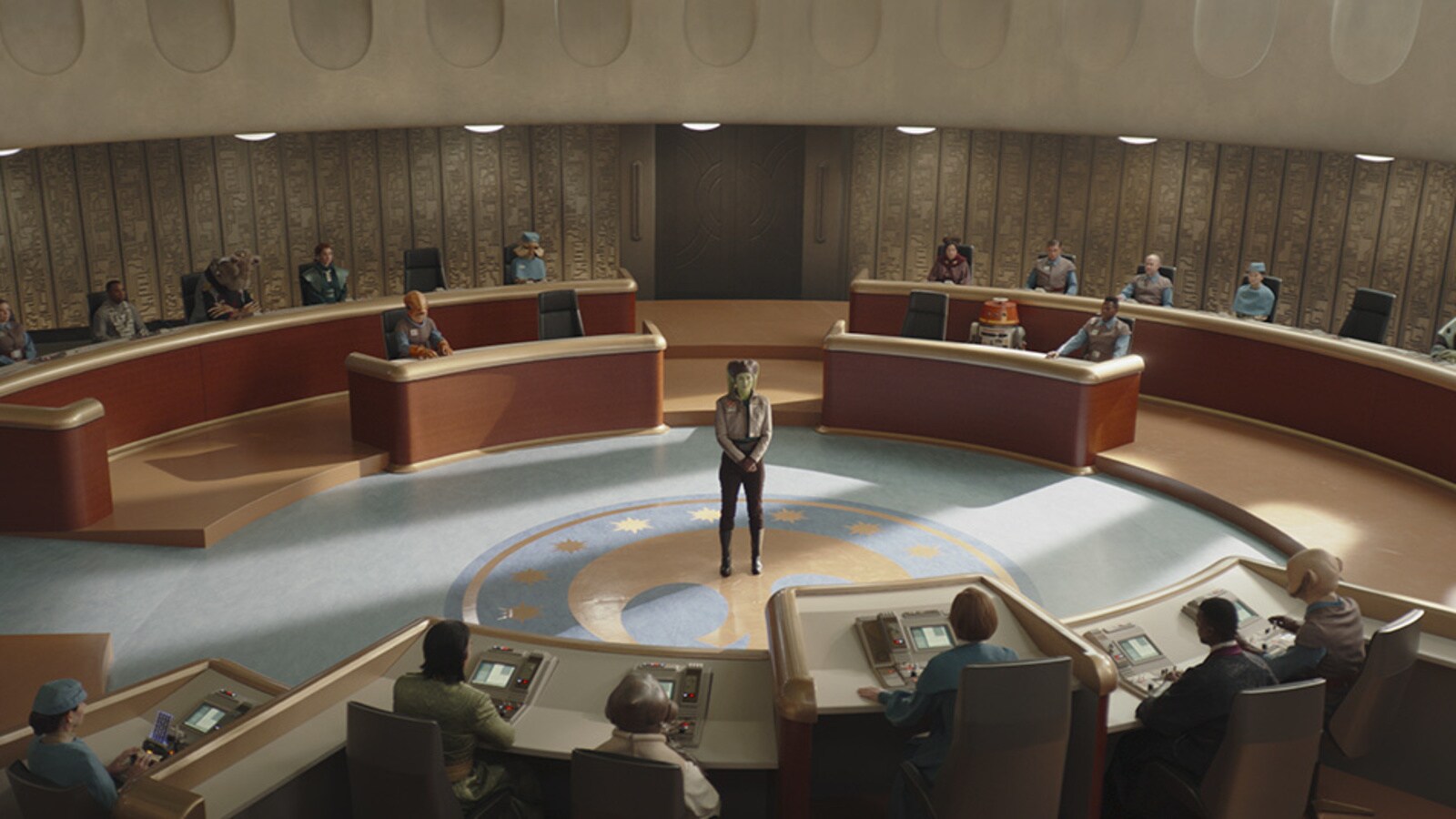
The New Republic rebuilt representative institutions around a Senate, civil administration, member systems, courts, security structures, and a smaller defense apparatus than the wartime Alliance. Membership includes Member systems, Senate, defense and security institutions, civil administration, while the organization's reach is described as Rotating and later established political centers. IDS separates formal offices from the wider population of personnel, clients, supporters, dependents, or subjects who make institutional action possible.
03 · Leadership
Leadership, authority, and succession
The New Republic restores civilian political leadership through a Senate and chancellorship, with Mon Mothma serving as a central founding figure. Military commanders and regional officials remain influential but are formally subordinate to democratic institutions. Leadership emphasizes separation from Imperial authoritarianism, yet this also produces tension when security officials perceive threats that civilian leaders view as manageable or politically costly.
04 · Recruitment
Recruitment, incorporation, and training
Membership expands through systems joining the new government, while civil servants, military veterans, local officials, security personnel, and former rebels enter state institutions. The New Republic also attempts rehabilitation and reintegration of some former Imperial personnel. Recruitment therefore serves two purposes: building a functioning government and demonstrating that the new order will not reproduce permanent wartime mobilization. That choice creates both legitimacy and vulnerability.
05 · Bureaucracy
Administration, records, and institutional routine
The New Republic rebuilds a Senate, courts, security services, prison systems, planetary coordination, registries, and administrative offices across a postwar galaxy. It also inherits records and infrastructure from older regimes. Bureaucracy is portrayed as less overtly coercive than the Empire but frequently slow, divided, or procedurally cautious. Ahsoka and The Mandalorian show officials struggling to interpret threats within rules designed to prevent another authoritarian security state.
06 · Ideology
Ideology and legitimacy
Its political project emphasized restoration of representative government and rejection of Imperial authoritarianism. Demilitarization and decentralization were intended to prevent another dictatorship but also limited responses to distant or emerging threats. The public or internal ideas attached to New Republic must be read alongside its institutional practice. The IDS focus on state building, demilitarization, legitimacy, postwar governance helps distinguish stated ideals from the ways authority, resources, coercion, and obligation actually operate.
07 · Financing
Resources, wealth, and institutional support
The new government inherits the costs of reconstruction, demobilization, administration, policing, and integration of member systems after years of war. It reduces military capacity and ends some Imperial priorities, redirecting resources toward civilian governance. Canon does not provide a full fiscal system, so IDS focuses on institutional choices visible in policy: demilitarization, prison operation, fleet maintenance, public administration, and the economic burdens of postwar reconstruction.
08 · Military power
Force, security, and coercive capacity
The New Republic retains fleets, X-wing patrols, defense personnel, and security forces but deliberately reduces its military after the Galactic Concordance. Demilitarization is meant to distinguish the new order from the Empire's permanent war state. Leia and others warn that this leaves the Republic slow to respond to the First Order and Imperial remnants. Military weakness is therefore partly the result of a conscious political choice about what democratic reconstruction should look like.
09 · Symbols
Symbols, material identity, and public authority
The restored Senate, New Republic insignia, revised uniforms, X-wing patrols, converted former Rebel ships, and the public language of peace and representative government distinguish the state from Imperial imagery. Symbols of continuity with the Rebellion remain, but institutional presentation becomes more bureaucratic and civic. This transition matters because the government must present itself as more than a victorious army.
10 · Territory
Territory, bases, and spatial reach
The New Republic governs member systems across a galaxy where former Imperial territories, neutral worlds, criminal regions, and distant frontier systems remain unevenly integrated. The capital is not permanently fixed in the same way as Imperial Coruscant, reflecting an effort to distribute political power. Practical reach is strongest where member governments cooperate and weaker in remote regions where patrols or local officials operate with limited support.
11 · Internal factions
Rivalries, factions, and competing priorities
Postwar politics includes advocates of demilitarization, security hawks, former Rebels with different priorities, local representatives, centrists sympathetic to aspects of Imperial order, and officials focused on reconstruction rather than renewed conflict. Leia's political isolation over the First Order demonstrates how threat perception can become factional. The New Republic is democratic precisely because these disagreements are institutionalized rather than suppressed.
12 · Historical development
Historical development
The New Republic emerged after Endor and gradually replaced the fractured Empire across much of the galaxy. Decades later, the rise of the First Order exposed weaknesses in its security and political consensus, culminating in the destruction of Hosnian Prime. The principal era listed for New Republic is New Republic era, but institutional development is rarely static. Leadership changes, wars, alliances, legal reforms, territorial shifts, and resource pressures can alter both goals and structure over time.
13 · Collapse / transformation
Collapse, survival, and transformation
The New Republic grows out of Rebel victory and attempts to convert revolutionary legitimacy into stable representative government. Its destruction at Hosnian Prime removes much of the central political structure in a single First Order strike. Surviving personnel and allies then operate through Resistance networks and local defense. The collapse illustrates the risks of concentrating key institutions even within a deliberately demilitarized system.
14 · IDS institutional lens
Why this organization matters analytically
The New Republic highlights the difference between winning a rebellion and governing afterward. Institutions designed to prevent renewed authoritarianism can create their own tradeoffs in enforcement, military readiness, and administrative reach. The IDS lens on New Republic is state building, demilitarization, legitimacy, postwar governance. The analytical purpose is to show how collective power is produced through people, rules, resources, material systems, and historical memory rather than reducing the organization to its most famous leaders.
Source record
Official sources used for this file
The factual baseline for this New Republic organization file comes from the linked official Star Wars source, the canon era identified in Quick Facts, and the story contexts reflected throughout the dossier. IDS uses those materials to establish leadership, membership, institutional reach, major events, and documented ideology. The discussion of bureaucracy, legitimacy, labor, coercion, and organizational change is independently written analysis. Public claims made by the organization are not treated as neutral descriptions of how every member understood or experienced it.