The First Order emerged from the Imperial remnant after the fall of the Galactic Empire. The New Republic treated the remaining Imperial territories as a defeated rump state, but officers, technologists, and political loyalists continued planning a return. They moved resources into the Unknown Regions, where distance protected them from the Republic’s attention and gave them time to rebuild.
The First Order was not a simple restoration of Palpatine’s Empire. It inherited Imperial symbols, military design, and authoritarian habits, but it presented itself as a cleaner and more disciplined answer to the Republic’s perceived weakness. Its leaders studied the earlier regime and tried to remove the compromises that had allowed rebellion to spread.
Imperial remnants in the Unknown Regions
After Endor, former Imperial commanders could no longer rely on a single capital, a stable chain of command, or the fear created by an intact fleet. The remnant had to survive through secret routes, hidden facilities, loyal industrial networks, and political allies. The Unknown Regions offered a place where these efforts could continue beyond the Republic’s normal reach.
That isolation allowed the movement to become more extreme. The First Order raised children inside a controlled military culture, trained soldiers from birth, and taught that personal identity should be secondary to service. It also built a force designed for a rapid strike rather than a slow occupation of every world. The result was an organization that looked smaller than the old Empire but was prepared to impose its will quickly.
Snoke and the problem of authority
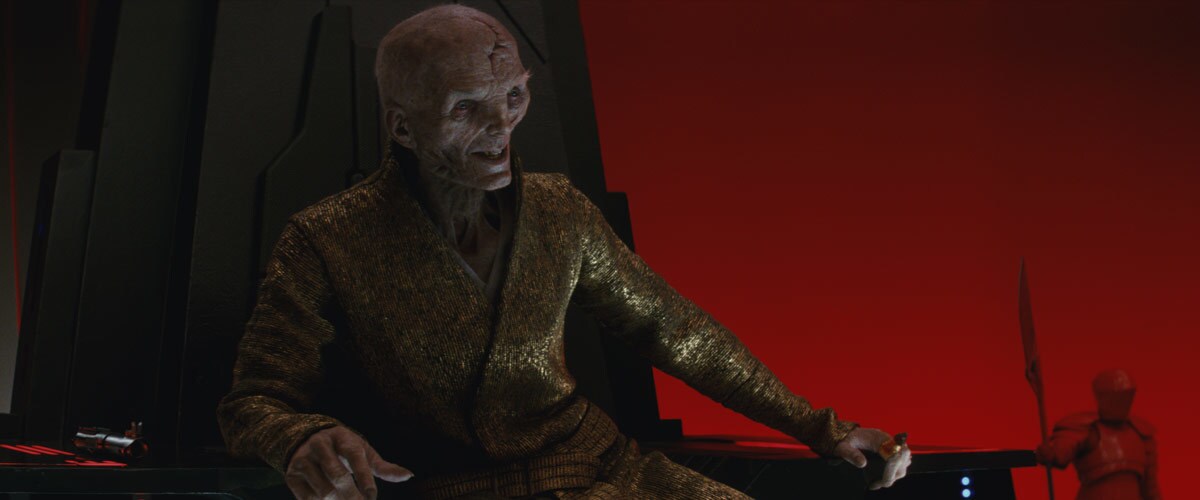
Supreme Leader Snoke gave the First Order a central figure who could dominate its public hierarchy without presenting himself as a traditional Imperial emperor. He controlled the military through fear, manipulation, and the promise of conquest. Kylo Ren served as the organization’s champion, creating a bridge between the First Order’s military identity and the dark-side legacy that still shaped the galaxy.
The relationship between Snoke and Kylo also exposed the First Order’s weakness. Its hierarchy depended on personal domination rather than shared legitimacy. Officers obeyed because they feared punishment and because the organization had trained them to treat dissent as betrayal. When Kylo killed Snoke and claimed the title of Supreme Leader, the transfer was possible because the system had never created a stable alternative to force.
A military culture built around the past
First Order uniforms, stormtrooper armor, starships, and ceremonies deliberately referenced the Empire. The references were not only nostalgic. They were instructional. The regime wanted its soldiers and civilians to understand that the old defeat had been temporary and that the new movement had learned from it.
Stormtroopers were trained to suppress individual identity. Finn’s decision to reject that system demonstrates why the policy was dangerous. The First Order could produce obedience at scale, but it could not guarantee that every person inside the institution would accept its meaning. The regime’s emphasis on numbers and designations made one soldier easy to replace, but it also made a single act of refusal symbolically powerful.
Starkiller Base and total war
Starkiller Base transformed a hidden military remnant into a regime that could threaten the entire galaxy. Built from a converted planetary body, the weapon turned a natural resource into an instrument of political terror. Its purpose was not simply to defeat a fleet. It was to destroy the Republic’s political center and make resistance appear pointless.
The strategy failed because the First Order confused destruction with control. It could eliminate a capital, but it could not create legitimacy in the worlds that remained. The Resistance survived, and the regime’s use of overwhelming force gave its opponents a clear reason to cooperate.
Exegol and the unstable return of the Sith
The First Order’s public leadership was eventually revealed to be connected to a larger Sith plan centered on Exegol. That connection changed how the sequel-era conflict could be understood, but it did not make the First Order identical to the Sith. Many officers were Imperial loyalists pursuing state power, while the Sith Eternal pursued a religious and dynastic project of its own.
The division mattered. The First Order had fleets, armies, and a governing structure. The Sith Eternal had secrecy, cultic commitment, and a plan to restore Palpatine. Their alliance created immense destructive power without creating a stable political settlement. The result was a regime capable of conquest but poorly equipped to explain what life after conquest would mean.
The fall of the First Order
The First Order collapsed when its claim to inevitability was broken. The Resistance survived long enough for ordinary people to recognize that the regime could be opposed. The conflict at Exegol then exposed the limits of a system that relied on a hidden center and treated the population as a resource.
For collectors, First Order cards work as visual records of post-Imperial continuity. A stormtrooper card can point to the manufactured identity of the rank and file. A Snoke or Kylo Ren card can represent the regime’s unstable leadership. A starship, base, or character parallel can show how the First Order reused Imperial design while changing the political conditions around it.
The First Order across films, television, and books
The First Order is introduced in The Force Awakens as a successor to the Empire, but the wider canon shows that “successor” is not the same as “continuation.” The Aftermath novels describe the political vacuum after Endor; Bloodline follows the New Republic's struggle to remember the Imperial past; Resistance shows how the regime threatened border communities; and the sequel films move from covert militarization to open conquest. The Last Jedi and The Rise of Skywalker then expose the First Order as part of a larger Sith restoration project.
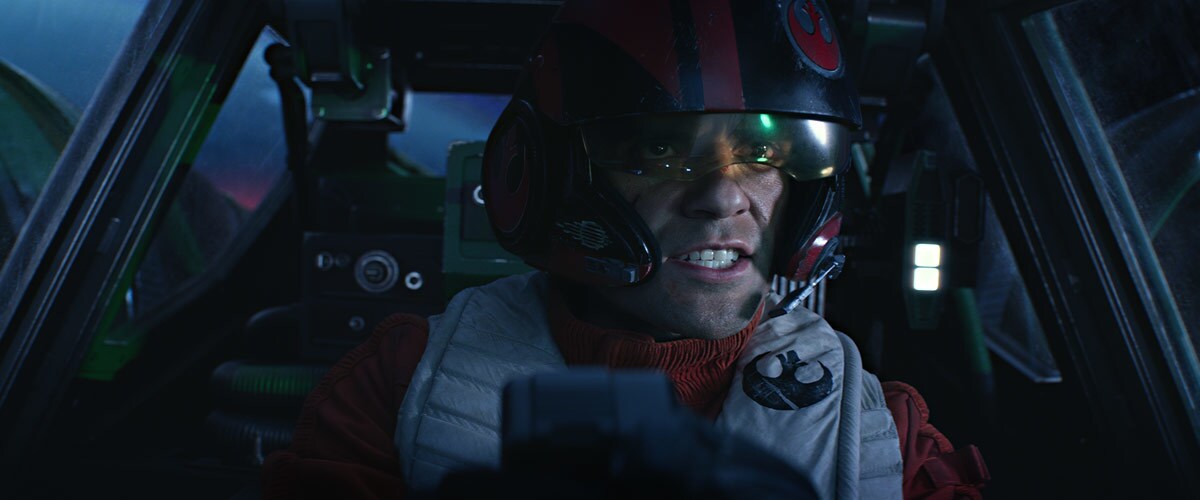
These stories also make the regime legible through people who refuse its categories. Finn is a stormtrooper who recovers a moral self. Poe Dameron is a pilot whose heroism depends on trust rather than rank. General Hux represents the theatrical, bureaucratic side of fascist power, while Kylo Ren turns dynastic grievance into political violence. Their conflicts show that the First Order was never only a fleet. It was a culture built from education, surveillance, ritual, and the deliberate narrowing of imagination.
A state made from a lost war
The First Order grew in the Unknown Regions under conditions created by the Empire's defeat. Imperial officers, weapons researchers, loyalist families, and political extremists carried military knowledge away from the core. The Concordance and the demilitarization of the New Republic did not create the First Order, but they created room for it to consolidate beyond ordinary oversight. It could present itself as a disciplined answer to what loyalists described as the Republic's softness.
This origin gave the regime a powerful mythology. The Empire became less a defeated government than a sacred memory of unity, scale, and command. Old banners, helmets, marching formations, and stories about Darth Vader turned nostalgia into recruitment. The First Order did not need every citizen to know the actual history of the Empire. It needed them to feel that history had been stolen from them and could be restored by obedience.
The mythology was selective. It celebrated military victory while hiding slavery, planetary destruction, species hierarchy, and the ordinary fear of occupation. That selective memory allowed the First Order to recruit people who had not lived under Imperial rule. It also explains why the regime's violence could be framed as a return to order rather than a new experiment in domination.
Child soldiers, training, and the making of obedience
The First Order's most revealing institution is its stormtrooper program. Children are taken from families, assigned numbers, trained away from ordinary social bonds, and taught that personal memory is a weakness. The system is efficient because it attacks alternatives before a recruit can compare them. A stormtrooper does not simply receive orders. They are taught to understand the order as the only stable relationship in their world.
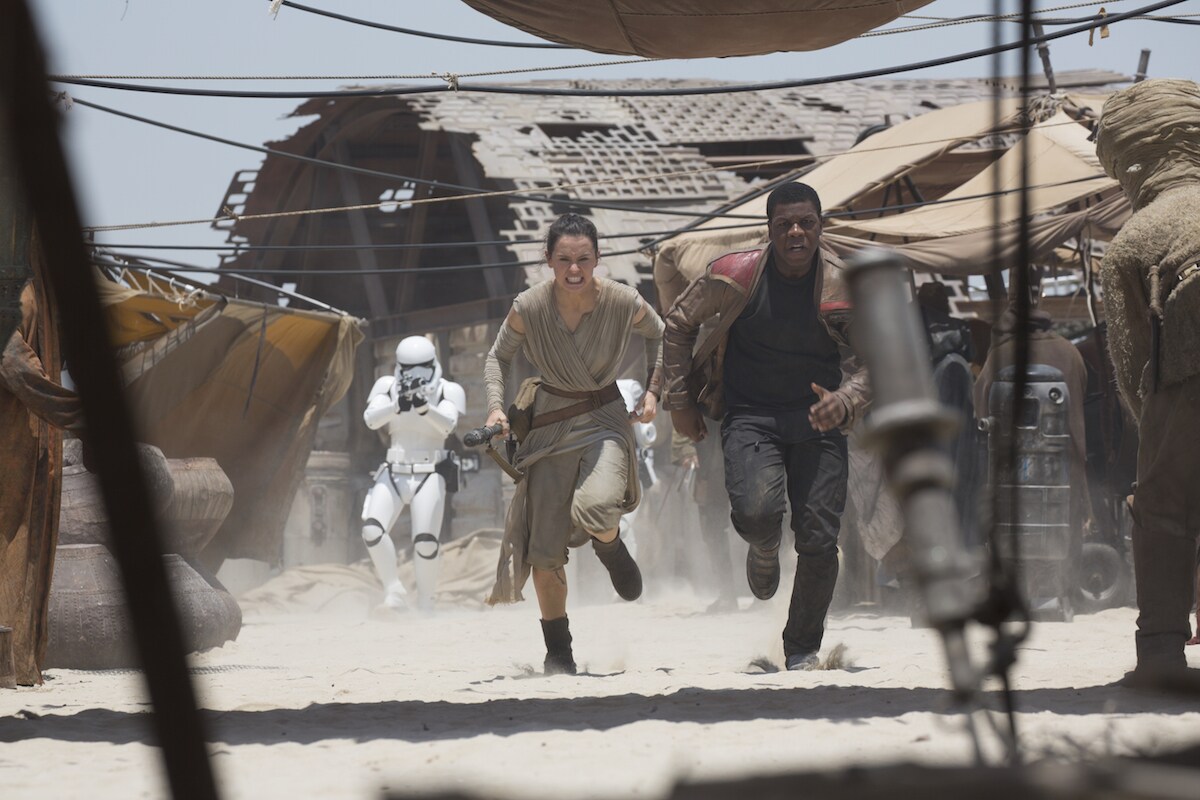
Finn's story makes the consequences visible. His hesitation on Jakku begins as a bodily reaction that the institution cannot fully discipline. Compassion returns through contact with a person who gives him a name and a choice. The friendship among Finn, Poe, and Rey is therefore not decorative. It is a counter-institution. It gives people a shared identity that does not depend on rank, bloodline, or state permission.
The First Order also uses schooling and spectacle to make violence ordinary. Troops assemble in geometric masses; commanders speak in slogans; weapons are named as if technical language could remove moral responsibility. Starkiller Base magnifies this practice by turning a planetary body into a weapon. The scale of the machine is part of the message: resistance should feel irrational because the state can transform a sun into an argument.
Kylo Ren, Snoke, and the politics of damaged inheritance
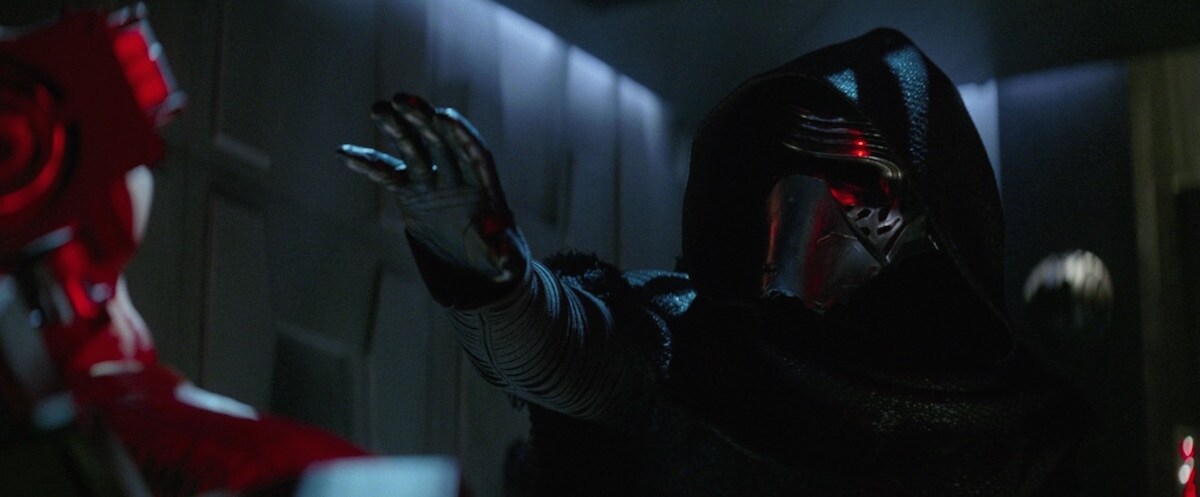
Kylo Ren's authority rests on contradiction. He wants the intimacy of family history but rejects the responsibilities that history imposes. He wants to be seen as unique while borrowing the mask, name, and theatrical violence of Darth Vader. Snoke uses that conflict to control him, and the First Order uses both men to convert private injury into public hierarchy.
The films connect this personal story to a broader political habit: institutions often turn unresolved grief into a permission structure for domination. Ben Solo's alienation does not excuse his crimes, but it helps explain why the regime can offer him a language of destiny. The Knights of Ren, Supreme Leader titles, red-lit chambers, and ritualized duels make violence resemble initiation. Power is presented as proof that the injured self has finally become real.
When Kylo kills Snoke and later rejects the role of Supreme Leader, the regime does not dissolve. That durability matters. Authoritarian systems are not only expressions of one person's psychology. They distribute power across officers, factories, intelligence networks, and frightened populations. Even a leader who changes can leave behind institutions trained to continue the work.
After Exegol: defeat, fragmentation, and memory
The First Order's collapse after Exegol does not end the social questions it created. Its officers, soldiers, factories, and occupied populations have to decide what comes next. The Resistance victory is military, but a lasting peace would require demobilization, truth-telling, reparations, and ways for former child soldiers to live outside the only institution they have known. A galaxy cannot be rebuilt by changing a flag alone.
The sequel era also argues about who gets to narrate the past. Rey, Finn, Poe, Rose Tico, Leia Organa, and the people of worlds under occupation all carry different memories of the conflict. The New Republic's earlier failure was partly a failure of memory: it treated Imperialism as a closed chapter and left the social conditions of authoritarian nostalgia unaddressed. The First Order exploited that silence.
For collectors, First Order imagery is unusually rich in institutional symbols. Helmets, red insignia, star destroyers, command rooms, and resistance flight suits show competing ideas of belonging. A character card can be read as a record of a person, but also as evidence of how a political system wanted bodies to look, move, and remember.
Sources and further reading
- The First Order, StarWars.com Databank
- First Order Stormtroopers, StarWars.com Databank
- Kylo Ren, StarWars.com Databank
- The Eras of Star Wars, StarWars.com
- The Force Awakens, StarWars.com
- The Last Jedi, StarWars.com
- The Rise of Skywalker, StarWars.com
- Star Wars Resistance, StarWars.com
Connected archive