Mother Koril is a co-leader and protector of the Brendok coven. Her authority is more confrontational than Mother Aniseya’s, but the difference does not make her a simple antagonist. Koril carries the community’s fear of outside intervention and insists that the coven’s children, practices, and future remain under its own control.
Protection as political work
Koril’s role is not limited to physical defense. She protects boundaries, rituals, children, and the community’s right to decide its own future. That work makes her suspicious of any outside group that arrives with questions about Force sensitivity and child development.
Her position reflects a political reality. The Jedi can leave Brendok, report to the Republic, and return with more authority. The coven cannot assume that an encounter will remain local.
Different models of leadership
Koril and Aniseya do not represent a simple division between violence and peace. They represent different strategies for maintaining collective life. Aniseya tries to manage the encounter through negotiation and concealment. Koril emphasizes readiness and resistance.
Their disagreement reveals the internal politics of the coven. Communities under pressure often debate whether survival depends on compromise, secrecy, or open refusal. Those choices are shaped by past experience rather than by abstract moral categories.
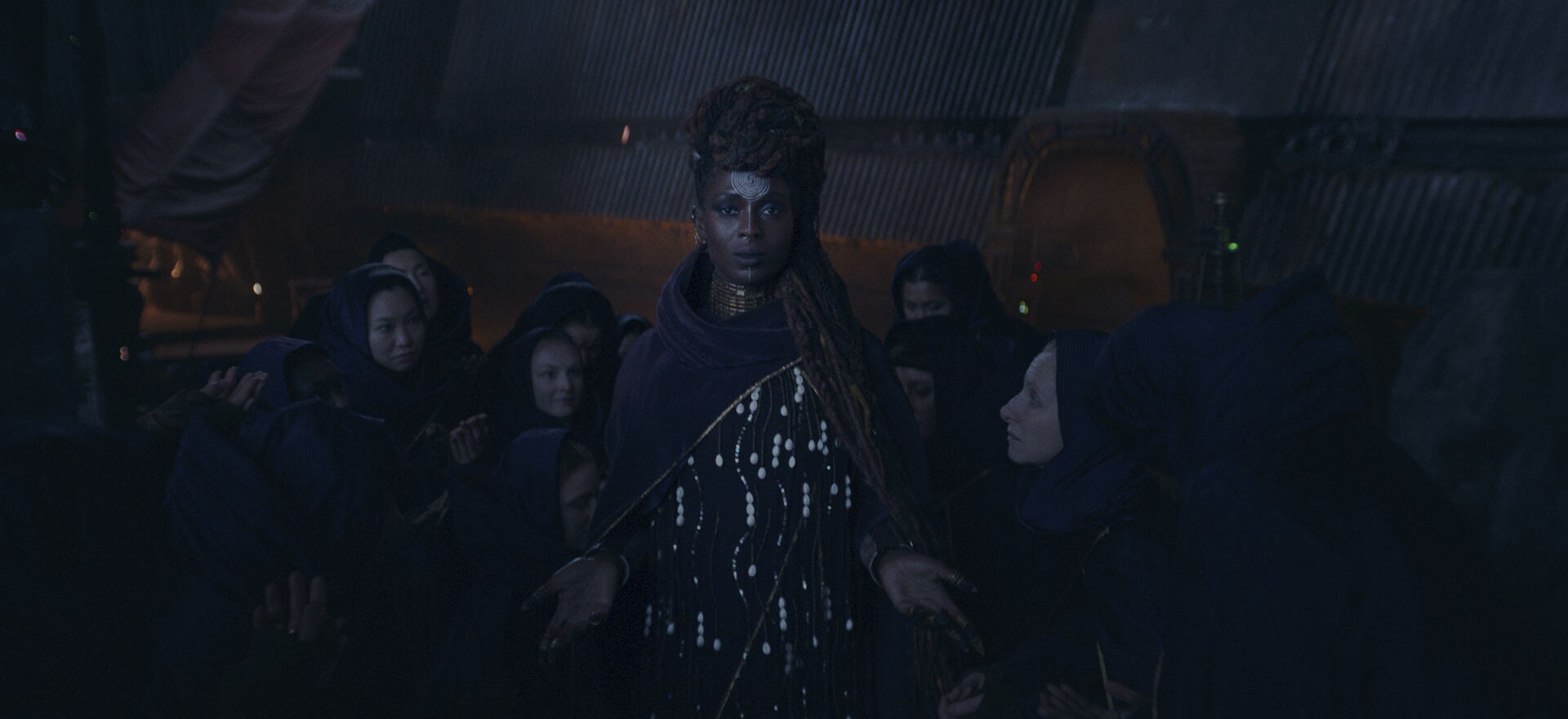
Kinship beyond the nuclear family
Koril’s relationship to Osha and Mae shows that parenting can be distributed across a community. The twins are not only children of a single household. They are part of a wider structure in which adults share authority, care, and responsibility.
The Jedi’s approach treats the children as individuals who can be assessed and recruited. Koril’s approach treats them as members of a community whose identity cannot be separated from the people who raised them.
Brendok as a conflict over sovereignty
The confrontation on Brendok becomes violent because each side understands the other as a threat to sovereignty. The Jedi believe the coven’s practices may endanger the children. Koril believes the Jedi’s investigation is itself a form of danger.
Once the encounter turns into a fight, the community’s ability to define its own future disappears. The destruction of the coven leaves the surviving twins with competing memories and removes the social structure that could have interpreted the event.
Anthropological assessment
Mother Koril demonstrates that resistance is often produced by unequal encounters. Her hostility cannot be understood apart from the Jedi’s ability to observe, classify, and intervene without sharing the coven’s risks.
Her story also warns against treating community defense as proof of irrationality. Koril’s methods contribute to the tragedy, but the tragedy is created by a larger failure to establish consent and mutual recognition.
Sources and status
This is a canon character file based on the first season of The Acolyte. It includes spoilers and separates confirmed story events from anthropological interpretation.
- StarWars.com, The Acolyte series guide
- StarWars.com, The Acolyte Character Posters
- StarWars.com, The Acolyte Stills Gallery
Distrust as collective memory
Koril’s hostility toward the Jedi is not simply personal temperament. It reflects a community that expects outside institutions to misunderstand, regulate, or destroy what they do not recognize.
Her protective stance makes more sense when the coven is treated as a vulnerable minority rather than as a private obstacle to Jedi recruitment.
Protection can also become constraint
Koril’s commitment to preserving the coven places her in tension with Osha’s desire to leave. The conflict shows that marginalized communities can still face internal disagreements about who has the right to choose departure.
Her role therefore resists a simple opposition between oppressive outsiders and unified insiders.
Connected archive