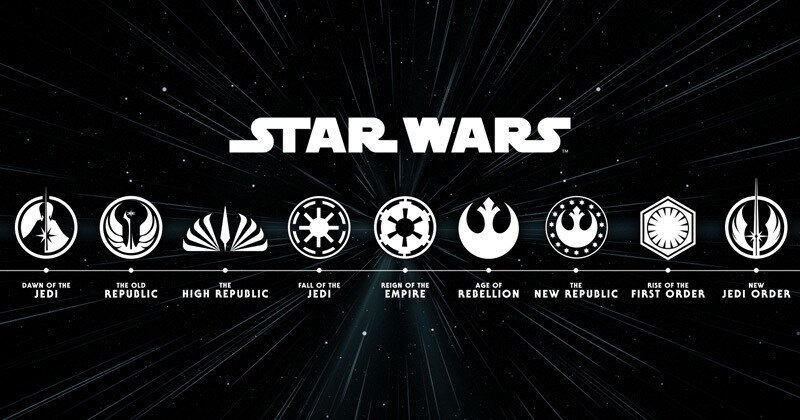
The High Republic is the most fully developed era in current Star Wars publishing outside the film-centered saga. Officially described as a period of prosperity and growth centuries before The Phantom Menace, it is a time when the Galactic Republic expands from Coruscant into the Outer Rim and the Jedi operate at the height of their public confidence. The official High Republic guide places its core stories roughly 150 to 300 years before Anakin Skywalker. That distance matters: the era is close enough to illuminate the prequels, but far enough away to show the Republic before its institutions become brittle.
Expansion as public promise
The High Republic’s defining political project is connection. Hyperspace lanes are charted, new worlds are brought into the Republic’s orbit, and Starlight Beacon is built as a symbol of communication and mutual aid. Bacta is introduced as a major medical technology, and the Jedi Vector gives the order a distinctive way to move through dangerous space. These details make prosperity material rather than abstract. A golden age is visible in routes, clinics, ports, rescue systems, and the ability of people who live far from Coruscant to imagine that the Republic might respond to their needs.
But every infrastructure project also creates dependence. When a lane collapses, when a beacon is attacked, or when a remote community is not included in the Republic’s assumptions, the limits of the golden age become visible. The High Republic therefore avoids a simple nostalgia story. It asks how a society can expand without turning the Outer Rim into a frontier that exists mainly to serve the center.

Starlight Beacon and the public life of infrastructure
Starlight Beacon is powerful because it gives the High Republic’s political ideal a physical address. It is a communications station, a rescue center, a diplomatic symbol, and a promise that the Outer Rim is not outside the Republic’s concern. The station’s importance cannot be measured only by its military value. People use it to send requests, receive information, locate family members, and imagine that distant officials know their communities exist.
Infrastructure creates expectations. Once a society builds a reliable medical route or communication system, people begin to treat access as a right rather than a gift. Failure then becomes political. A delayed rescue can be interpreted as incompetence. A broken hyperspace lane can become evidence that the Republic protects the Core more effectively than the frontier. The Great Disaster and the Nihil attacks exploit these expectations because the Republic has made connection central to its legitimacy.
The beacon also changes how the Jedi are seen. A Jedi who arrives through a public rescue network is not only a spiritual guardian. They are part of an emergency service. That role increases trust but also increases accountability. Communities can ask why help did not come, who decided which crisis mattered most, and whether the Jedi’s priorities match the needs of people without political influence.
The Great Disaster and the Nihil
Light of the Jedi opens with the Great Disaster, a hyperspace catastrophe that scatters destruction across the galaxy. The disaster is both a spectacular event and a test of governance. The Republic responds through emergency coordination; the Jedi rescue civilians at extraordinary scale; and Starlight Beacon becomes the public face of a promise that no world must be isolated. The Nihil then exploit the same interconnectedness, weaponizing hyperspace knowledge and attacking the assumptions behind Republic security.
Marchion Ro, Lourna Dee, and the wider Nihil are not only pirates with better ships. They represent a counter-politics of mobility. Where the Republic wants routes to stabilize commerce, law, and belonging, the Nihil want routes to remain unpredictable and privately controlled. Their “Storms” create a geography in which the state cannot guarantee movement. The conflict is consequently a war over who gets to define distance: the government that says space can be governed, or the insurgents who profit when communities are cut off from one another.
Republic society beyond Coruscant
The High Republic is not only a story about Jedi and senators. It is also a story about traders, farmers, miners, students, healers, pilots, local rulers, and families who experience expansion through changes in work and mobility. A new hyperspace route can bring medicine and markets. It can also bring land claims, corporate pressure, cultural tourism, and new forms of crime. The same route can be welcomed by one community and feared by another.
Republic membership is therefore negotiated at the local level. A town may want protection without wanting a permanent garrison. A planet may accept a beacon but reject a Senate-appointed administrator. A community may welcome Jedi mediation in one crisis while insisting that its own religious authorities lead the next. These negotiations complicate the image of the High Republic as a simple golden age. Prosperity is real, but it is distributed through political relationships.
The Nihil understand this unevenness. Their attacks do not need to defeat the Republic in a conventional battle if they can make communities doubt the reliability of shared routes. Once people begin to hoard supplies, distrust outsiders, or rely on private security, expansion reverses. The Republic remains formally united while its social infrastructure fragments.
Jedi as people, not icons
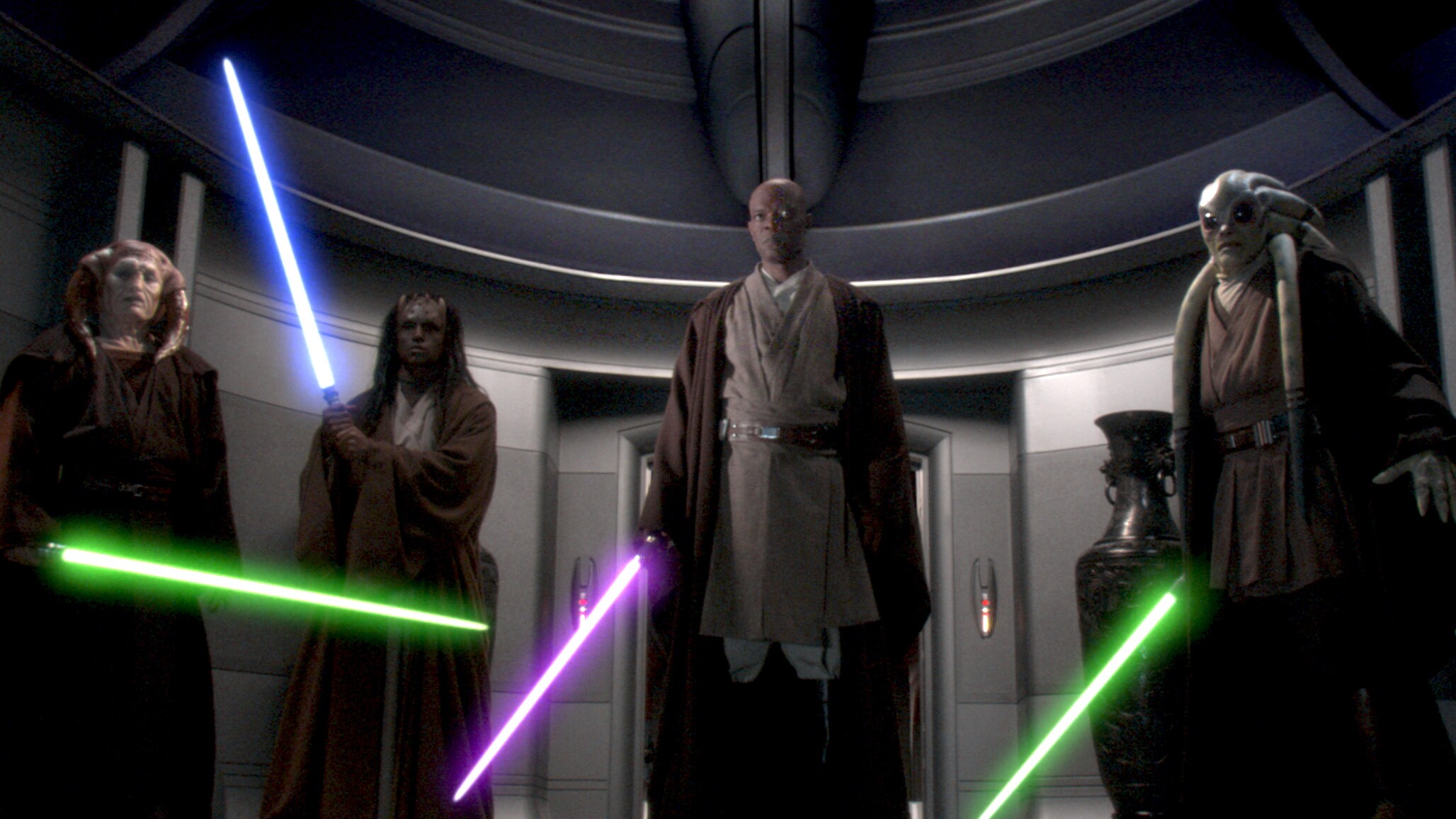
The High Republic ensemble makes the Jedi unusually legible as a social institution. Avar Kriss, Elzar Mann, Stellan Gios, Vernestra Rwoh, Keeve Trennis, Burryaga, and Reath Silas represent different generations, species, temperaments, and relationships to authority. Yoda appears as an old connective tissue between eras, but the stories do not make him the only measure of Jedi wisdom. Instead, they show an order whose confidence can become a blind spot.
The Jedi are explorers, diplomats, investigators, rescue workers, teachers, and combatants. Those roles do not always align. Avar’s ability to sense a musical unity in the Force is not merely a power; it is a way of imagining interdependence. Elzar’s visions show how intimacy and fear can distort perception. Vernestra’s early promotion exposes the social pressure placed on exceptional young people. Burryaga’s empathy is both a personal quality and a reminder that the order’s philosophy is embodied by many kinds of personhood.
The Path of the Open Hand and the Nameless
Phase II moves backward in time and widens the era’s anthropological frame. The Path of the Open Hand, led by the Mother, questions the Jedi assumption that the Force should be managed by a trained elite. That critique is not automatically correct—the Path can become coercive and its leadership can weaponize its own anti-authoritarian language—but it identifies a real social tension. When one order claims special access to a universal power, what happens to people who experience that claim as cultural occupation?
The Nameless, or the threat that strips Force-users of their power, makes the argument bodily. The Jedi are accustomed to being the people who stabilize crises. The Nameless reverses that hierarchy and turns mastery into vulnerability. Fear spreads through rumor, sensory experience, and ritual. This is one of the High Republic’s strongest contributions to Star Wars anthropology: it shows that “the Force” is not only a metaphysical field but also a set of institutions and bodies that interpret, regulate, and sometimes misunderstand it.
Stories across media
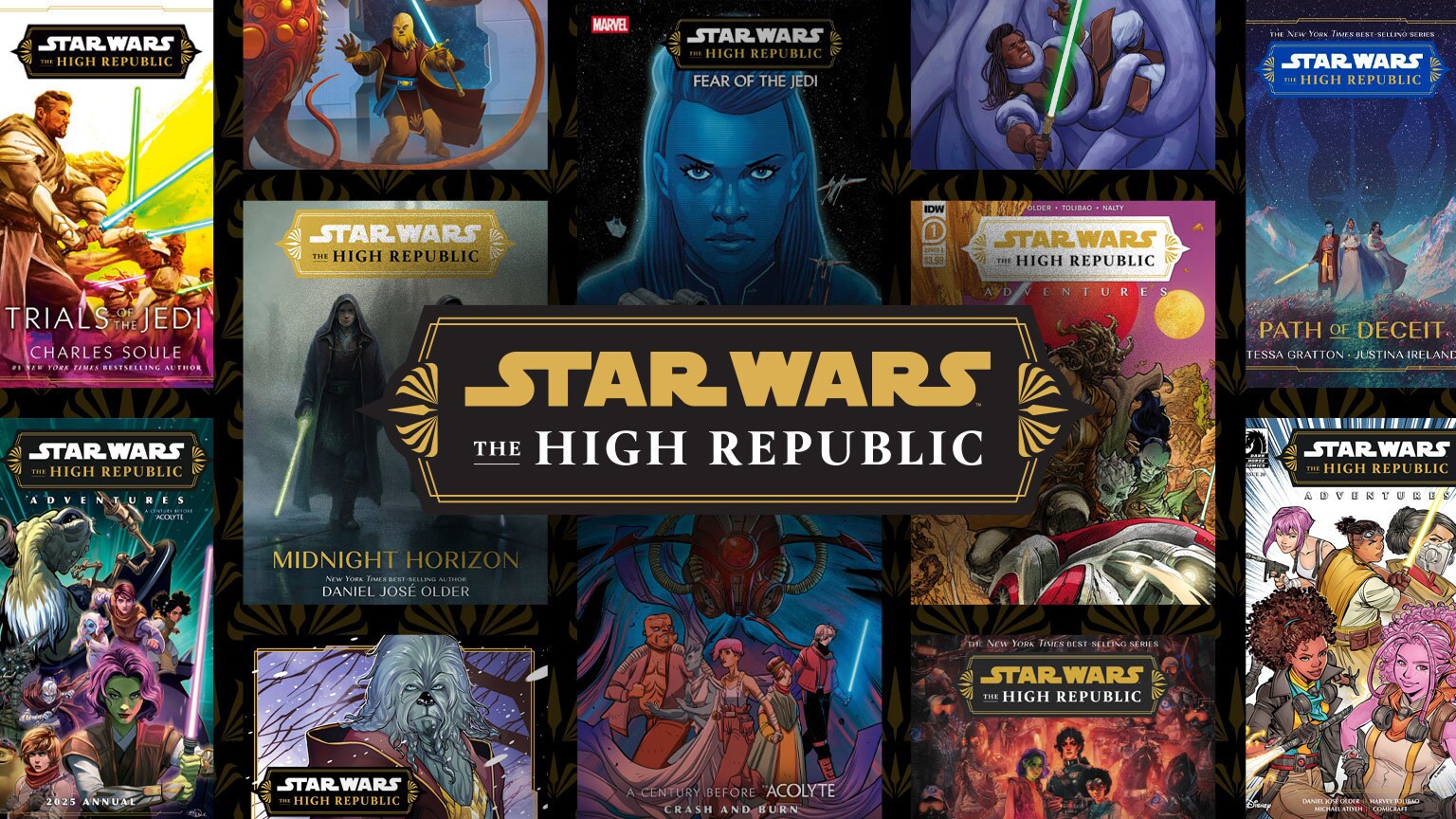
The era’s design is itself a cultural experiment. Adult novels such as Light of the Jedi, The Rising Storm, Midnight Horizon, The Fallen Star, Convergence, Cataclysm, and The Eye of Darkness establish political scale. Young adult books such as Into the Dark, Out of the Shadows, Midnight Horizon, and Path of Deceit make adolescence a site of institutional choice. A Test of Courage and the middle-grade novels follow young people learning what the Republic looks like from below. Marvel’s The High Republic, IDW’s High Republic Adventures, manga, and Tempest Runner add different visual and auditory grammars.
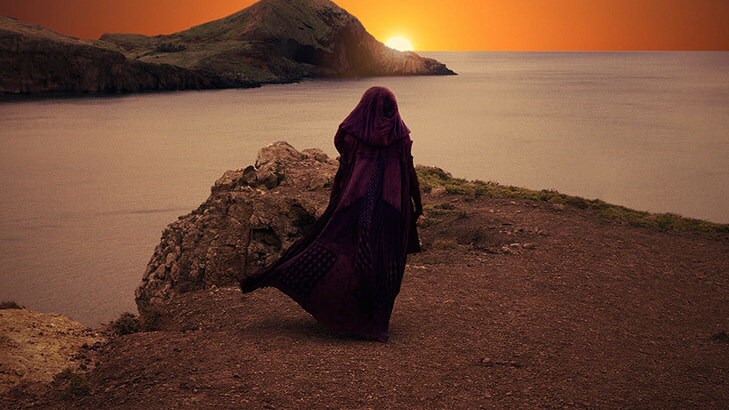
Young Jedi Adventures translates the era for children, making training, friendship, and everyday problem-solving part of the archive. The Acolyte depicts the late High Republic and supplies a darker bridge toward the prequel period. Taken together, these stories show a civilization not only at war but also at school, in hospitals, on ships, in markets, in families, and in the rituals of public mourning.
Education, childhood, and generational change
The High Republic’s many young protagonists make education a political subject. A lesson in navigation, a first encounter with a dangerous artifact, or a disagreement between students can reveal how a society prepares people for uncertainty. The Jedi teach discipline and Force awareness, but young characters also learn from crews, families, local traditions, and friendships that exist outside the order.
That broader education matters because the Republic is expanding faster than its institutions can standardize experience. Children on a Core world may understand the Republic as an established civic environment. Children on an Outer Rim station may understand it through delayed services, sudden visitors, and the risk of being forgotten. A common political identity cannot be produced by a shared emblem alone. It requires repeated experiences of fairness.
The stories also distinguish age from wisdom. Yoda represents long institutional memory, while Vernestra Rwoh and the younger Jedi demonstrate that new knowledge can come from people who have not yet inherited every assumption of the council. Mentorship works best when it moves in both directions. Teachers transmit discipline, but students reveal where the institution’s categories no longer fit the world.
Anthropology of a golden age
Golden ages are always retrospective. People call a period golden because later generations have lost something, not because everyone in the period lived equally well. The High Republic therefore works as a study of uneven prosperity. The Core can celebrate expansion while Outer Rim worlds absorb risk. The Senate can speak the language of unity while frontier communities decide whether Republic membership is materially useful. The Jedi can be admired as peacekeepers while their exceptional status remains politically complicated.
Starlight Beacon condenses this tension. It is a lighthouse, communications hub, relief station, and monument. Its destruction is not only a military defeat; it is an attack on a shared social imagination. When a beacon goes dark, communities lose more than a signal. They lose a story about who will come when help is needed. That is why the High Republic’s wars are also wars over trust, and why its characters matter as custodians of relationships rather than only wielders of lightsabers.
The era’s political legacy
The High Republic leaves later eras with both achievements and warnings. It demonstrates that a large political community can invest in rescue, communication, medicine, and shared exploration. It also shows that confidence can become complacency when institutions assume that their public image reflects everyone’s experience. The prequel Republic inherits the High Republic’s routes and prestige, but not all of its willingness to acknowledge the frontier.
The Jedi inherit the memory of being admired. That memory can be a resource when the order acts with courage, but it can also make criticism feel like betrayal. The Path of the Open Hand and the Nameless expose fears that a central Jedi institution would rather classify than understand. Their arguments do not excuse violence, but they force the Jedi to confront the cultural effects of claiming authority over the Force.
For readers, the High Republic is valuable because it turns background history into lived history. It asks what a golden age looks like in a classroom, a rescue bay, a market, a family argument, and a damaged route. Its greatest conflicts are political because they concern trust. The Jedi and Republic are tested not only by whether they can defeat an enemy, but by whether people continue to believe that connection is worth maintaining.
The archives of a golden age
A golden age is maintained through records. Maps, medical reports, rescue logs, senate debates, school lessons, memorials, and family stories tell people that the period’s prosperity was real and worth preserving. The High Republic initiative mirrors this process by distributing its history across novels, comics, audio dramas, manga, and animation. Each format records a different social scale.
An adult novel can follow the movement of a crisis across the Republic. A middle-grade story can show what danger feels like to children on a transport. A comic can make clothing, architecture, and technology visible. An audio drama can preserve speech, hesitation, and rumor. These differences matter because a civilization is not experienced from one viewpoint. The archive becomes more accurate when it includes institutions and ordinary lives.
The destruction of Starlight Beacon therefore damages memory as well as infrastructure. Survivors must decide what to preserve, how to name the dead, and whether the Republic’s public story matches what happened. The Nihil can attack records because records help communities coordinate after physical systems fail. A population that remembers its own networks can rebuild them. A population that loses the evidence of connection may accept isolation as inevitable.
Later eras often remember the High Republic as a lost ideal. That memory can inspire reform, but it can also create nostalgia that hides inequality. The best reading of the era preserves both facts: the Republic achieved meaningful forms of public cooperation, and those achievements required constant attention to the people and regions that prosperity could leave behind.
Reading and viewing path
Begin with the official What Is the High Republic? guide, then read Light of the Jedi as the central crisis text. Add Into the Dark, A Test of Courage, the Marvel and IDW comics, and the Phase II novel Path of Deceit to move between institutional, adolescent, and local viewpoints. Finish with The Acolyte for the late-era transition and Young Jedi Adventures for an everyday view of Jedi education.
Sources and further reading
- What Is Star Wars: The High Republic?, StarWars.com
- The Acolyte, StarWars.com
- Young Jedi Adventures, StarWars.com
- Star Wars: The High Republic comic series, Marvel
- Official Timeline: The Eras of Star Wars, StarWars.com
Visual record
Images, objects, and echoes
Official artwork and reference imagery used as visual anchors. Captions distinguish direct period evidence from later depictions of memory and lineage.
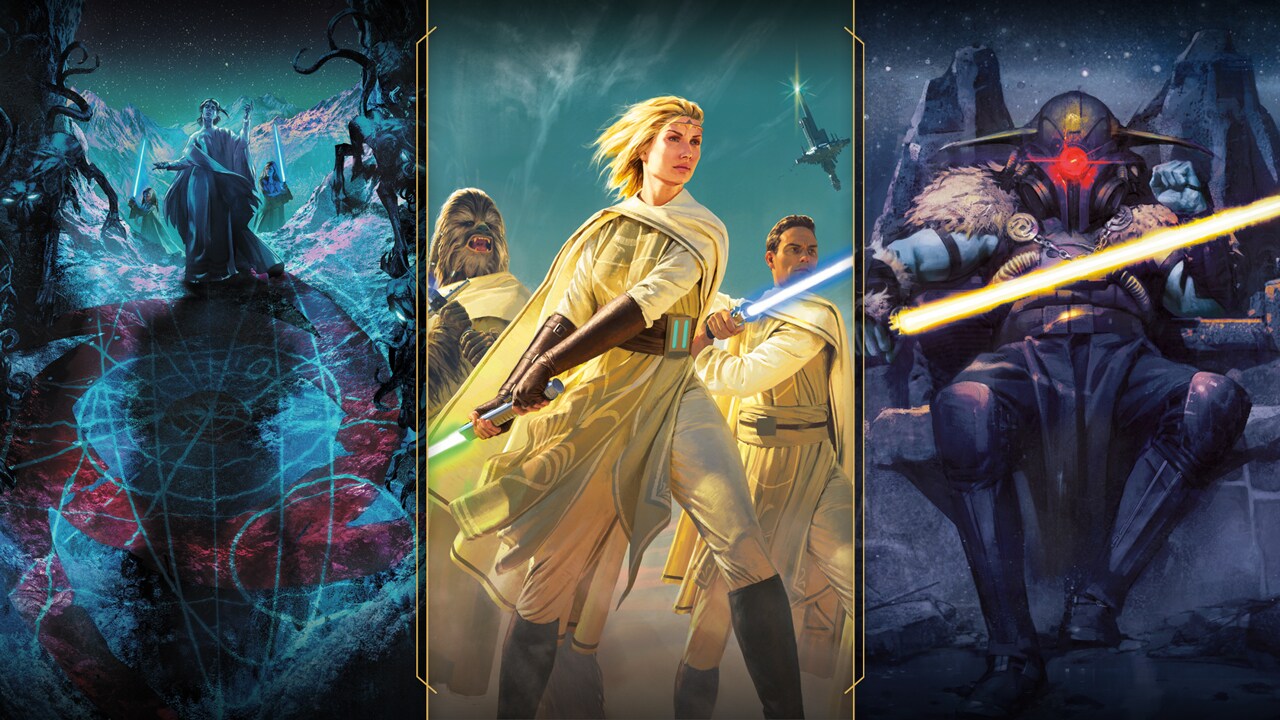

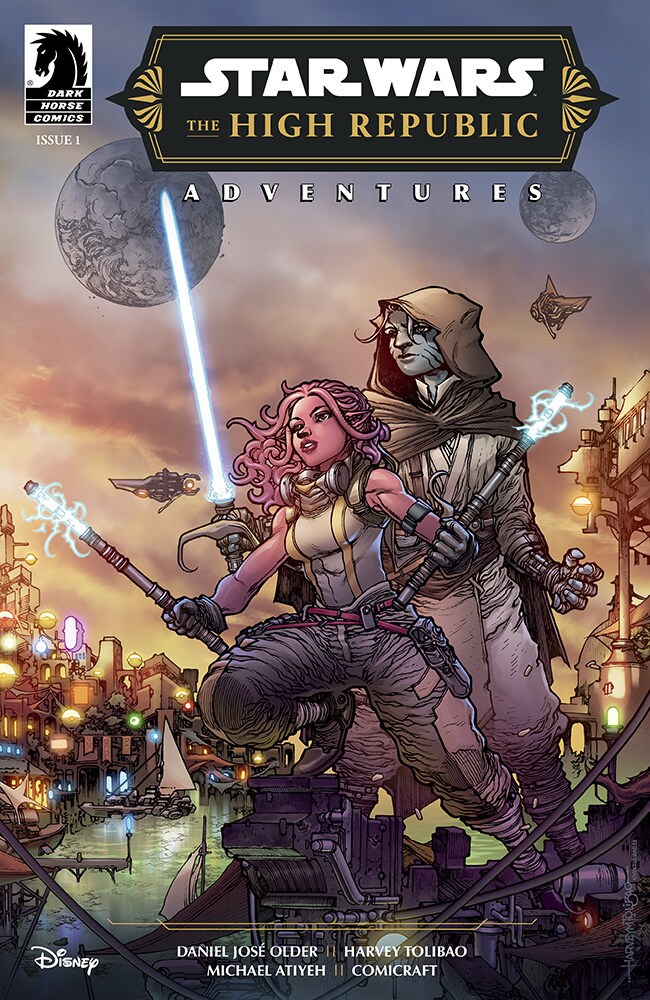
Image links open the official host or publisher page. This independent archive uses the images for commentary, identification, and research context.
Connected archive