The Reign of the Empire begins with a promise of order. Palpatine declares that the Republic will be reorganized into an Empire for the safety of its citizens, and the administrative machinery of the old government remains available for the new regime. The official era guide describes a galaxy ruled through treachery and deception while Jedi survivors are hunted. Stories such as The Bad Batch, Obi-Wan Kenobi, Solo, Andor, Rebels, and Tales of the Empire show what that transformation feels like from different social positions.
2026 archive update: Star Wars: Maul – Shadow Lord now adds another perspective to this era. StarWars.com classifies the series as Reign of the Empire and places Maul in the post-Clone Wars galaxy as he tries to rebuild a criminal syndicate while the new Imperial order is still consolidating. That makes organized crime another useful window into the transition: the Empire does not eliminate older power networks so much as force them to adapt around a more centralized state.
From clone state to imperial state
The first imperial task is to make the coup look like continuity. The Senate still meets. Officers keep their ranks. Supply chains, starports, prisons, archives, and communications networks continue operating. What changes is the meaning of the institutions. The Republic’s emergency measures become permanent. Military necessity becomes the language for reorganizing law. The clone army that defended the Republic becomes the template for an empire that wants obedience to be visible everywhere.
The Bad Batch follows the transition through Clone Force 99, Crosshair, Omega, and the gradual replacement of clones by recruited stormtroopers. The story makes labor and personhood impossible to separate. Clones are praised as loyal veterans when their skills are useful, then treated as obsolete when the state wants a larger population of replaceable soldiers. The Empire’s turn to conscription is therefore an economic policy as much as a military one: it removes responsibility from the state while widening the number of households tied to imperial pay.

A new calendar of power
Imperial rule changes how people experience time. Republic holidays, local assemblies, and military deployments are reorganized around the Emperor’s authority. New decrees arrive with deadlines. Curfews divide the day into permitted and forbidden hours. Work quotas and transport schedules turn local time into an imperial resource. A regime does not need to be present in every room if people begin organizing their routines around the possibility of inspection.
The transition also changes the meaning of public ceremony. Republic symbols remain visible in modified form, while Imperial banners, uniforms, and portraits enter schools, offices, ports, and government buildings. The purpose is not decoration. Repetition makes the regime appear ordinary. Children encounter the Empire as the background of daily life before they understand that another political order existed.
These changes help explain why the Empire can be both spectacular and mundane. A Star Destroyer communicates power from the sky, but a clerk checking a travel document communicates it at ground level. The state becomes durable when its authority is reproduced by thousands of small decisions made by people who may not identify as political participants.
Occupation, extraction, and the Inquisitors
Imperial power is felt most sharply on worlds that become resource zones, strategic corridors, or examples to others. Mines, factories, shipyards, agricultural systems, and prison complexes convert local landscapes into imperial assets. The regime does not need to be equally present everywhere. It needs enough checkpoints, informants, patrols, and exemplary punishments to make people calculate the risk of collective action.
The Inquisitors represent another layer of occupation. Former Jedi and Force-sensitive agents are reorganized into a hunting service whose purpose is both practical and symbolic. They search for survivors, but they also tell the population that the old spiritual order has been defeated. Vader is the terrifying center of that message, while figures such as the Grand Inquisitor, Reva Sevander, and the agents of Tales of the Empire show the complicated human material from which imperial violence is built.

Prisons, factories, and imperial labor
Imperial power becomes especially clear in places where work is compulsory. Mines, factories, shipyards, and prisons separate people from the products of their labor. The Empire presents this extraction as development, but the benefits move upward while the risks remain local. Workers lose control over time, movement, and the meaning of their own skills.
Narkina 5 turns labor into a system of repetition. Prisoners are organized into rooms, tables, shifts, and production targets. The design reduces personal contact while preserving enough cooperation to keep the factory operating. Its weakness is the same feature that gives it power. A system that depends on synchronized bodies can be disrupted when workers share information and act together.
The Empire treats laborers as replaceable because replaceability is politically useful. If a worker disappears, the regime can classify the loss as an operational cost. Resistance begins when people reject that classification. A name, a memory, or a shared plan turns an anonymous unit into a community capable of making demands.
Small resistances become networks
Andor is essential to this era because it refuses the idea that rebellion begins when a hero discovers their destiny. Cassian Andor moves through debt, theft, policing, prison labor, and clandestine organizing. Mon Mothma works inside elite politics while building a financial and logistical system that the Empire would criminalize. Luthen Rael turns art, secrecy, and sacrifice into an intelligence practice. Maarva Andor gives resistance a language of civic memory: a community is not only a population that shares a street; it is a people willing to remember what power wants erased.
The Aldhani operation, the prison at Narkina 5, and the uprising on Ferrix show three scales of resistance. A spectacular theft can fund a movement. A factory of prisoners can become a site of shared knowledge and revolt. A funeral can become a public assembly whose ritual form briefly exceeds the state’s ability to control it. These episodes reveal why empires fear culture: songs, signs, family names, uniforms, and burial practices can coordinate people without a central command.

Culture under censorship
The Empire does not need to eliminate every local culture. It needs to make cultural expression politically risky. Songs, funerals, family names, murals, religious gatherings, and oral histories can become evidence of disloyalty when they preserve a memory the state wants replaced. Surveillance is effective partly because it changes how people interpret their own behavior. A public celebration can become a security concern. A private joke can become a report.
This pressure produces coded communication. People use ordinary objects, rituals, and phrases to signal trust. A funeral procession can become a public assembly. A market can become a place to exchange intelligence. A damaged monument can become a reminder that the local past predates the Empire. These practices do not defeat the regime on their own, but they preserve relationships that make coordinated resistance possible.
Imperial censorship also affects people who support the regime. Officers learn to perform certainty because doubt can be dangerous to their careers. Contractors learn to separate technical work from moral responsibility. Civilians learn to describe violence as an unfortunate necessity. The culture of the Empire is therefore maintained by more than fanatics. It is maintained by habits that make responsibility easier to avoid.
Survivors and compromised protagonists
Obi-Wan Kenobi and Ahsoka Tano embody different responses to the purge. Obi-Wan hides in the desert and narrows his world to survival until Leia Organa’s rescue forces him to recover the moral practice he thought he had lost. Ahsoka works through aliases and networks, choosing when visibility will help or endanger the people around her. Kanan Jarrus, born Caleb Dume, grows from a traumatized Padawan into a teacher who makes the Jedi tradition available to a new community without reproducing the old temple’s certainties.
Hera Syndulla, Sabine Wren, Ezra Bridger, Zeb Orrelios, and Chopper turn the Ghost crew into a kin group assembled through shared risk rather than blood. Han Solo and Chewbacca show another form of relationship: an alliance born in the criminal margins that becomes a political commitment. Qi’ra and Crimson Dawn demonstrate how criminal syndicates can become alternative infrastructures when formal politics is closed. These characters matter because the Empire is never opposed by one ideology alone. It is opposed by former soldiers, smugglers, senators, grieving families, local organizers, and people who simply refuse the state’s account of their own lives.
Anthropology of imperial everyday life
Anthropology makes the Empire visible in the mundane. A ration, a work shift, an identity document, a curfew, a school lesson, a surveillance report, or a corporate contract can reveal more about power than a parade of destroyers. The Empire standardizes time and movement so that extraction can be measured. It names populations so that they can be sorted. It builds prisons where social difference is flattened into labor output. It turns local histories into security threats.
Resistance, by contrast, is often a practice of rehumanization. Clones insist on names. Prisoners share a map. A town turns a funeral into a declaration. A hidden Jedi teaches a child that fear does not have to be the final authority. The rebellion does not begin when everyone agrees on a constitution. It begins when people create relationships the regime cannot fully monetize, classify, or replace.

The Empire’s limits
The Empire appears omnipresent because its symbols travel farther than its personnel. A broadcast, a uniform, or a standardized form can make distant authority feel close. In practice, the regime depends on uneven cooperation. Local officials interpret orders. Contractors manage facilities. Informants decide what counts as suspicious. Officers compete for status and resources. The center can punish disobedience, but it cannot supervise every decision.
That weakness creates openings for resistance. Local knowledge can defeat a patrol that does not understand the landscape. A worker can alter a schedule without attracting immediate attention. A clerk can delay a record. A family can hide a fugitive because the local community knows which official is corrupt or which route is not watched. These actions matter because they challenge the Empire’s claim to complete knowledge.
The regime eventually responds by escalating punishment and centralizing control. That response can restore short-term obedience while increasing resentment and administrative cost. The Death Star is the extreme version of this logic: a weapon designed to eliminate the need for negotiation. Its existence shows both the Empire’s strength and its political failure. A government that can no longer persuade its subjects builds a machine intended to make persuasion unnecessary.
Imperial identity and social difference
The Empire presents standardization as fairness. One uniform, one chain of command, one official language, and one system of law appear to promise that local favoritism has been removed. In practice, standardization hides unequal treatment. Core worlds receive different levels of protection from occupied regions. Human officers receive privileges that many species do not. Corporations receive exemptions that ordinary workers cannot obtain.
Species and cultural difference become security categories. A community’s language, clothing, religion, or family structure can be treated as evidence of disloyalty when it does not fit imperial expectations. This pressure encourages assimilation in public while pushing local traditions into private spaces. The state can then describe the absence of visible difference as proof that the Empire has created unity.
Resistance often begins by refusing that definition of unity. People preserve names, accents, ceremonies, and local histories even when those practices carry risk. The rebellion does not need every community to become culturally identical. It needs people to recognize that the Empire’s promise of order depends on making difference politically dangerous.
Reading and viewing path
Watch The Bad Batch and Obi-Wan Kenobi for the immediate aftermath of Order 66; Maul – Shadow Lord for criminal power adapting to the new Imperial order; Solo for criminal economies and imperial militarization; Andor for occupation and political organizing; and the first half of Star Wars Rebels for the emergence of a cell into a larger alliance. Read Catalyst, the Kanan comic, and selected Darth Vader and Star Wars comics as supplementary perspectives on the Death Star project, Jedi survival, and imperial propaganda.
Sources and further reading
- Star Wars: Maul – Shadow Lord, StarWars.com
- Official Timeline: The Eras of Star Wars, StarWars.com
- Andor, StarWars.com
- The Bad Batch, StarWars.com
- Galactic Empire, StarWars.com Databank
- Rebel Alliance, StarWars.com Databank
Visual record
Images, objects, and echoes
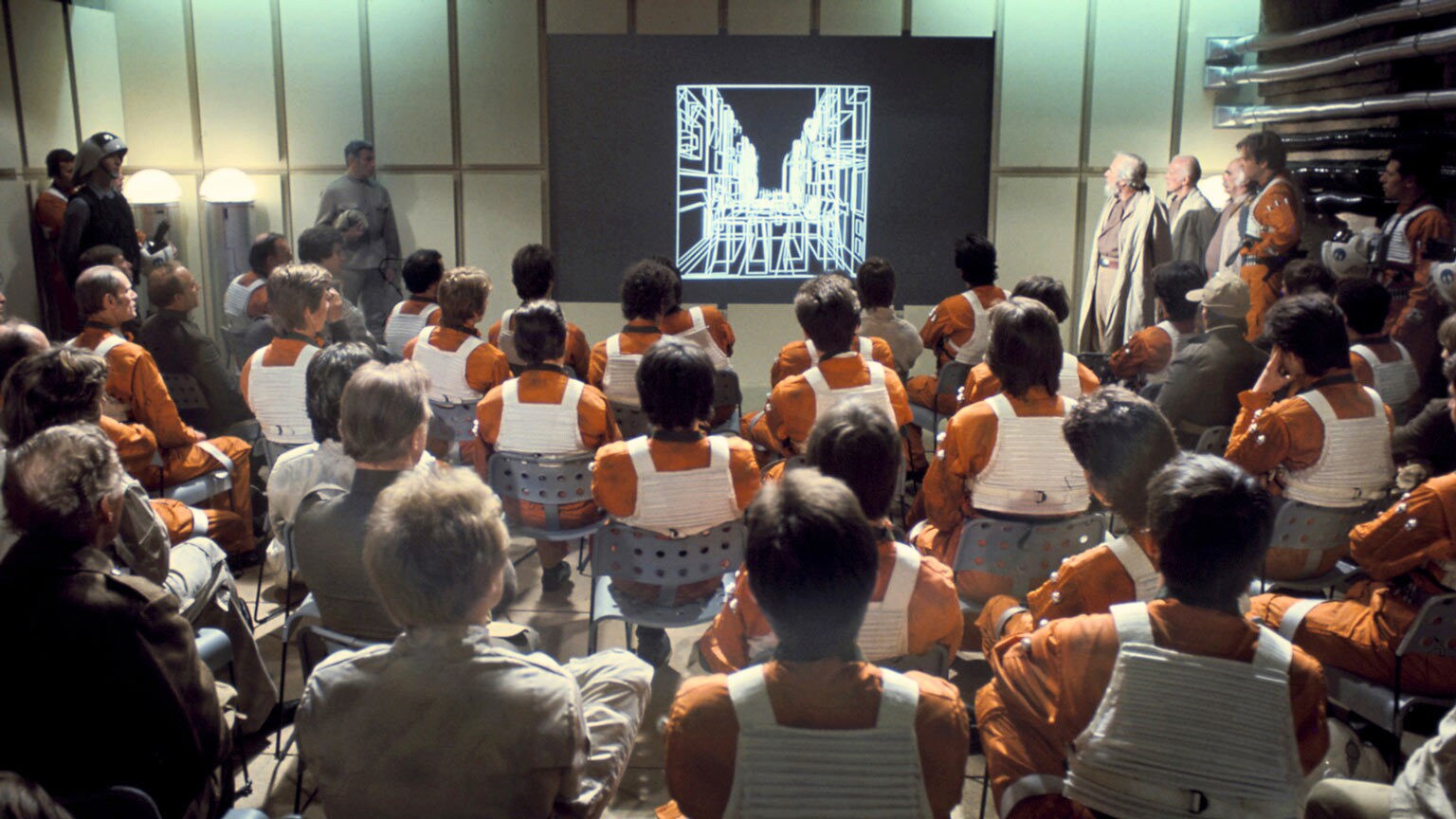
Official artwork and reference imagery used as visual anchors. Captions distinguish direct period evidence from later depictions of memory and lineage.
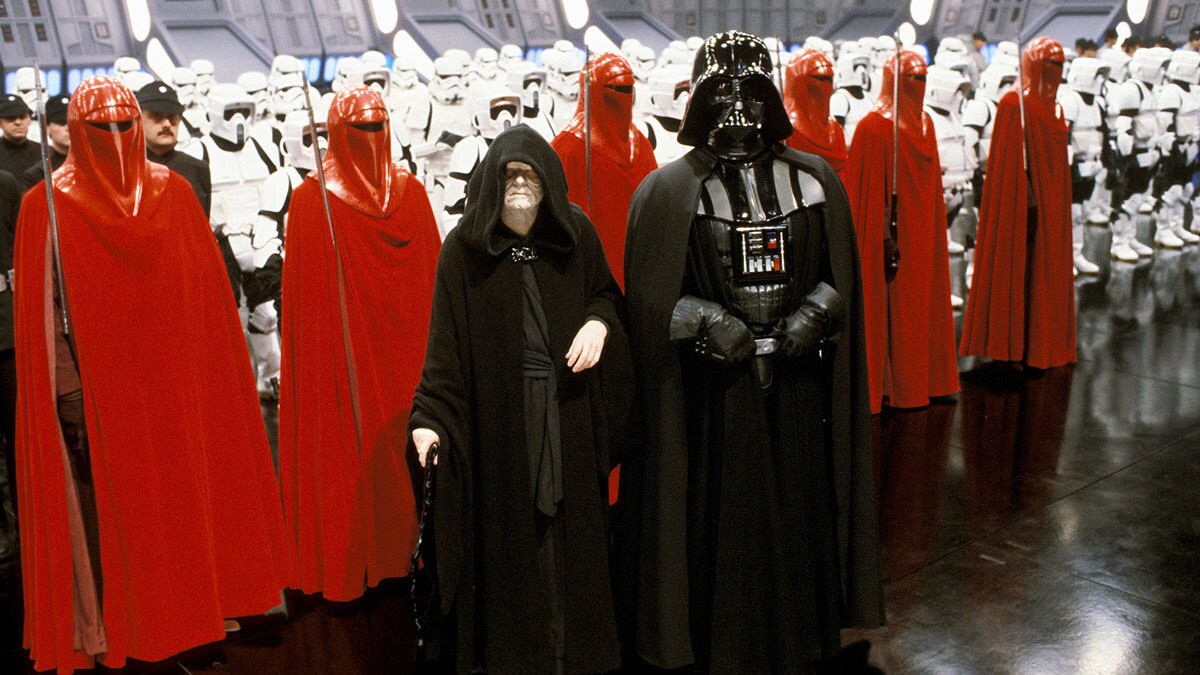

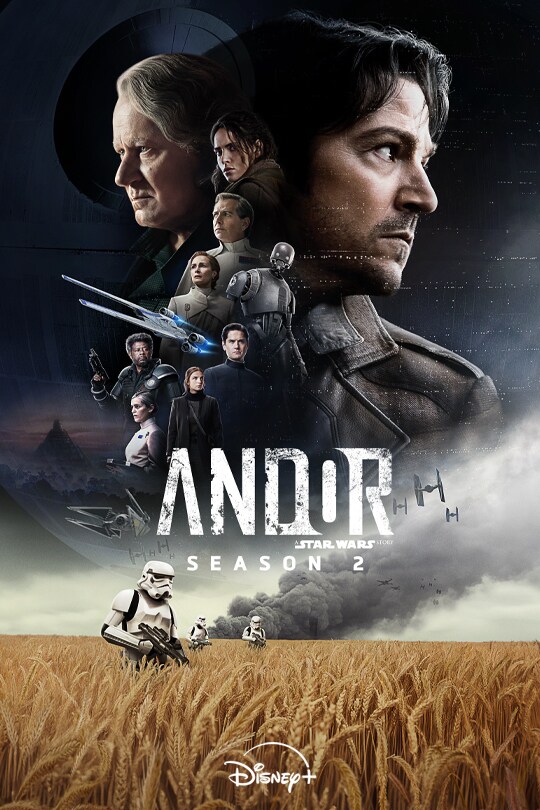

Image links open the official host or publisher page. This independent archive uses the images for commentary, identification, and research context.
Connected archive