The Dawn of the Jedi is the point at which Star Wars stops being a story about an established order and becomes a story about how orders are made. The official era guide places this period at the beginning of the mythic timeline: the Republic is founded in the Galactic Core, the Jedi emerge as guardians of the Force, and a schism gives rise to the Sith. Current canon keeps the boundary deliberately deep and open. That uncertainty is productive. It lets the era function less like a dated textbook chapter and more like an origin field in which later institutions remember themselves into existence.
A galaxy before one galaxy
Early galactic society is best understood as a problem of connection. Worlds may possess sophisticated local cultures without sharing a political language, a reliable route, or a common account of what the Force means. Hyperspace is not merely a faster road between planets; it is a social technology. Whoever charts a lane can change which communities trade, intermarry, migrate, raid, or become legible to a central authority. In this sense, the Republic is not born fully formed. It is an agreement that becomes possible when travel, communication, law, and ritual begin to synchronize.
The Jedi are likewise not born as a finished bureaucracy. The word describes a discipline and a community that gradually develops practices for training, mediation, healing, combat, and the interpretation of visions. Their later public identity—peacekeepers in service to the Republic—is an institutional settlement, not an eternal essence. The official Jedi Order record emphasizes the order’s long service to the Republic; this era asks what kinds of teachers, shrines, kin groups, and pilgrimage networks existed before that service became the dominant model.
Routes before institutions
Before a senate can represent distant worlds, people must be able to reach one another often enough to imagine a shared political space. Early hyperspace travel therefore changes more than transportation. It alters marriage patterns, trade partnerships, migration routes, military strategy, and the circulation of religious ideas. A world that was once separated by months or years of dangerous travel can become a participant in a regional network. A world left outside those routes can become isolated, exploited, or treated as culturally backward by communities that now move more easily.
The first Republic should be read against that uneven geography. Its founding is not a single ceremony that instantly creates a unified galaxy. It is a series of agreements among communities with different legal traditions and different ideas about sovereignty. Some worlds may join because shared defense is valuable. Others may join because commerce makes membership profitable. Some may remain formally independent while still relying on Republic routes, mediators, or medical knowledge. These differences persist into every later era, especially when the Republic claims that its laws apply more evenly than its resources do.
The Jedi emerge within this changing geography. A traveling Force tradition can mediate disputes between communities that do not share a language or a political history. It can also become a vehicle for cultural standardization. Training, robes, codes, and shared rituals make cooperation possible, but they may also make local traditions appear less legitimate. The early history of the Jedi is therefore a history of translation. The order must decide which practices can be shared, which must remain local, and who has the authority to make that decision.
The first schism and the invention of “the enemy”
Star Wars repeatedly returns to a political danger: a disagreement about how power should be used becomes a permanent category of person. The ancient Jedi–Sith schism is the original version. A debate over the Force, desire, authority, or forbidden knowledge hardens into exile and then into a civilization-scale opposition. The Sith are not simply “bad Jedi.” The official Sith entry describes an ancient order devoted to the dark side through hate, deception, and greed, but the historical question is how a minority tradition turns into a durable identity with rituals, texts, symbols, and claims to rule.
From an anthropological perspective, schism creates archives. Both sides preserve stories about the betrayal, and each story explains why the other side must be watched. A lightsaber becomes more than a weapon: it is an heirloom of discipline, a sign of belonging, and eventually a material shorthand for moral alignment. The later red blade, temple ruin, and forbidden holocron are therefore cultural objects as much as plot devices. They make a contested past portable.

Authority, initiation, and material culture
Every religious or philosophical order has to turn ideas into repeated behavior. A belief in the Force becomes visible through initiation ceremonies, rules about weapons, forms of meditation, systems of apprenticeship, and decisions about who may teach. These practices create a recognizable community. They also create boundaries. A person may feel the Force without being accepted as a Jedi, just as a community may use Force traditions without recognizing the authority of a distant temple.
Material objects help stabilize those boundaries. A blade, a robe, a shrine, a carved symbol, or a recorded teaching can travel farther than its maker. It can be shown to a stranger as evidence of shared ancestry. It can also be taken, copied, or reinterpreted by a rival group. The later Jedi and Sith obsession with holocrons, temples, and ancient weapons reflects this older problem: whoever controls the object can influence the story attached to it.
Legends expands this question through Tython and the Je'daii. The Je'daii are not simply an early version of the Jedi. They represent a society still negotiating what balance means, how training should be organized, and whether the Force should be approached through institutions or individual practice. The distinction matters because an origin story often hides the conflicts that made the final institution possible. The Jedi seem inevitable only after later generations have forgotten the alternatives that were rejected.
Legends field notes: the Je'daii and Tython
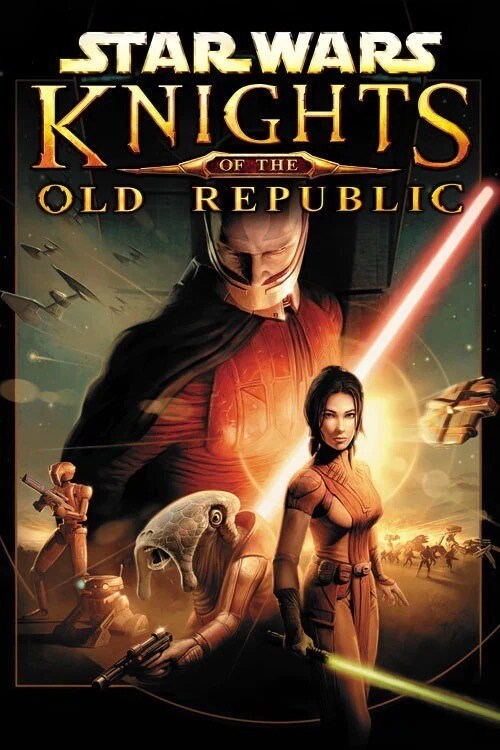
Legends supplement. The Dawn of the Jedi comics from Dark Horse and Tim Lebbon’s novel Into the Void give this otherwise open period a detailed imaginative archaeology. They place early Force traditions among the Je'daii on Tython, a world where balance is treated as a lived discipline rather than a slogan. Characters such as Shae Koda, Sek'nos Rath, Tasha Ryo, and Daegen Lok inhabit a society in which exploration, clan loyalty, spiritual practice, and technology are entangled.
The value of this material is not that it secretly supplies a canon date. It supplies a vocabulary for thinking about the origins of an order. Tython’s storm-ridden geography externalizes an argument about balance; the Rakatan threat connects local spirituality to imperial violence; and the Je'daii show that a Force tradition can look like a network of initiations, rival schools, and place-based obligations before it becomes a centralized Jedi temple system. In the Legends continuity, the first Sith are a historical diaspora from that dispute, not an abstract evil that appears without social conditions.
Names, figures, and conflicts to know
Because the canon Dawn is still a framework rather than a fully narrated saga, the most important “characters” are institutional ancestors: the founders of the Jedi and Republic, the unnamed communities whose routes make a republic possible, and the first dissenters who become Sith. In Legends, the key names are the Je'daii protagonists above, the Rakatan Infinite Empire, and later Sith ancestors whose teachings echo through Naga Sadow, Marka Ragnos, and Darth Bane. The conflicts are correspondingly foundational: the negotiation of a common law, the struggle over whether balance means equilibrium or restraint, and the violence that follows when a spiritual disagreement becomes a politics of domination.
Readers should resist the temptation to treat this as a simple “good civilization versus bad civilization” prologue. The Jedi and Sith both grow out of the same Force-bearing world. Their separation makes moral difference visible, but it also makes each tradition dependent on the other as a remembered opposite. That relational structure is one reason the saga can keep returning to ancient Sith ruins and forgotten Jedi sites without making the past feel finished.
The Republic as social compact
A republic becomes real when people expect obligations to travel with membership. Protection should reach beyond the capital. A dispute should be answerable to some shared process. A world that contributes resources should have a voice in how those resources are used. None of these promises requires every planet to become culturally identical. They require a political relationship that people can recognize in practice.
That relationship is difficult to establish across species, languages, environments, and forms of authority. A monarch, a clan council, a corporate board, and a village assembly may all claim to represent their people, but they do not make decisions in the same way. Early Republic diplomacy must therefore translate not only words but institutions. The Jedi can help because they are trained to mediate, but their presence also raises a question that will return in the High Republic and the prequels: does mediation remain neutral when one side has greater access to the Republic’s power?
The Republic’s first successes probably depend on practical compromises rather than complete agreement. Local law can remain in place if it does not interfere with shared defense. Religious practices can remain independent if they do not threaten the rights of other communities. Trade can expand while some regions remain outside direct administration. Such compromises create flexibility, but they also create ambiguity. Later rulers can claim that the Republic has always possessed more authority than its founders intended.
Anthropology of an origin story
Origin stories tell a community what kind of difference is acceptable. The Jedi origin says that power should be trained, disciplined, and placed in service to others. The Sith origin says that power can be claimed, intensified, and made sovereign. Neither statement is only philosophical. Each becomes a way to organize childhood, clothing, architecture, burial, apprenticeship, and political authority. A temple teaches by controlling movement: who may enter, who may speak, who may carry a weapon, and how a novice’s body is trained. A Sith citadel teaches through hierarchy, secrecy, and the display of accumulated power.
The early Republic adds another layer: a federation is also an origin story. It promises that distant worlds can retain difference while sharing enough law to travel, trade, and defend one another. Every later crisis—the Clone Wars, the Empire, the First Order—tests that promise. That is why the Dawn of the Jedi belongs at the front of a timeline even when its specific dates remain unsettled: it contains the political grammar that later eras repeatedly try to repair or weaponize.

What the origin stories leave behind
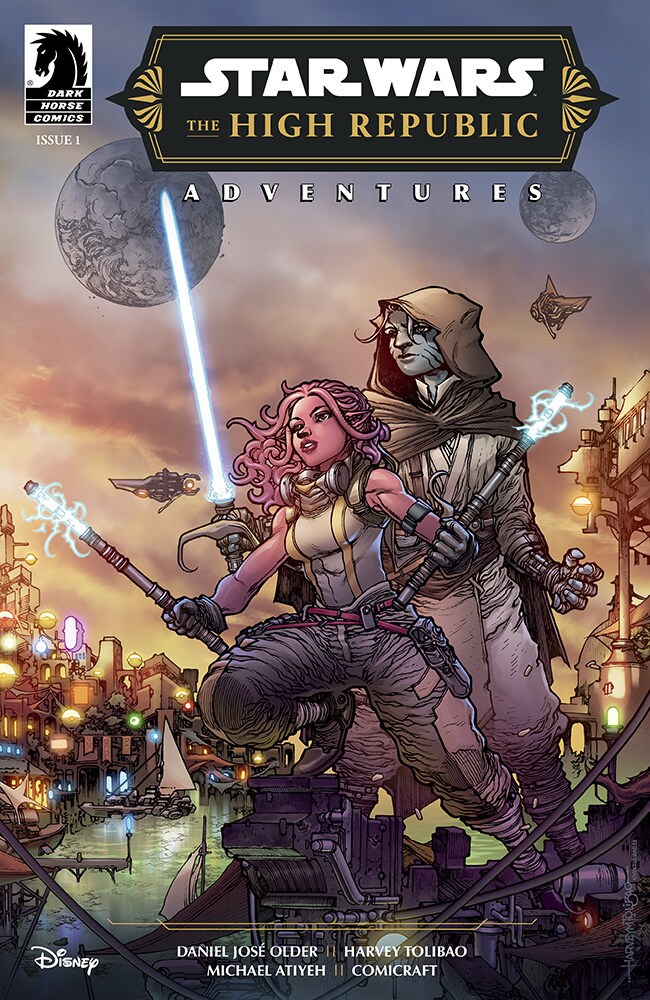
The Dawn of the Jedi continues to matter because later eras repeatedly return to the question of whether institutions can remember their purposes. The High Republic presents the Jedi as confident public servants. The prequel era shows that confidence becoming entangled with government and war. Luke’s generation inherits ruins and incomplete teachings. Rey inherits a library, a name, and the responsibility to decide whether preservation means repetition.
The Sith inherit a different kind of past. Their authority depends on claiming that earlier masters possessed a truth the Republic and Jedi tried to suppress. Tombs, masks, blades, and forbidden records make the dead into political participants. A Sith leader can present conquest as restoration because the object or ritual seems older than the government being challenged. The age of the first schism therefore continues as a contest over who can define the past.
For an anthropological reading, the most important figures in this era are not only named founders. They include the people who built routes, maintained shrines, translated law, cared for children, and decided which local practices could enter a shared public culture. The galaxy becomes connected through ordinary work. The institutions later remembered as eternal begin as negotiated arrangements among communities trying to survive contact with one another.

Small communities in the founding era
Large institutions begin with small practices. Before a Republic can standardize law, communities must decide how to share food, settle disputes, mark adulthood, bury their dead, and respond to strangers. Those decisions create local political cultures that later governments inherit. A planetary government may have a senate, a clan council, or a religious authority long before it joins a wider federation.
Contact with the Republic changes these practices without replacing them all at once. New routes bring new goods and new marriages, but they also bring arguments about land, labor, and authority. A local community may accept a Jedi mediator while refusing to surrender control of its ceremonies. Another may seek Republic protection but insist that its own elders decide how justice works. The founding period is therefore not only the creation of universal institutions. It is also the preservation and renegotiation of local life.
These small communities disappear from official origin stories because later institutions prefer to remember founders and battles. An anthropological timeline restores them to view. The Jedi and Republic become possible because ordinary people develop ways to live with difference before a central order can claim credit for doing so.
Reading path
Start with the official Eras of Star Wars overview and the Sith Databank entry for the current canon frame. For Legends archaeology, look for Dark Horse’s Dawn of the Jedi: Force Storm and the novel Dawn of the Jedi: Into the Void. Read them as a parallel historical imagination, not as a hidden canon chronology.
Sources and further reading
- Official Timeline: The Eras of Star Wars, StarWars.com
- Jedi Order, StarWars.com Databank
- Sith, StarWars.com Databank
- Dawn of the Jedi: Force Storm, Dark Horse Comics
- Legends continuity policy, StarWars.com
Visual record
Images, objects, and echoes
Official artwork and reference imagery used as visual anchors. Captions distinguish direct period evidence from later depictions of memory and lineage.
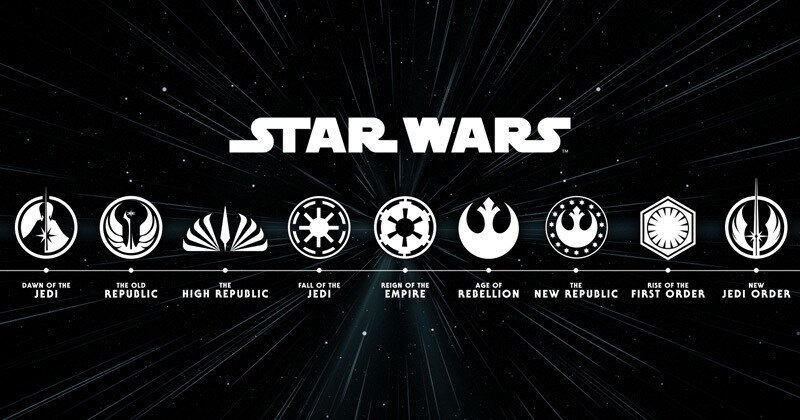



Image links open the official host or publisher page. This independent archive uses the images for commentary, identification, and research context.
Connected archive