Anakin Skywalker begins as a gifted child from Tatooine whose connection to the Force attracts Qui-Gon Jinn and the attention of the Jedi Council. His talent is matched by fear, anger, and a deep concern that the people he loves will be taken from him.
As a Jedi Knight and Clone Wars general, Anakin becomes an effective but increasingly impatient commander. His attachment to Padmé and his frustration with the Council make Palpatine’s manipulation easier.
Anakin’s fall creates Darth Vader, but the story does not end with the transformation. His love for Luke allows him to reject the Emperor and return to the light, making his choices central to both the tragedy and the hope of the saga.
Character in social context
Anakin Skywalker enters this archive as the gifted jedi whose fear, love, and choices create the central tragedy of the saga.. The short account describes Anakin Skywalker begins as a gifted child from Tatooine whose connection to the Force attracts Qui-Gon Jinn and the attention of the Jedi Council. His talent is matched by fear, anger, and a deep concern that the people he loves will be taken from him.. That account identifies a social position as much as a plot event. Anakin Skywalker is recognized through obligations, institutions, material practices, and the people who can reward, discipline, shelter, or abandon them.
The profile’s anthropology insight is Anakin’s story shows how apprenticeship can function as kinship. The Jedi call the relationship training, but battlefield dependence and emotional attachment make Obi-Wan, Ahsoka, and Padmé part of a competing social world that the Order cannot fully regulate. Read alongside the story, this suggests that Anakin Skywalker's choices are shaped by Jedi apprenticeship, the Order’s council structures, and the competing traditions that claim authority over the Force. The question is not whether Anakin Skywalker is simply heroic, villainous, loyal, or dangerous. It is how those labels become persuasive and what they hide.
A biography becomes more intelligible when the surrounding community is kept in view. The archive follows the relationships that make Anakin Skywalker possible, the institutions that constrain Anakin Skywalker, and the objects through which Anakin Skywalker becomes visible to others.
Formation, training, and social position
No biography begins at the moment of first appearance. Anakin Skywalker arrives with inherited histories, learned habits, unfinished obligations, and ideas about what a person is allowed to become. Those histories may be private, but institutions make them legible through rank, reputation, family, schooling, service, or exclusion.
Anakin Skywalker learns through apprenticeship, discipline, meditation, and the transmission of embodied knowledge. Training is never only the acquisition of a skill. It teaches posture, vocabulary, timing, acceptable emotion, and the difference between knowledge that may be shared and knowledge that must remain guarded.
Social position changes when Anakin Skywalker crosses a boundary: entering an order, leaving a home, surviving a war, changing allegiance, accepting a title, or being recognized by a new community. Each transition creates possibilities while also producing debts to the people and institutions left behind.

Institutions and the distribution of power
Jedi apprenticeship, the Order’s council structures, and the competing traditions that claim authority over the Force gives Anakin Skywalker a vocabulary for authority. It defines legitimate command, acceptable violence, proper loyalty, and the forms of evidence that count as knowledge. The institution may appear stable, but Anakin Skywalker’s biography reveals the work required to maintain it.
Authority reaches the body. Uniforms, armor, scars, hair, weapons, gestures, and controlled movement let observers identify rank and affiliation before a word is spoken. These signs are material arguments about who may enter a room, give an order, claim protection, or be treated as a threat.
When Anakin Skywalker obeys, questions, or leaves an institution, the conflict is both personal and political. The choice changes relationships, but it also tests whether the institution can tolerate dissent, repair harm, or imagine belonging outside its own rules.
Kinship, community, and belonging
Belonging is not only a feeling. It is a set of rights, duties, stories, names, and practical expectations. masters, students, allies, civilians, and other communities that do not share one definition of responsibility For Anakin Skywalker, these relationships establish what counts as protection and what counts as betrayal.
Kinship can be inherited, chosen, ritualized, or imposed. A mentor may function as a parent, a crew as a household, a clan as a political nation, or a rival as the person who best understands an obligation. The story’s emotional force often comes from these overlapping forms of relatedness.
Moments of separation show how communities define themselves. Exile, adoption, recruitment, imprisonment, marriage, apprenticeship, and reconciliation all reorganize the social map around Anakin Skywalker. The character’s identity changes because other people change the terms under which recognition is offered.
Labor, tools, and material culture
Work reveals the practical structure of Anakin Skywalker’s world. Survival, command, caregiving, intelligence, combat, teaching, trade, and maintenance all require labor that may be celebrated, hidden, or exploited. Studying that work moves attention away from exceptional moments and toward the systems that make them possible.
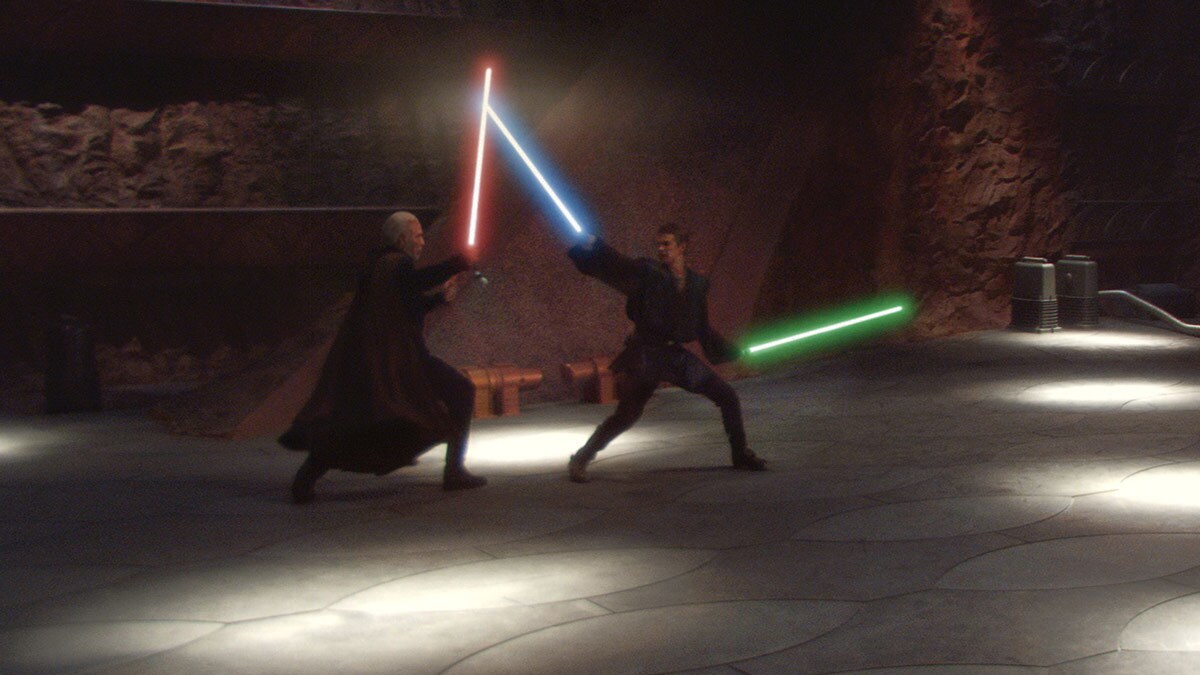
lightsabers, robes, archives, ships, and the spaces where instruction becomes public. These objects do more than establish a visual style. They carry memory, mark status, distribute risk, and limit the choices available to the people who use them. A tool can be a livelihood, a weapon, an heirloom, or evidence of institutional control.
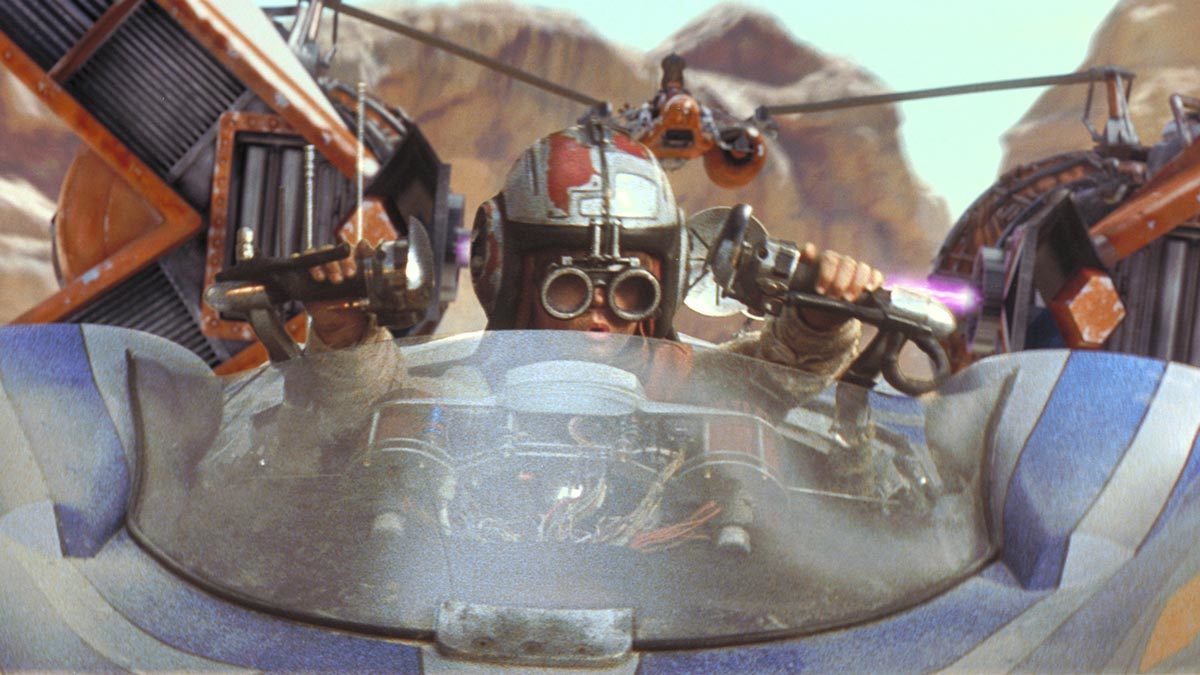
The collector record preserves these material traces. Anakin cards connect the prequels, Clone Wars, Padmé, Obi-Wan, podracing, blue lightsabers, and the transition into Vader.. A card or image can therefore be read as a small archive of social relations rather than only as a portrait.
Body, environment, and representation
The body of Anakin Skywalker is read by other people before the character can explain it. Species, gender, age, clothing, scars, posture, accent, and visible technology become evidence used to assign danger, authority, beauty, weakness, or trust. These readings are social judgments, not neutral observations.
Places also shape identity. Homes, temples, prisons, ships, battlefields, workshops, courts, and frontier settlements offer different forms of shelter and different ways to be seen. Anakin Skywalker becomes a different kind of social person when the surrounding environment changes the risks and relationships available.
This is why the visual record matters. Images show how the story places Anakin Skywalker among other bodies, objects, and landscapes. A full-size scene can reveal hierarchy, distance, care, surveillance, or exclusion that a cropped portrait would conceal.
Memory, narrative, and historical change
Memory is a social resource. Communities use names, rituals, monuments, songs, testimony, archives, and rumors to decide which parts of Anakin Skywalker’s life should endure. Those practices can honor a person, justify a regime, conceal violence, or give survivors a language for repair.
the survival of Jedi memory after the Order’s political collapse. The character’s later meaning is therefore not fixed by the earliest account. New institutions reinterpret old actions, and new generations inherit both the consequences and the arguments surrounding them.
The archive keeps confirmed history, interpretation, canon, and Legends status distinct because each category answers a different question. Historical placement asks what the story establishes. Anthropology asks how people organize meaning around it. Collector context asks how material objects carry that meaning forward.
Anthropological assessment
The strongest anthropological claim in this file is that Anakin’s story shows how apprenticeship can function as kinship. The Jedi call the relationship training, but battlefield dependence and emotional attachment make Obi-Wan, Ahsoka, and Padmé part of a competing social world that the Order cannot fully regulate. The claim matters because it connects personal identity to institutions, relationships, environments, and material culture.
This assessment is interpretation, not a replacement for canon. The confirmed story establishes the events and relationships. The anthropological reading asks what those events reveal about authority, kinship, labor, training, knowledge, and the boundaries of political belonging.
Anakin Skywalker is therefore not reduced to a moral label or a dramatic role. The profile treats Anakin Skywalker as a person moving through social worlds that distribute recognition, risk, care, and memory unevenly. That is what makes the character historically and anthropologically useful to this archive.
Attachment inside an institution that distrusts it
Anakin’s most important relationships do not fit neatly inside Jedi rules. Obi-Wan is master, brother, and family. Ahsoka is student, comrade, and someone Anakin feels personally responsible for protecting. Padmé is a secret spouse whose existence forces him to split his public and private identities.
The problem is not that Anakin simply has relationships. It is that he has few safe ways to discuss fear, grief, jealousy, or dependence without risking judgment or exposure. The result is an emotional life managed through secrecy.
War normalizes the future Vader
The Clone Wars give Anakin authority, soldiers, repeated exposure to death, and permission to solve political problems through military force. Traits praised in wartime, decisiveness, aggression, loyalty to his own people, and willingness to break procedure, become increasingly dangerous when removed from battlefield limits.
Palpatine exploits that transition by offering Anakin a form of recognition the Jedi cannot provide. His fall is therefore not one sudden personality change. It is the convergence of personal fear, institutional secrecy, wartime habits, and a political mentor who turns each weakness into leverage.
Collector note: Anakin cards connect the prequels, Clone Wars, Padmé, Obi-Wan, podracing, blue lightsabers, and the transition into Vader.
Sources and further reading
Connected archive