Han Solo begins as a Corellian smuggler who trusts his ship, his aim, and his ability to leave before trouble becomes personal. His partnership with Chewbacca and his meeting with Luke and Leia force him to reconsider that distance.
Han’s importance comes from repeated choices. He returns to help Luke at Yavin, stays with the Rebel Alliance, leads the Endor ground mission, and becomes a general despite never fitting the image of a traditional officer.
After the Battle of Endor, Han and Leia build a family, but the loss of Ben Solo to the dark side reopens old wounds. Han’s final attempt to reach his son on Starkiller Base is one of the saga’s most painful examples of loyalty.
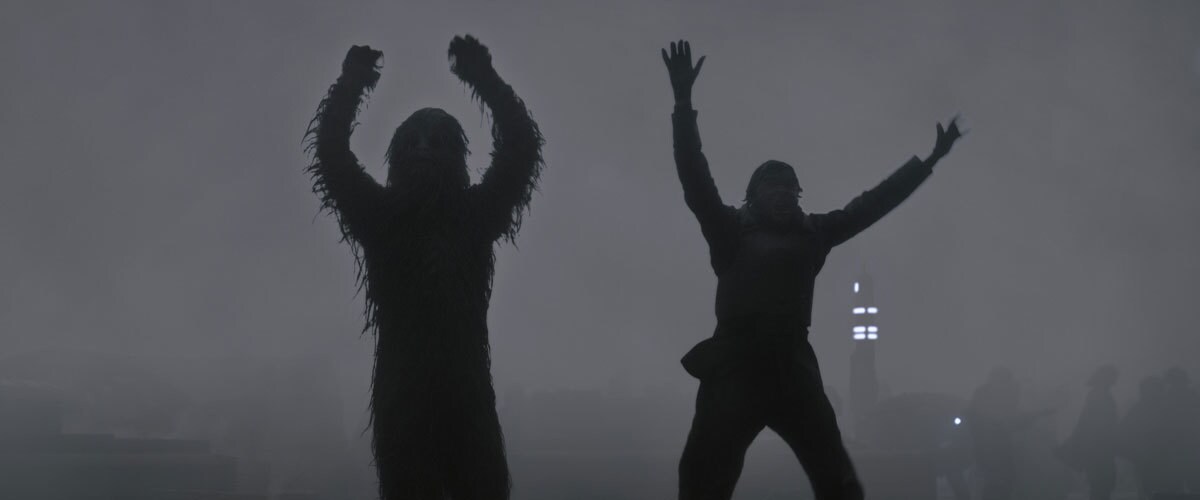
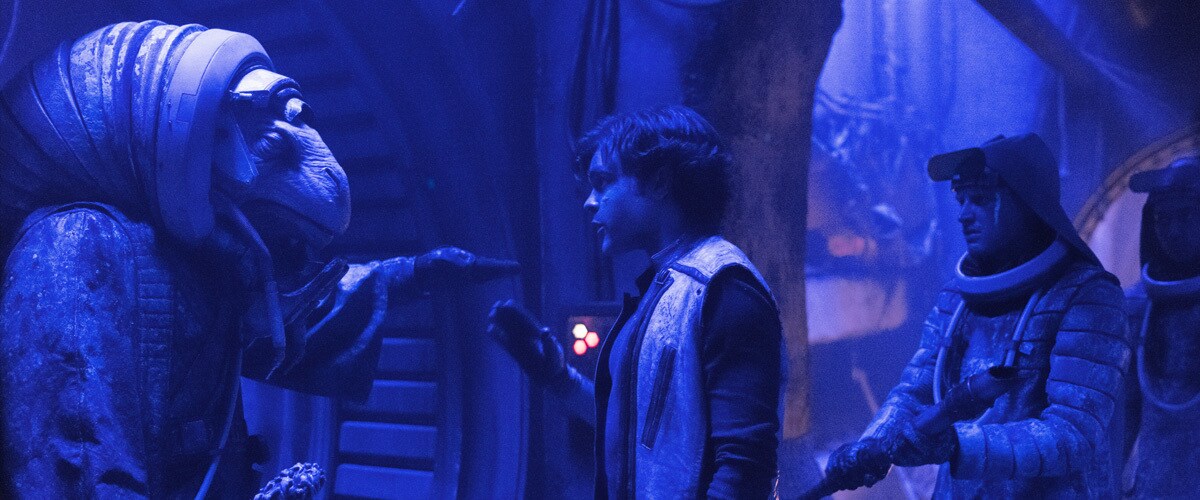
Character in social context
Han Solo enters this archive as a self-interested smuggler who chooses the rebellion and keeps choosing his friends.. The short account describes Han Solo begins as a Corellian smuggler who trusts his ship, his aim, and his ability to leave before trouble becomes personal. His partnership with Chewbacca and his meeting with Luke and Leia force him to reconsider that distance.. That account identifies a social position as much as a plot event. Han Solo is recognized through obligations, institutions, material practices, and the people who can reward, discipline, shelter, or abandon them.
The profile’s anthropology insight is Han’s movement from smuggler to military leader shows how frontier identities become political resources. His reputation, ship, and debt networks are forms of social capital that can be redirected from individual survival toward collective action. Read alongside the story, this suggests that Han Solo's choices are shaped by Jedi apprenticeship, the Order’s council structures, and the competing traditions that claim authority over the Force. The question is not whether Han Solo is simply heroic, villainous, loyal, or dangerous. It is how those labels become persuasive and what they hide.
A biography becomes more intelligible when the surrounding community is kept in view. The archive follows the relationships that make Han Solo possible, the institutions that constrain Han Solo, and the objects through which Han Solo becomes visible to others.
Formation, training, and social position
No biography begins at the moment of first appearance. Han Solo arrives with inherited histories, learned habits, unfinished obligations, and ideas about what a person is allowed to become. Those histories may be private, but institutions make them legible through rank, reputation, family, schooling, service, or exclusion.
Han Solo learns through apprenticeship, discipline, meditation, and the transmission of embodied knowledge. Training is never only the acquisition of a skill. It teaches posture, vocabulary, timing, acceptable emotion, and the difference between knowledge that may be shared and knowledge that must remain guarded.
Social position changes when Han Solo crosses a boundary: entering an order, leaving a home, surviving a war, changing allegiance, accepting a title, or being recognized by a new community. Each transition creates possibilities while also producing debts to the people and institutions left behind.

Institutions and the distribution of power
Jedi apprenticeship, the Order’s council structures, and the competing traditions that claim authority over the Force gives Han Solo a vocabulary for authority. It defines legitimate command, acceptable violence, proper loyalty, and the forms of evidence that count as knowledge. The institution may appear stable, but Han Solo’s biography reveals the work required to maintain it.
Authority reaches the body. Uniforms, armor, scars, hair, weapons, gestures, and controlled movement let observers identify rank and affiliation before a word is spoken. These signs are material arguments about who may enter a room, give an order, claim protection, or be treated as a threat.
When Han Solo obeys, questions, or leaves an institution, the conflict is both personal and political. The choice changes relationships, but it also tests whether the institution can tolerate dissent, repair harm, or imagine belonging outside its own rules.
Kinship, community, and belonging
Belonging is not only a feeling. It is a set of rights, duties, stories, names, and practical expectations. masters, students, allies, civilians, and other communities that do not share one definition of responsibility For Han Solo, these relationships establish what counts as protection and what counts as betrayal.
Kinship can be inherited, chosen, ritualized, or imposed. A mentor may function as a parent, a crew as a household, a clan as a political nation, or a rival as the person who best understands an obligation. The story’s emotional force often comes from these overlapping forms of relatedness.
Moments of separation show how communities define themselves. Exile, adoption, recruitment, imprisonment, marriage, apprenticeship, and reconciliation all reorganize the social map around Han Solo. The character’s identity changes because other people change the terms under which recognition is offered.
Labor, tools, and material culture
Work reveals the practical structure of Han Solo’s world. Survival, command, caregiving, intelligence, combat, teaching, trade, and maintenance all require labor that may be celebrated, hidden, or exploited. Studying that work moves attention away from exceptional moments and toward the systems that make them possible.
lightsabers, robes, archives, ships, and the spaces where instruction becomes public. These objects do more than establish a visual style. They carry memory, mark status, distribute risk, and limit the choices available to the people who use them. A tool can be a livelihood, a weapon, an heirloom, or evidence of institutional control.
The collector record preserves these material traces. Han cards center on the Millennium Falcon, Chewbacca, the blaster, the Original Trilogy, Solo, carbonite, and his relationship with Leia.. A card or image can therefore be read as a small archive of social relations rather than only as a portrait.
Body, environment, and representation
The body of Han Solo is read by other people before the character can explain it. Species, gender, age, clothing, scars, posture, accent, and visible technology become evidence used to assign danger, authority, beauty, weakness, or trust. These readings are social judgments, not neutral observations.
Places also shape identity. Homes, temples, prisons, ships, battlefields, workshops, courts, and frontier settlements offer different forms of shelter and different ways to be seen. Han Solo becomes a different kind of social person when the surrounding environment changes the risks and relationships available.
This is why the visual record matters. Images show how the story places Han Solo among other bodies, objects, and landscapes. A full-size scene can reveal hierarchy, distance, care, surveillance, or exclusion that a cropped portrait would conceal.
Memory, narrative, and historical change
Memory is a social resource. Communities use names, rituals, monuments, songs, testimony, archives, and rumors to decide which parts of Han Solo’s life should endure. Those practices can honor a person, justify a regime, conceal violence, or give survivors a language for repair.
the survival of Jedi memory after the Order’s political collapse. The character’s later meaning is therefore not fixed by the earliest account. New institutions reinterpret old actions, and new generations inherit both the consequences and the arguments surrounding them.
The archive keeps confirmed history, interpretation, canon, and Legends status distinct because each category answers a different question. Historical placement asks what the story establishes. Anthropology asks how people organize meaning around it. Collector context asks how material objects carry that meaning forward.
Anthropological assessment
The strongest anthropological claim in this file is that Han’s movement from smuggler to military leader shows how frontier identities become political resources. His reputation, ship, and debt networks are forms of social capital that can be redirected from individual survival toward collective action. The claim matters because it connects personal identity to institutions, relationships, environments, and material culture.
This assessment is interpretation, not a replacement for canon. The confirmed story establishes the events and relationships. The anthropological reading asks what those events reveal about authority, kinship, labor, training, knowledge, and the boundaries of political belonging.
Han Solo is therefore not reduced to a moral label or a dramatic role. The profile treats Han Solo as a person moving through social worlds that distribute recognition, risk, care, and memory unevenly. That is what makes the character historically and anthropologically useful to this archive.
Independence built through networks
Han presents himself as a self-interested smuggler, but his survival has always depended on relationships: Chewbacca, mechanics, gamblers, clients, criminal contacts, and people willing to extend trust or credit.
The image of the independent pilot therefore rests on a dense social network that becomes visible whenever those relationships break down.
From contract thinking to collective obligation
Joining the Rebellion changes the scale of Han’s commitments. He begins by measuring risk against payment and personal survival, then repeatedly returns to fights from which he could have walked away.
That shift does not erase his skepticism. It shows how political belonging can grow from specific loyalties until the line between helping friends and serving a larger cause becomes difficult to separate.
Collector note: Han cards center on the Millennium Falcon, Chewbacca, the blaster, the Original Trilogy, Solo, carbonite, and his relationship with Leia.
Sources and further reading
LEGO collector picks
Han Solo and the Millennium Falcon
Official LEGO Star Wars sets with a direct connection to this character or their signature ship, equipment, or story.
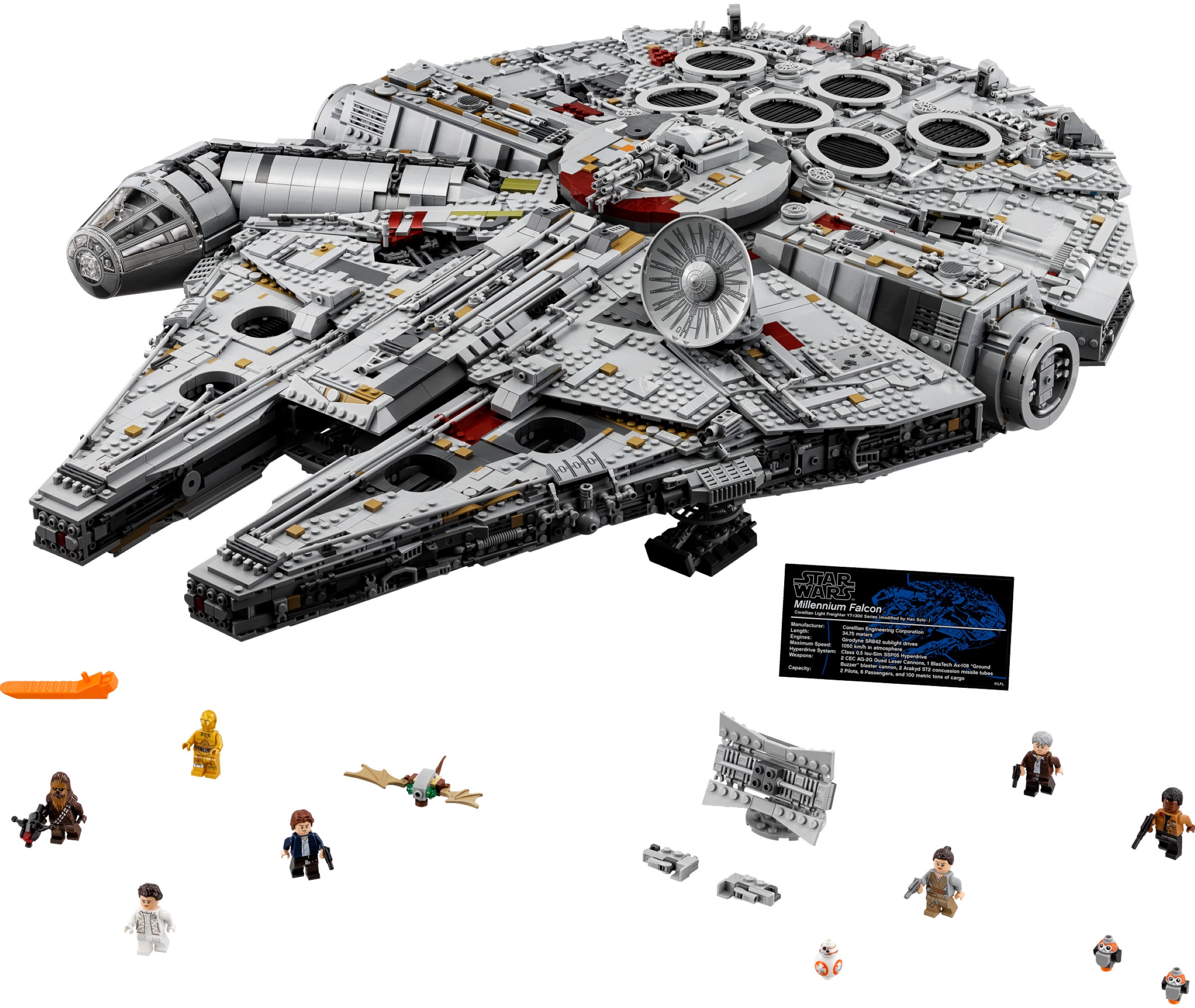
Millennium Falcon 75192
The large UCS Millennium Falcon is the definitive collector build of Han's signature ship.
Shop at LEGO.com ↗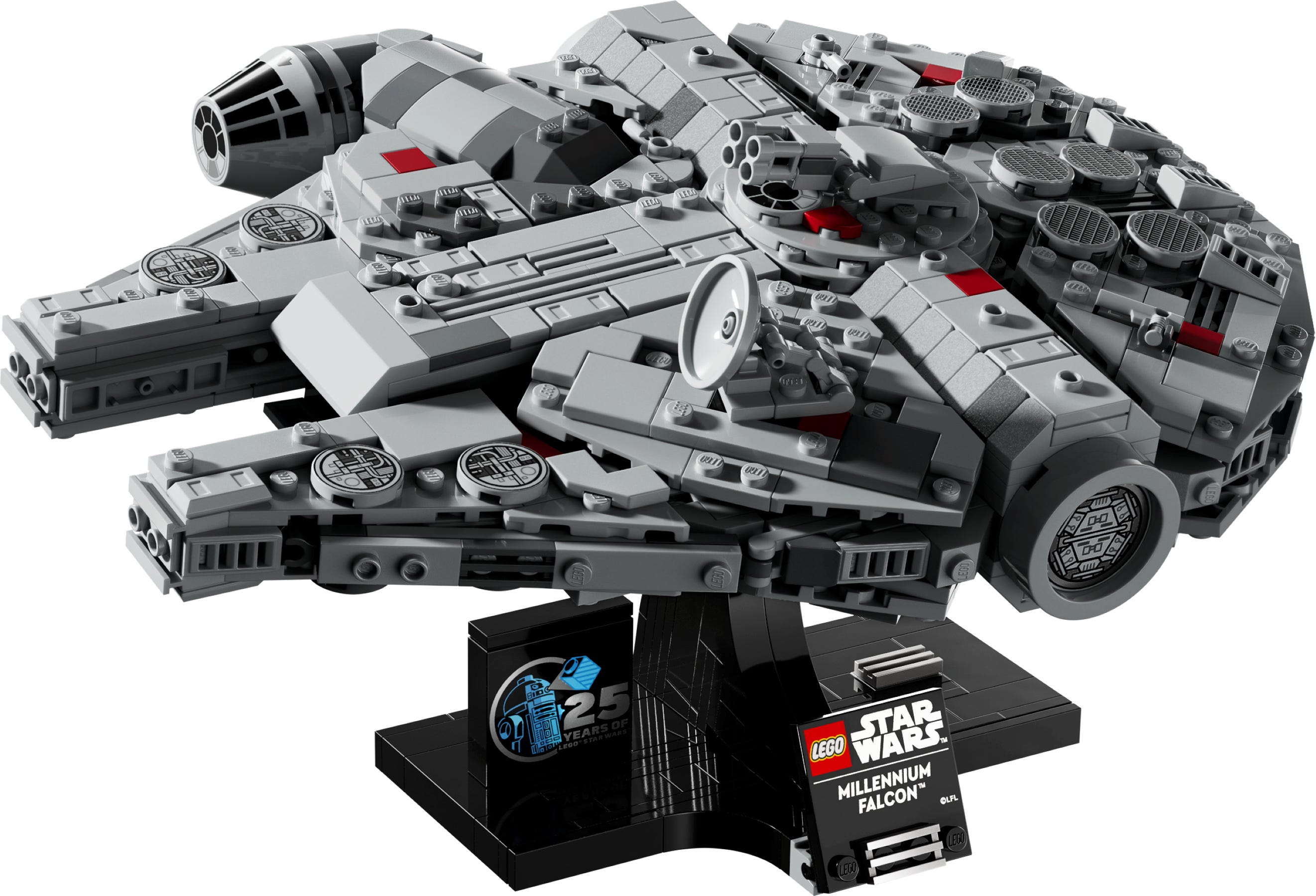
Millennium Falcon 75375
A smaller display-focused Millennium Falcon with a much more accessible footprint.
Shop at LEGO.com ↗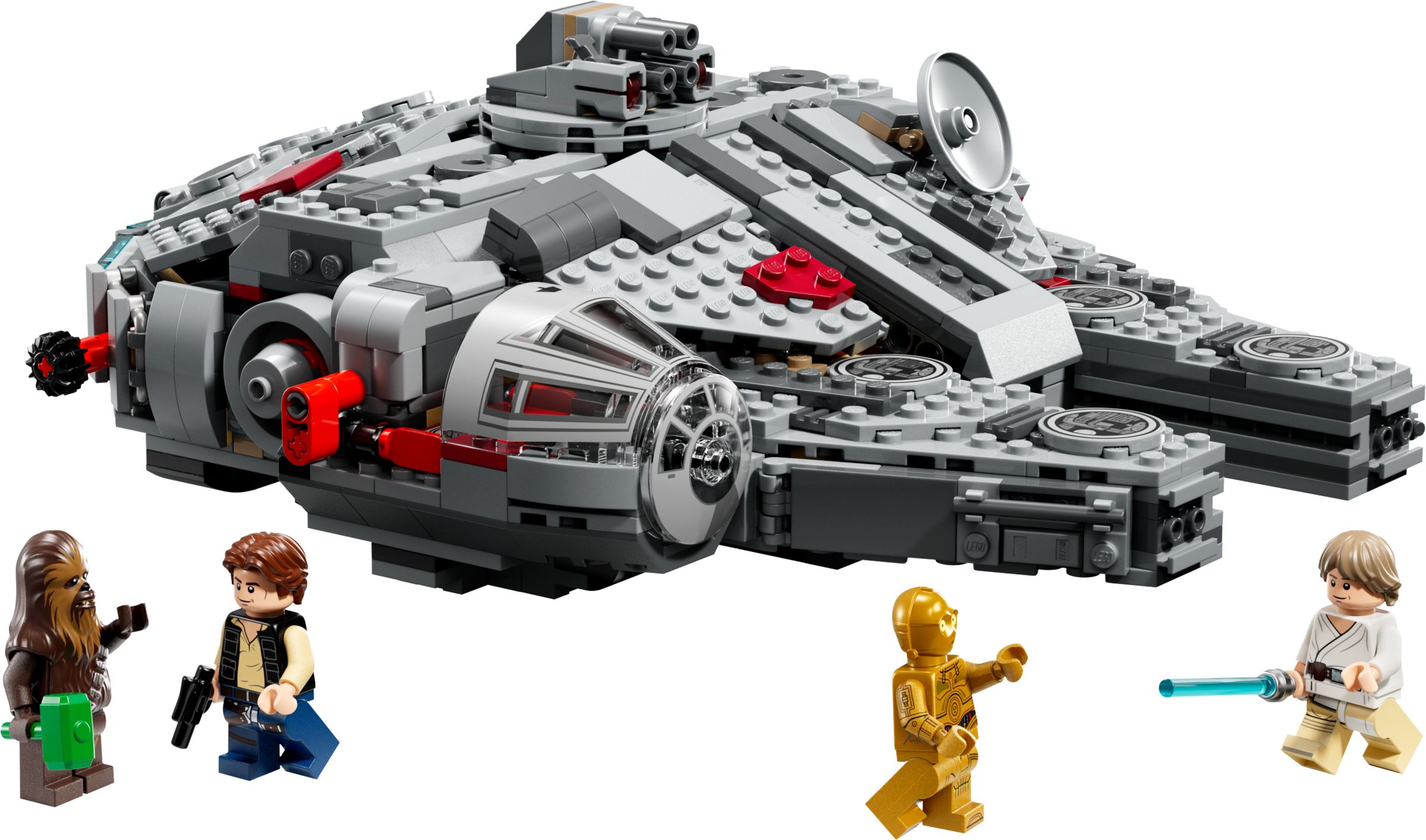
SMART Play Millennium Falcon 75426
A SMART Play version of Han Solo's signature ship, adding an interactive option alongside the display-focused Falcon sets.
Shop at LEGO.com ↗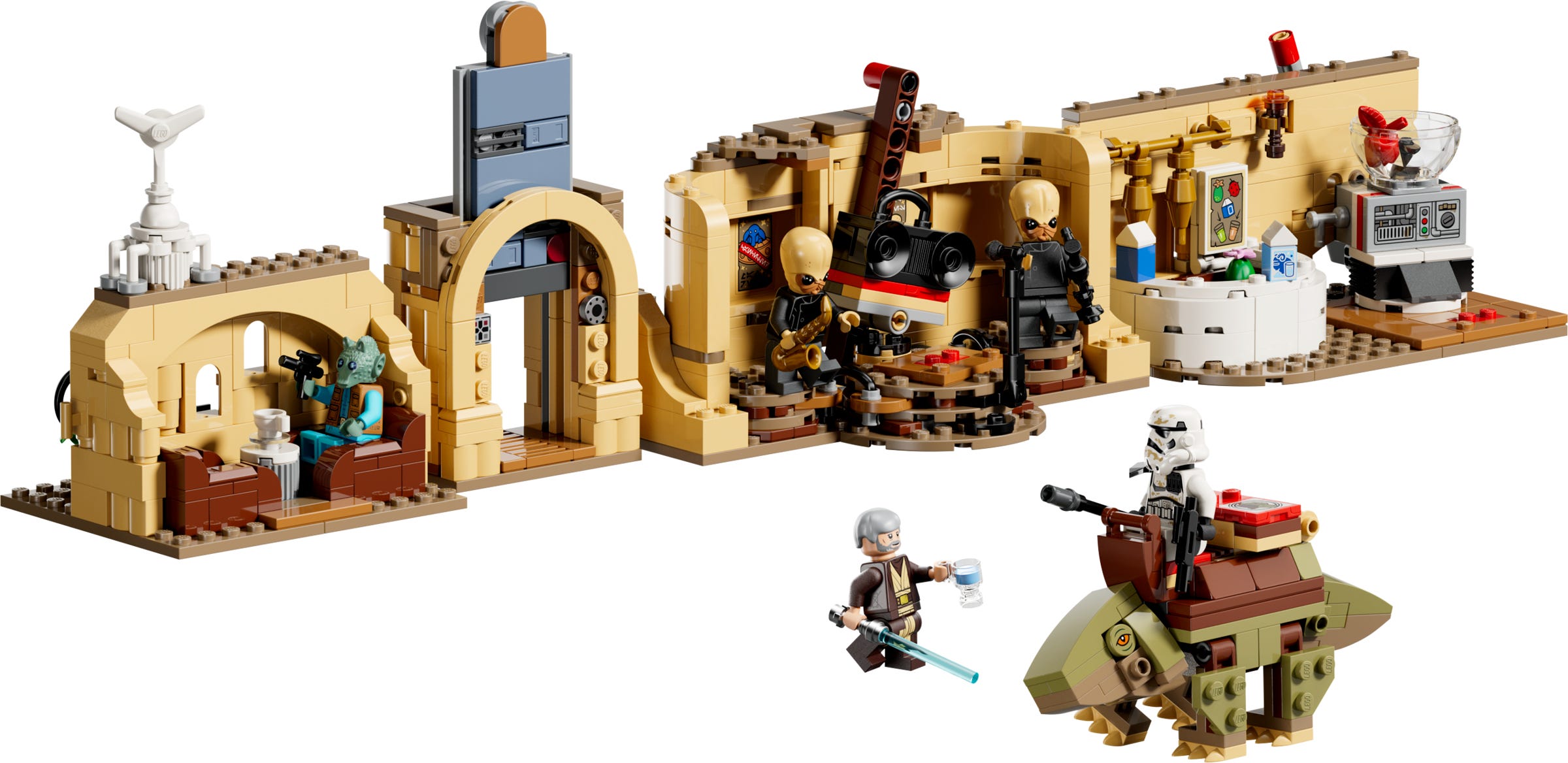
SMART Play Mos Eisley Cantina 75425
The cantina is where Han Solo meets Luke Skywalker and Obi-Wan Kenobi and agrees to take them off Tatooine.
Shop at LEGO.com ↗Affiliate disclosure: These LEGO Store links use Imperial Dark Sector's Rakuten Advertising affiliate tracking. IDS may earn a commission from qualifying purchases at no added cost to you.
Connected archive