
- Date
- 2975 BBY
- Continuity
- Legends
- Location
- Alanciar · Keshtah Minor
- Key participants
- Varner Hilts · Jogan Halder · Adari Vaal's legacy
Alanciar had destroyed the Sith scouting craft and defeated a major invasion fleet. Nevertheless, by the end of the 2975 BBY campaign its independence had ended. Grand Lord Varner Hilts used the Alanciari signal officer Jogan Halder as a public advocate for an alternative explanation of the crisis. Hilts' followers were framed as benevolent Protectors, while Bentado's faction became servants of the dreaded Destructors. The resulting 'unification' gave the Lost Tribe control of Alanciar without the wider ground war its leaders had initially feared.
Sequence of events
- 01
Hilts arrives after Bentado's defeat.
- 02
Jogan presents the Sith as Protectors and Bentado as a Destructor.
- 03
Alanciar submits to Sith rule and the continents enter a new relationship.
How the Sith used an Alanciari intermediary
Jogan was a local signal officer who had visited Keshtah after being captured during Vrai's expedition. He was presented to his own people as someone who had seen the foreign continent directly and could explain what the newcomers really represented. His social identity supplied credibility that an outsider's proclamation might not have possessed.
Hilts exploited that status. When a threat is unfamiliar, communities often place special weight on accounts delivered by people whose background they recognize. This helped turn a former prisoner into an effective instrument of political persuasion.
The Protectors and Destructors distinction
Traditional Keshiri beliefs told of benevolent Protectors and dangerous Destructors. For generations, Alanciari society had interpreted Adari Vaal's history as a warning against the Sith. Hilts did not simply deny the warnings. He reclassified the recent invaders: Bentado's faction was the danger Vaal had predicted, while the dominant Sith leadership was recast as the force that had defeated it.
The story was effective because it incorporated the public's existing memory instead of demanding that everyone forget it overnight. It offered a way to preserve reverence for Vaal while accepting a new and politically convenient division among the Sith.
A low-casualty annexation is still annexation
The initial combat and political assassinations caused deaths. After Bentado's fall, broader conquest was achieved with relatively limited additional fighting. The fact that widespread war was avoided should not be confused with the continuation of independent government. Hilts gained control over Alanciari institutions, resources, and navigation traditions.
Quarra and others could not simply erase their knowledge of what had happened. The public explanation of the invasion became a form of selective political memory, giving prominent place to the defeat of Bentado and less space to the campaign planned by the wider Tribe.
What changed after unification
The two major Keshiri populations entered regular contact, and Alanciari sailing methods began to transform Sith travel. Ports, vessels, and new routes made exploration of other regions of Kesh possible. Hilts' next expansion turned toward the planet's southern polar territory, Eshkrene, in 2974 BBY.
The annexation therefore had effects beyond one city or one year. It transferred maritime knowledge and labor into the service of a growing political system, helping create the conditions for the crisis that followed.
The question of public legitimacy
The Sith did not need everyone to believe precisely the same story. They needed a sufficiently persuasive narrative for resistance to become harder to coordinate, especially after the government had been destroyed and a known local witness spoke for the newcomers.
In the historical sequence, changes to public theater and commemorative accounts later helped displace Vaal's original warning with a story celebrating first contact. That shift illustrates rule through institutions and memory rather than by force alone.
Interactive history lab
Explore the evidence from two perspectives. Select a response to each question. The explanation updates immediately; this is a source-based interpretation activity, not a change to established lore.
Questions from the archive
Did the Alanciari win the initial battles?
Yes. Their defenders brought down the scouting airships and the Ebon Fleet.
Why did the Sith take power anyway?
The War Cabinet's destruction and Hilts' manipulated public narrative enabled annexation.
Was the conquest completely bloodless?
No. The term refers to limited further hostilities during the final political submission, not an absence of earlier deaths.
Legends · Original narrative provenance
Source comparison: what is established?
The central source is the novella Pandemonium. A documented political surrender after manipulated testimony is not proof that the entire population freely consented. Hilts's speech and Quarra's private doubts are separate strands of evidence.
Primary story and publication chronology
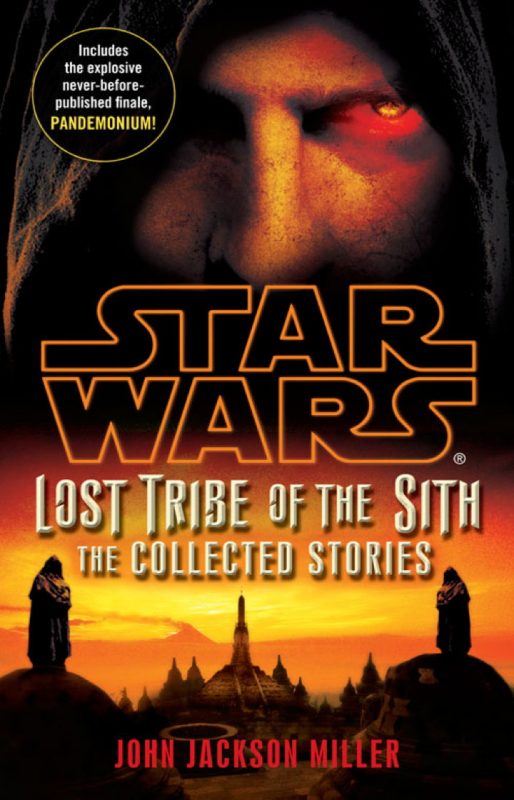
John Jackson Miller’s Lost Tribe of the Sith: Pandemonium is collected in Lost Tribe of the Sith: The Collected Stories. The publication year of the novel or comics is not the fictional BBY event year. Images showing a comic cover are contextual source art, not guaranteed illustrations of the precise event.
Read John Jackson Miller’s commentary on the original story →
Anthropological assessment
The Alanciar annexation is a study in legitimization through symbolic classification. Hilts split a single imperial threat into allegedly good and evil factions using stories already meaningful to Alanciari society. The result was the loss of sovereignty following tactical military successes. Names such as 'unification' should therefore be read as political language, not neutral descriptions.
Primary source and verification
- John Jackson Miller, Lost Tribe of the Sith: Pandemonium, in Lost Tribe of the Sith: The Collected Stories (Del Rey, 2012).
- Alanciar — Wookieepedia (Legends)
- Invasion of Alanciar — Wookieepedia (Legends)
- Skyborn — Wookieepedia (Legends)