
- Date
- 2975 BBY
- Continuity
- Legends
- Location
- Vaal Hall · Sus'mintri
- Key participants
- Korsin Bentado · War Cabinet · Vaal Hall
After the Ebon Fleet was destroyed, Korsin Bentado reached Sus'mintri with surviving followers. At Vaal Hall, a government building named in honor of Adari Vaal, his force killed the Alanciari War Cabinet and other personnel. The attack struck at the command center of a society that had spent nearly two thousand years organizing to repel the Sith. It was not the product of a successful conventional invasion. It was the murder of the leaders who coordinated Alanciar's defense.
Sequence of events
- 01
Bentado's surviving warriors reach Sus'mintri.
- 02
The War Cabinet and civilian staff are killed.
- 03
The attackers seize control of a key communications site.
Why Vaal Hall was such an important target
The War Cabinet combined military, industrial, and educational directorates in a shared complex. Placing them near a signal tower helped coordinate security policy over a large continent. It also concentrated authority in a site vulnerable to infiltration after a crisis.
In 2985 BBY, the directorates had relocated into Vaal Hall. Ten years later, that administrative structure became a point of failure. Centralized decision-making can be fast, but it can also produce a sharp loss of continuity if the coordinating leadership is destroyed.
The attack on the capital
Bentado's small surviving force managed to reach the building and kill the leaders inside it. Their violence went beyond battlefield combat, targeting the officials and staff through whom Alanciar governed. A Sith-controlled signal facility further complicated efforts by the broader population to identify what had happened.
The historical sequence is particularly brutal because the Alanciari had successfully shot down the invaders' fleet. They were not conquered by an overwhelming air assault. The surviving attackers instead decapitated a central institution when many defenders still believed the invasion had failed.
A symbolic reversal
The building carried Adari Vaal's name. Vaal had warned her descendants against Sith domination and had become a foundational figure in Alanciari public memory. Her memorial building was now occupied by the very power against which that memory was organized.
The murder of the War Cabinet had an informational effect as well as a military one. The government could no longer speak with its usual authority, and attackers could exploit a communication system that had previously been a cornerstone of resistance.
What the killing did not prove
The destruction of a central cabinet did not make the Sith morally legitimate or show that Alanciari resistance had been misguided. It demonstrates the danger of leadership concentration during a sudden crisis. The public would later hear a carefully controlled alternative story about the events.
That distinction is essential: a military force can destroy a governing institution without earning popular consent. Alanciar's later submission involved persuasion, myth, and calculated omissions, not simply the consequences of a lost battle.
Interactive history lab
Explore the evidence from two perspectives. Select a response to each question. The explanation updates immediately; this is a source-based interpretation activity, not a change to established lore.
Questions from the archive
Was Vaal Hall a fortress?
The chronology describes a government building beside a signal tower, not a giant fortified castle.
Did Alanciar's defenders lose the aerial battles?
No. They repelled the Sith airships before Bentado reached the capital.
Was the War Cabinet still active after this attack?
Its members were killed, seriously disrupting the central Alanciari government.
Legends · Original narrative provenance
Source comparison: what is established?
The killings at Vaal Hall are a direct assault on the Alanciari governing leadership. This violence cannot be relabeled a peaceful integration merely because Hilts later used a public reconciliation narrative.
Primary story and publication chronology
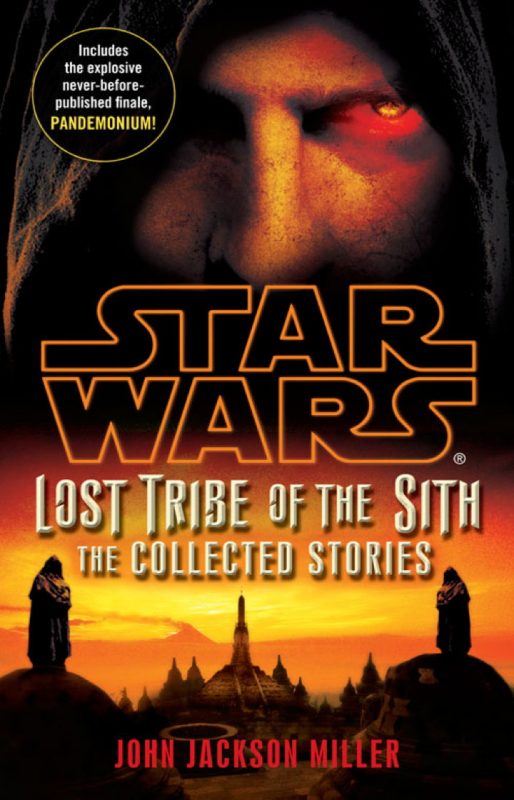
John Jackson Miller’s Lost Tribe of the Sith: Pandemonium is collected in Lost Tribe of the Sith: The Collected Stories. The publication year of the novel or comics is not the fictional BBY event year. Images showing a comic cover are contextual source art, not guaranteed illustrations of the precise event.
Read John Jackson Miller’s commentary on the original story →
Anthropological assessment
The massacre demonstrates institutional decapitation: an attacker damages a political system by removing the people and communications infrastructure that coordinate it. It also shows how collective memory can be attacked through the physical sites that preserve and represent it.
Primary source and verification
- John Jackson Miller, Lost Tribe of the Sith: Pandemonium, in Lost Tribe of the Sith: The Collected Stories (Del Rey, 2012).
- Invasion of Alanciar — Wookieepedia (Legends)
- Alanciar — Wookieepedia (Legends)