Virtual reality changes the scale of Star Wars. A Star Destroyer becomes something that hangs above the player's body. Darth Vader occupies the same room. A lightsaber is no longer only an animation mapped to a button. IDS tracks the major VR and mixed-reality releases as a distinct branch of Star Wars interactive history.
Current storefronts and hardware differ sharply from the first generation of Star Wars VR. These three releases form the clearest modern path into the archive.
2025 · Meta Quest 3 / 3S
Beyond Victory
ILM's mixed-reality playset combines a Volo Bolus and Sebulba story with tabletop-style podracing and a sandbox that places digital figures and vehicles into the player's physical room.
A droid-repair technician crash-lands on Batuu and moves between blaster combat, cantina storytelling, Jedi tales, droid characters, and connections to the Black Spire Outpost setting.
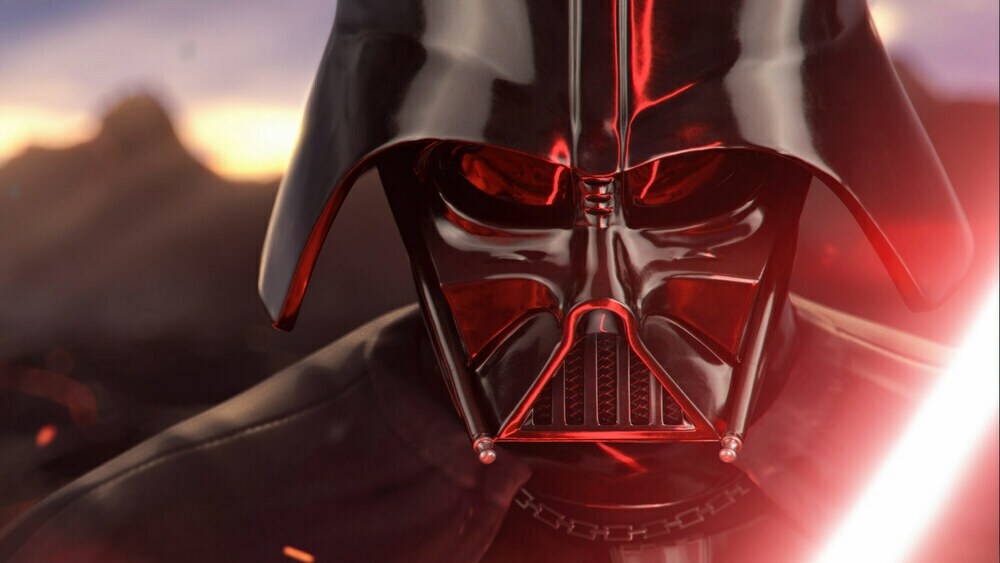
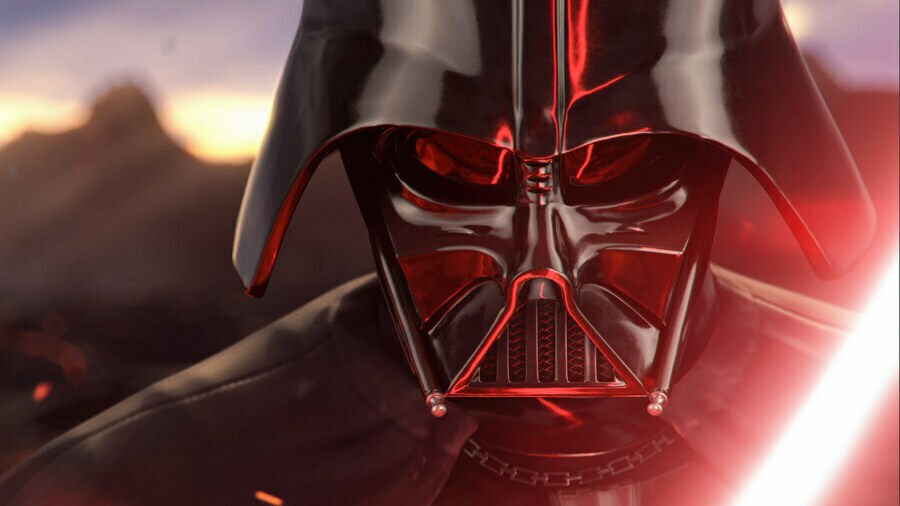
The three-part canonical story places a Force-sensitive smuggler inside Vader's fortress on Mustafar. Narrative chapters sit beside Lightsaber Dojo modes built around physical lightsaber and Force interactions.
This list includes full VR games, substantial VR modes, mixed-reality releases, and historically important location-based experiences. It does not treat every 360-degree video or technology demo as a separate game.
2016 · PC VR experiment
Trials on Tatooine
ILMxLAB's early interactive experiment put the player on Tatooine with R2-D2, the Millennium Falcon, stormtroopers, and a lightsaber. It established the basic Star Wars VR fantasy of scale, physical presence, and direct object interaction.
Criterion's free mission for owners of the 2015 Battlefront on PlayStation 4 placed the player inside an X-wing cockpit during a Rogue One-connected Rebel mission. The Star Destroyer encounter became an early showcase for how VR communicates fictional scale.
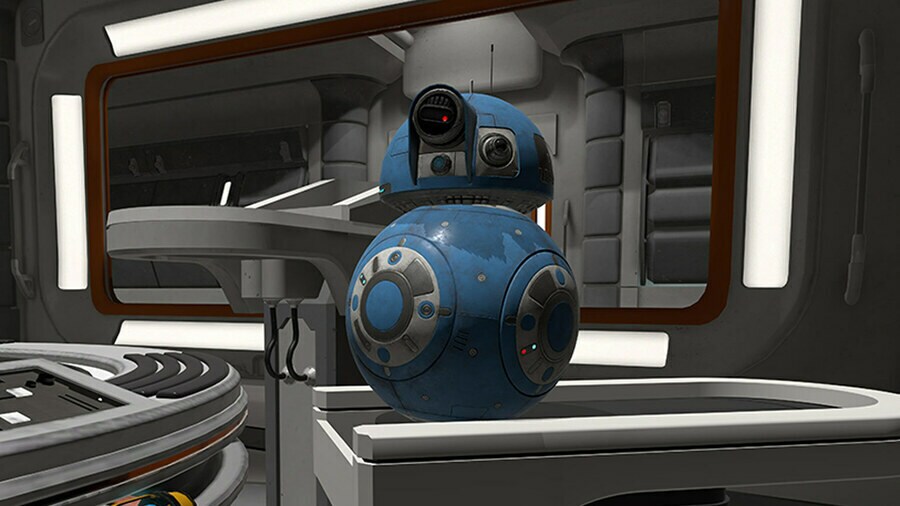
The player works as an astromech technician aboard General Leia's ship, repairing BB-8 and newly created droids. The experience is unusually useful for IDS because it makes maintenance labor, tools, droid personality, and backstage Resistance infrastructure the center of play.
Teams of four infiltrated an Imperial installation on Mustafar while disguised as stormtroopers. The VOID installation combined untethered VR with tracked movement, force-feedback vests, physical surfaces, heat, and other environmental effects.
Format
Ticketed location-based experience
IDS focus
Group behavior, sensory design, undercover identity
ILMxLAB moved from short experiments into a sustained canonical narrative. Players explore Mustafar, confront Vader at human scale, learn Force interactions, and use Lightsaber Dojos that treat iconic weapons as practiced bodily skills.
Released for
Oculus Quest / Rift; later PlayStation VR
IDS focus
Sith space, embodiment, ritualized training, character presence
Unlike a short VR side mission, Squadrons allows the complete space-combat experience to be played in VR. Cockpit instruments, power management, head tracking, squad commands, and the physical difference between Rebel and Imperial craft all become part of the player's military perspective.
VR support
Original PS VR and supported PC VR headsets
IDS focus
Cockpit material culture, military institutions, pilot identity
The main Batuu story follows a droid-repair technician, while Seezelslak's stories let players move into other eras and roles. Last Call expanded the experience in 2021, and the Enhanced Edition brought it to PlayStation VR2 in 2023.
Released for
Oculus Quest / Quest 2; PS VR2 Enhanced Edition
IDS focus
Batuu, work, cantina storytelling, memory across eras
Eight launch tables are staged inside a customizable virtual fan cave filled with earned Star Wars objects. The result is less about inhabiting galactic history and more about representing fandom itself as a room, collection, and display practice.
Released for
Oculus Quest 1 / 2, SteamVR, PlayStation VR
IDS focus
Collecting, fan identity, display, virtual material culture
Adventure Mode places the player in Volo Bolus's podracing story under Sebulba's mentorship. Arcade Mode converts the room into a holotable race. Playset Mode adds unlockable digital figures and vehicles that can be staged in physical surroundings.
Available on
Meta Quest 3 / 3S
IDS focus
Podracing culture, playsets, domestic space, digital objects
The archive distinguishes release-era compatibility from present-day storefront availability. Older titles may require discontinued hardware, legacy software, or a base game.
Current Meta Quest line
Quest
Vader Immortal, Tales from the Galaxy's Edge, and Beyond Victory are the major Star Wars immersive releases represented in Meta's current ecosystem. Beyond Victory specifically requires Quest 3 or 3S.
Current PlayStation VR
PS VR2
Tales from the Galaxy's Edge - Enhanced Edition is the major native Star Wars release for PS VR2 and requires PS5, the PS VR2 headset, and Sense controllers.
Legacy console VR
Original PS VR
Rogue One: X-wing VR Mission, Vader Immortal, Squadrons, and Star Wars Pinball VR belong to the original PlayStation VR generation.
PC / legacy PC VR
PC VR
Trials on Tatooine, Droid Repair Bay, Vader Immortal on Rift, Squadrons, and Pinball VR represent several generations of PC-based Star Wars VR support.
Venue-based
The VOID
Secrets of the Empire depended on a dedicated physical site, tracked group movement, props, vests, heat, and set-like surfaces. It cannot be reduced to a normal downloadable headset title.
Anthropology lens
What VR changes about Star Wars
Immersive media makes several features of fictional worlds available through the body rather than through observation alone.
01 · Embodiment
The body enters the fiction
Head position, hand movement, reach, stance, and spatial awareness become part of the text. A lightsaber is experienced through repeated bodily action instead of only represented on screen.
02 · Scale
Size becomes experiential
Vader's height, a Star Destroyer's mass, a cockpit's enclosure, and Mustafar's architecture can be judged relative to the player's own body.
03 · Labor
Work becomes interaction
Droid Repair Bay turns maintenance into the narrative center. Squadrons turns instrument reading and power allocation into pilot work. VR can make fictional occupations procedural.
04 · Material culture
Objects become handled things
Weapons, controls, tools, droids, vehicles, and collectibles acquire position, reach, scale, and use. Beyond Victory extends this into mixed reality by placing digital objects into the player's room.
05 · Social presence
Other bodies matter
Secrets of the Empire used teams of four, tracked proximity, shared tasks, and embodied stormtrooper disguises. Social coordination became part of the story experience.
06 · Fandom as space
The fan room becomes media
Pinball VR's customizable fan cave and Beyond Victory's playset mode make collecting, arranging, and displaying Star Wars objects part of the designed experience.
Archive scope
This page focuses on substantial interactive VR and mixed-reality releases. 360-degree promotional videos and non-interactive cinematic demos are not counted as separate archive entries. Hardware labels describe official release support, not a guarantee of present-day store availability or compatibility with newer headsets.