
GALACTIC WAR · 3636 BBY · LEGENDS
The destruction of Ziost: Vitiate consumes a Sith Imperial world
The Emperor turns on his former subjects, seizes Imperial troops and Jedi minds, and drains an inhabited planet of life.
← Galactic timeline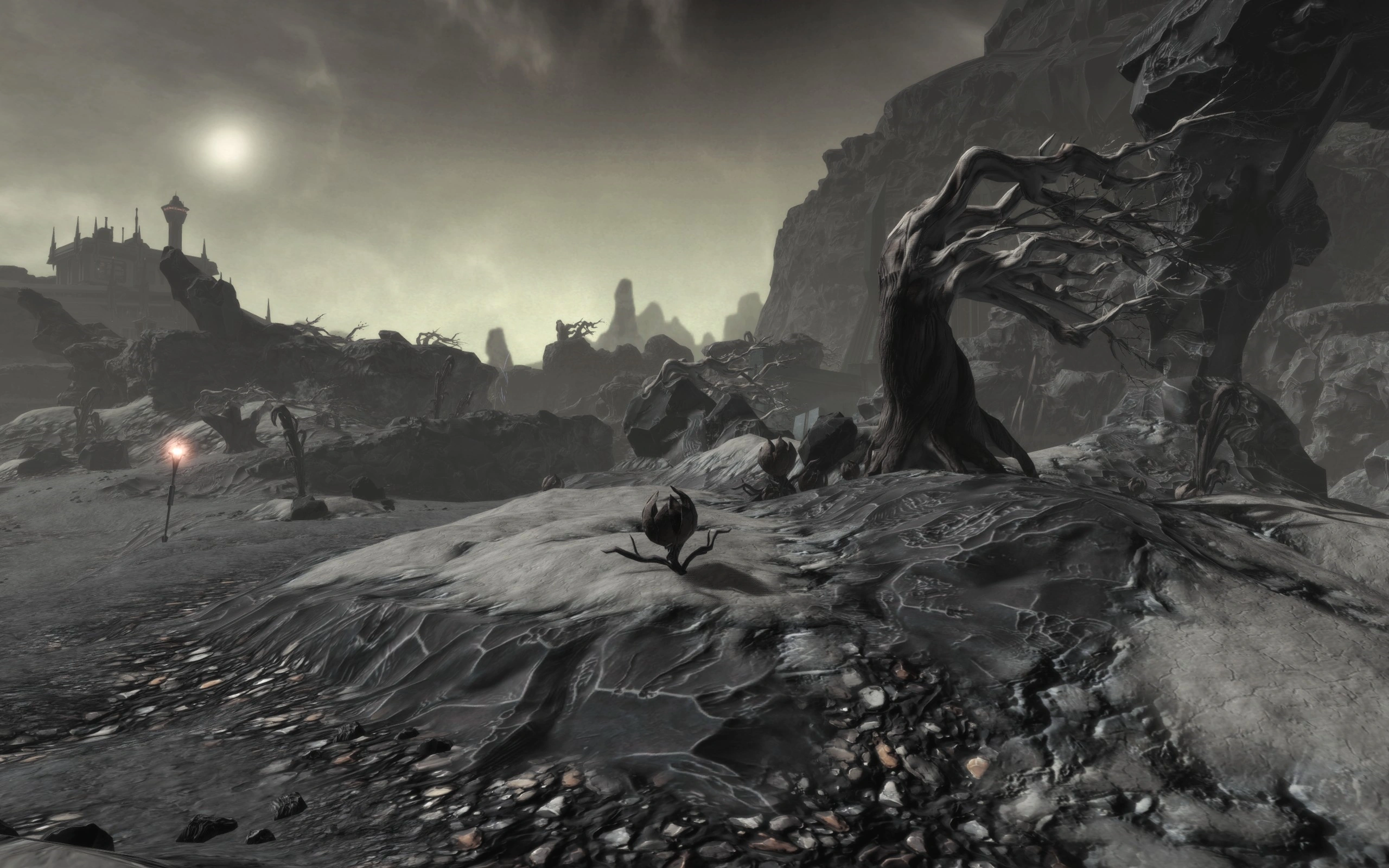
Source and continuity: The event belongs to Star Wars: The Old Republic Legends. Its 3636 BBY placement is distinct from the real-world April 2015 game-update publication. Interpretive anthropology is identified separately, and the quiz is an educational exercise.
Why Ziost mattered to the Sith Empire
Ziost was a developed Imperial world associated with the long history of the Sith. Its cities, installations and civilian population represented a political society, not merely a battlefield or a storehouse of Force energy. That distinction matters because Vitiate, the former Sith Emperor, chose to prey on his own former subjects. Where an ordinary sovereign might claim an obligation to preserve the lives of citizens, Vitiate treated those lives as a resource for his survival. The destruction therefore reveals a break between the man who once ruled an empire and the people who still lived under its symbols.
The disaster begins after Yavin 4
A temporary Republic–Sith Imperial coalition had confronted Revan on Yavin 4. Revan's attempt to force Vitiate into a vulnerable form failed, and the Emperor's disembodied presence reemerged. On Ziost, Vitiate was no longer concerned with maintaining a stable Imperial hierarchy. His abilities allowed him to attack inhabitants without obeying an army's normal chain of command. This is a causal sequence, not two unrelated villains appearing in successive expansions. Understanding Ziost requires recognizing how the failure of Revan's plan freed a threat that neither government could fully control.
The theft of personal agency
The former Emperor possessed the minds of Imperial soldiers and members of the Sixth Line, an elite group of militarized Jedi. His victims were driven into violence against civilians and against people who might otherwise have been allies. Master Surro, a leader of the Sixth Line, became one of his most important pawns. This must not be described as an ordinary political conversion in which the troops freely endorsed Vitiate's program. The official story identifies mind domination as central to the crisis. When Force possession overrides choice, the resulting violence cannot be analyzed only through the victims' institutional loyalties.
Lana Beniko and Theron Shan cooperate
Lana Beniko, who worked within Sith Imperial intelligence, and Theron Shan, an intelligence agent for the Galactic Republic, investigated the emergency together. Their governments remained wartime rivals, yet both agents recognized that the Emperor was an existential threat. The player protagonist aided the effort to understand the attacks and stop the expanding disaster. Their cooperation did not dissolve the political differences between the Republic and the Empire. It showed instead that intelligence sharing and the protection of civilians could become immediate priorities when an adversary turned the foundations of both states against them.
An Imperial city under occupation from within
The People's Tower and other Ziost landmarks appeared in the official depiction of the crisis. Armored walkers, troops and administrative centers that normally signaled public order now helped spread fear. The rulers' infrastructure had not vanished, but its users were being controlled by another power. Citizens therefore faced a particularly destabilizing danger: authority appeared in familiar uniforms and machines even when it no longer operated for the public's safety. This is one reason the mind-control phase deserves its own explanation instead of being reduced to a prelude before the final ritual.

The Sixth Line and its controversial code
The Sixth Line was known for emphasizing duty in its interpretation of Jedi responsibilities. Its members were trained for military action and belonged to an organization with strong internal discipline. Their possession does not prove that a duty-based code caused Vitiate's attack, because his powers could override the will of individuals in other institutions too. It does raise a question about how military orders, ethical judgment and autonomy interact. A historian must distinguish what the fictional organization taught its members from the supernatural force that deprived them of the ability to act according to their own reasoning.
The Emperor drains a planet
Vitiate ultimately consumed life on a planetary scale through a catastrophic dark-side ritual. The aftermath was a devastated environment, stripped of the vitality that had supported its population. Official SWTOR historical material describes the killing of almost the entire population rather than publishing a precise death toll in the source used here. The destruction therefore should not be assigned a fabricated casualty number. It also was not an ordinary naval bombardment. The event was supernatural extraction of life energy, executed by a former ruler whose goal was personal empowerment rather than conquest of Ziost.
Nathema as the earlier precedent
The Emperor's earlier consumption of life on Nathema provides a disturbing historical parallel. In both cases a population was treated as expendable material in a search for extraordinary power. Yet the two catastrophes took place in different political circumstances. Ziost was an inhabited Sith Imperial world during a broader galactic conflict, and the attack followed an attempt to defeat Vitiate on Yavin 4. The comparison supports analysis of the Emperor's recurring motivations, but it does not permit invented claims that the rituals had identical participants, timing or social consequences.
The surviving alliance faces a new problem
The failure to prevent Ziost's destruction changed the mission facing Lana, Theron and their allies. They now knew that Vitiate could sacrifice an entire Imperial world, and that the Empire's own troops could be transformed into weapons against its subjects. Subsequent operations took forces into Wild Space and brought them into contact with the Eternal Empire. There, the figure known as Valkorion was revealed to be another identity of the same being. Those events belong to later chronological dossiers. The Ziost entry explains their cause without collapsing the future war with Zakuul into a single episode.
Anthropological assessment: population as a resource
The story provides an extreme fictional model of a ruler treating subjects as resources rather than as people with independent social lives. States routinely depend on labor, taxation, military service and the consent or compliance of communities. Vitiate's ritual removed even the pretense of reciprocal obligation. Citizens' bodies became fuel for one individual's immortality. This is original anthropological analysis, not a claim that actual empires possess equivalent supernatural abilities. The relevant questions concern authority, coercion, the limits of obedience and whether institutions organized around a ruler can protect people when that ruler turns against them.
Visual evidence and careful historical claims
The destroyed landscape can be seen in SWTOR imagery archived by Wookieepedia. An earlier screenshot shows Ziost as an inhabited Imperial environment. The images do not depict the same moment and should not be presented as interchangeable. Their contrast helps explain the loss involved without needing to invent scenes or fabricate portraits. The same caution applies to the text: official promotion establishes the conflict and participating figures, the game supplies the narrative, and secondary chronologies provide the widely used 3636 BBY label. None gives permission to assign a precise day or count every life lost.
Sources and date distinction
The event is placed in 3636 BBY in the Legends chronology. In the real world, Rise of the Emperor was published as SWTOR Game Update 3.2 on April 28, 2015. The developer's overview and official historical recap establish the relationship between Revan's failure, the possession of Ziost inhabitants and the Emperor's return. The world was emptied of life before the larger campaign involving the Eternal Empire and the Outlander. Keeping the publication date separate from the in-universe date is essential to a reliable chronology.
Interactive evidence challenge
Select an answer for each question. Your results and explanations appear below the final question.