
- Date
- c. 9 ABY
- Continuity
- Canon
- Location
- At Achrann
Archive method: c. means approximate. The image caption identifies whether artwork shows a later appearance. The social-science analysis is an editorial interpretation of the story, not invented dialogue or unreported historical events.
A place that resembles home
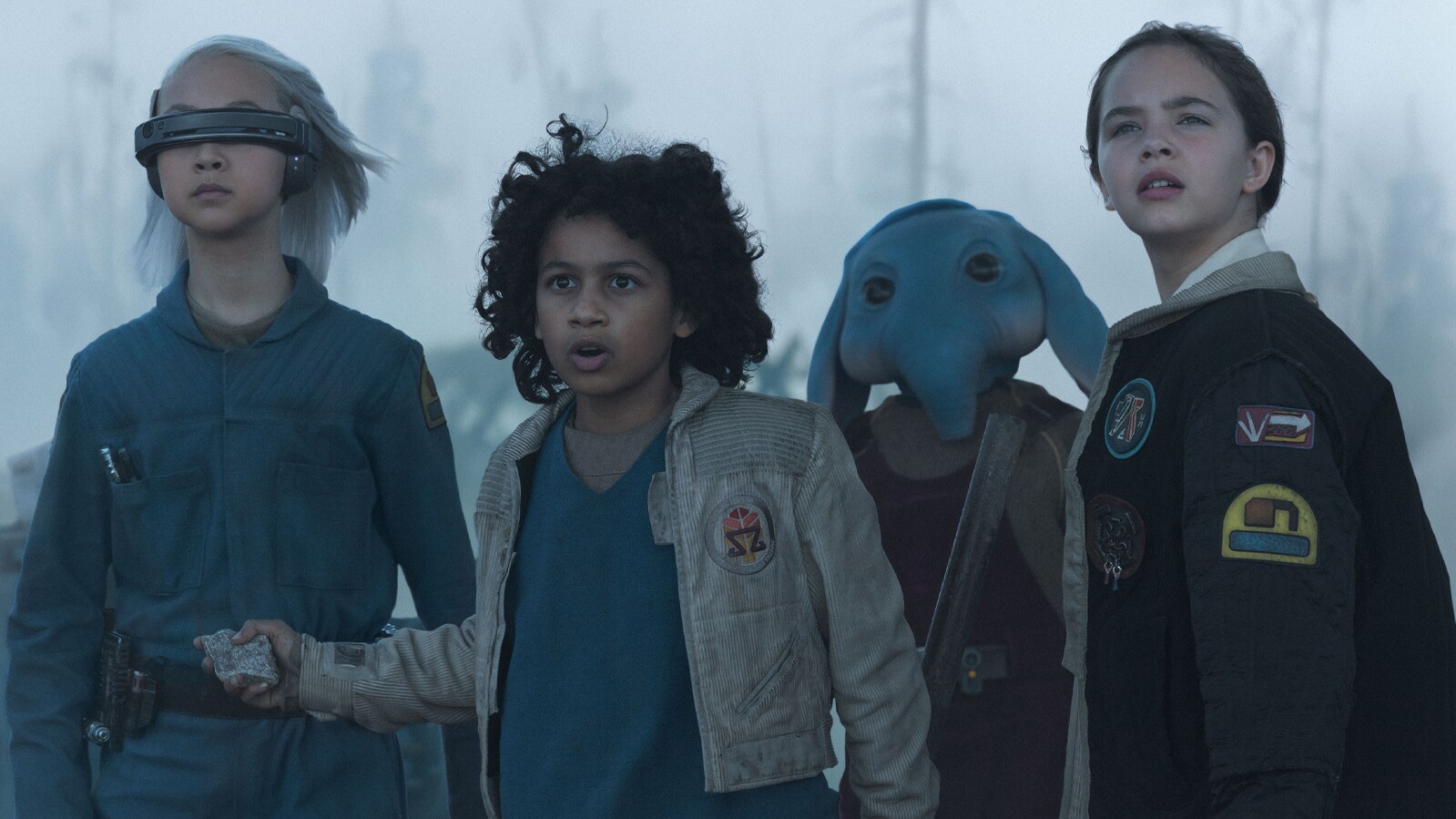
At Achrann's name and structures suggested a connection to the children's hidden homeworld, but its physical environment was utterly different. Damaged buildings, smoke and ruined communities were evidence of prolonged conflict. The contrast made the children's earlier assumptions about what ordinary life looked like in the galaxy difficult to maintain.
Children raised as soldiers
General Strix led an armed group in which young people were trained for conflict. His daughter Hayna understood military life as a normal part of growing up. Wim, Fern, KB and Neel had never faced comparable demands. Their conversations with local children exposed contrasting definitions of maturity, responsibility and courage.
Maps become a political resource
The visitors needed access to information that could identify At Attin. They entered a dangerous environment in which local factions controlled spaces and knowledge. Their interest in finding home did not erase the needs or authority claims of the inhabitants, and both groups approached the encounter with incomplete knowledge of the other.
Neel refuses simple heroics
Neel, who often preferred peace, questioned why people continued to fight and showed care toward Hayna. He did not become an idealized warrior simply by entering a war zone. His actions suggested that kindness and a refusal to glorify violence could be forms of courage.
Anthropological interpretation
At Achrann invites comparison of childhood socialization. Children do not experience a universal path toward adulthood. Their societies teach different duties and fears, and a society organized around war may interpret an outsider's innocence differently from the outsiders themselves.
Interactive archival judgment lab
Try the three evidence questions below. Each choice explores a real tension in the story rather than inventing a new Canon ending. Select one and the interpretation appears below.
Was At Achrann just the same peaceful suburb as At Attin?
Supported answer: No. It was a world with similar elements but a history of destructive conflict.
Unsupported alternative: Yes. The visitors returned home without realizing it.
Canon · c. 9 ABY · Primary-source investigation
At Achrann is not a second copy of At Attin
Episode Four takes the Onyx Cinder crew to At Achrann, a world whose name and built environment resemble At Attin but whose social circumstances are starkly different. Damaged buildings, armed groups and persistent danger show a society shaped by prolonged war. The children cannot use similarities in architecture as evidence that this is their own safe home. Lucasfilm's official episode discussion stresses the shock of their arrival and the distinctive circumstances facing At Achrann's inhabitants. The episode does not provide a complete, independently verified history of why the war began.
The encounter with children accustomed to combat challenges Wim, Fern, KB and Neel's expectations. Young people raised around weapons and rivalry assess outsiders differently from classmates who have known supervised schoolwork and domestic routines. Neel's reluctance to embrace the fighting demonstrates that the travelers do not all respond alike. A chronology should avoid describing the conflict as an ordinary school competition or assuming that every resident supports the same side. The group's immediate priority is navigation and survival, not an already successful intervention in the planet's politics.
IDS uses the episode to examine how childhood can be organized under conditions of militarization and how unfamiliar social worlds are interpreted through prior experience. This is an analysis of narrative evidence, not a claim that fiction supplies demographic data about real societies. Earlier At Attin routines establish the contrast; the later Tak Rennod inquiry shows a different problem: incomplete records of places that travelers desperately need to find.
Verification: Lucasfilm's Episode Four analysis. The named episode is the original story; the official editorial material is a second reference. Cultural interpretations are identified as IDS analysis. The 9 ABY grouping is approximate and does not prove the month or date of this event.
Sources and continuity
Published accounts and Lucasfilm materials used for this entry: