
The Dread Masters' campaign ended on Oricon in 3638 BBY after they attempted to turn terror and mass death into tools of galactic domination.
3638 BBY · Legends · Editorial research
THE DREAD MASTERS AT ORICON
Documented history and uncertainties
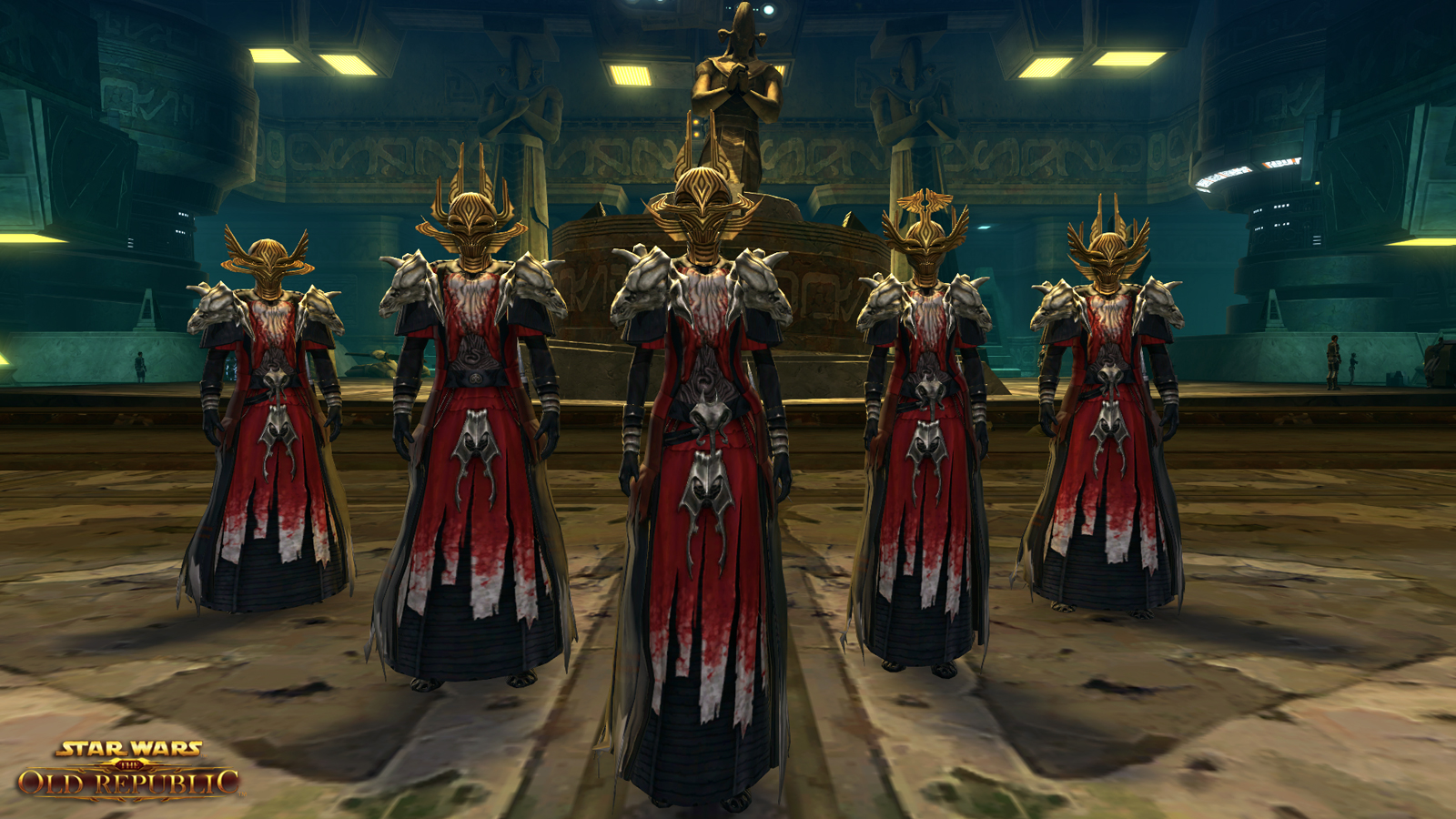
The Dread Masters, six Sith beings once captured by the Republic in 3668 BBY and secretly confined on Belsavis, escaped during the renewed war. Their campaign of psychological terror culminated at their remote Oricon stronghold in 3638. SWTOR's Dread War operations take participants through the Dread Fortress and Dread Palace toward a final confrontation with the surviving Masters. The events on Oricon mark the end of their immediate campaign and must not be confused with the 3668 capture or the earlier Belsavis escape.
Anthropological analysis
The Dread Masters weaponized emotion as a political means of control. Fear affected warships, soldiers and wider communities even when a victim never saw the rulers causing it. Oricon's architecture and landscape reinforced this authority, transforming a defensible site into a ritual theater of dread. Shared opposition to the Masters did not require the Republic and Sith Empire to abandon their own political conflicts.
Compare evidence and later interpretation
Separate the event dated 3638 BBY from its later political and biographical consequences. Exact dates, casualty figures and personal motives are not inferred when the surviving records do not provide them.
Research: Star Wars: The Old Republic, its Galactic History, game episodes, and official retrospective history.
Anthropological assessment
Charismatic terror regimes depend on maintaining belief in their exceptional power. Coordinated resistance can collapse that authority once invincibility is disproved.
Legends / SWTOR primary-source research
The Dread War reaches the Masters' stronghold
The final confrontation with the Dread Masters took place on Oricon, a remote moon strongly associated with the dark side. Their campaign had operated through fear, coercion and subordinate forces across several locations. Republic and Imperial personnel eventually located the group and attempted to suppress its fortress complex. Official game material distinguishes the Dread Fortress and Dread Palace operations, with the latter carrying the concluding confrontation rather than presenting all fighting as one undifferentiated battle.
The source record also preserves the difficulty of locating Oricon. A companion intelligence story describes searches using slicers, probes and interrogation before the site was found. That institutional effort matters because it explains why the Masters could operate from a remote base even while drawing attention across the galaxy. The final battle was a collective action supported by intelligence and logistics, not simply the achievement of an unnamed single hero.
Fear works through reputation
The Masters' campaign depended partly on making them appear capable of acting anywhere. Coercive authority can grow when opponents believe resistance is futile. Finding the fortress and forcing a confrontation challenged that image, but did not make the earlier victims' experiences disappear.
An operation is not a single fixed player roster
The game offers encounters to multiplayer groups. Their design allows different participants, classes and decisions. An historical account should distinguish the broadly shared result from any invented canonical party composition.
Is the Dread Fortress alone the end of the complete story?
No. Official SWTOR update materials describe the Dread Fortress and Dread Palace operations as consecutive parts of the Oricon conclusion.
Direct publisher evidence: Official SWTOR — The Dread War, Oricon and Dread Palace. This is Legends. Interpretation, group-dependent game routes and in-universe dates are distinguished from fixed outcomes.
3638 BBY · The Old Republic · Legends
Historical context: The crisis on Oricon
The defeat of the Dread Masters closes a conflict that also demonstrates the risks of weaponized fear.
Anthropological perspective: Political authority depends on institutions, resources and collective loyalties as well as military power. This is analysis of the documented event, not a claim that additional scenes occurred.
Evidence check: what does this date establish?
The date places the event in the published Legends chronology, but does not independently establish every battle phase, civilian experience or unnamed participant's motives. Read the sources below for their documented scope.
Test your source interpretation
Sources and further reading
- Star Wars: The Old Republic and associated Encyclopedia / expansion material.