
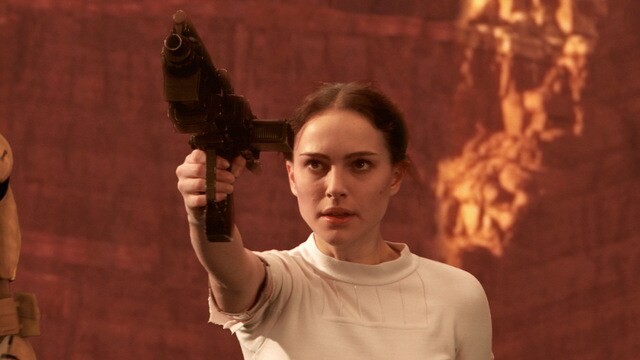
Padmé was brought to Polis Massa after the catastrophe on Mustafar. She gave birth to twins, Luke and Leia, in medical care. Soon afterward she died, and a funeral was held for her on Naboo.
The final journey of the former senator
Padmé was brought to Polis Massa after the catastrophe on Mustafar. She gave birth to twins, Luke and Leia, in medical care. Soon afterward she died, and a funeral was held for her on Naboo.
Children separated for protection
Obi-Wan and Yoda recognized that the twins would be endangered if their father and the Emperor discovered them. Leia was adopted by Bail Organa and Breha Organa on Alderaan, while Luke went to live with Owen and Beru Lars on Tatooine.
Two different family histories
The children grew up apart, unaware of their relationship and the circumstances of their birth. Their separate social environments would shape their identities before they met during the rebellion against the Empire.
Anthropological assessment
The twins' separation shows kinship being reorganized in response to political danger. Adoption and guardianship provided security, but also produced different forms of belonging and deliberately restricted family knowledge.
Interactive evidence lab
Were Luke and Leia raised together after Padmé died?
No. They were separated and raised by different families for their safety.
Choose a perspective
Sources and continuity notes
Star Wars: Episode III Revenge of the Sith. Read more about the event. Image captions clarify when the art is representative rather than an actual scene.
Next: Clone Force 99 resists Imperial orders →
Canon · 19 BBY · Imperial transformation
The births of Luke and Leia: source and social analysis
Historical sequence and documented actions
After the Mustafar confrontation, Obi-Wan took Padmé to the medical installation on Polis Massa. She gave birth to twins, Luke and Leia, before dying. To keep the children out of Darth Sidious's reach, Bail Organa adopted Leia and Obi-Wan brought Luke to Owen and Beru Lars on Tatooine. The twins' early separation was a protective decision made amid the Republic's collapse.
Power, family and institutional consequences
Kinship and care operated outside the new Empire's institutions. Adoption and guardianship formed two different family settings for siblings whose identities had become politically dangerous. Padmé should also be remembered as a senator, former elected queen and participant in the Republic's final debates, not only as the mother whose death begins other people's stories.
Official media and image interpretation
The existing official Padmé image depicts her before the medical crisis. The main historical evidence comes from Revenge of the Sith, The Clone Wars, The Bad Batch and the specific publisher histories linked here. These events overlap in 19 BBY but are not interchangeable episodes.
Check your historical judgment
Complete the two-question evidence check for feedback and corrections.