
- World
- Hutta
- Area
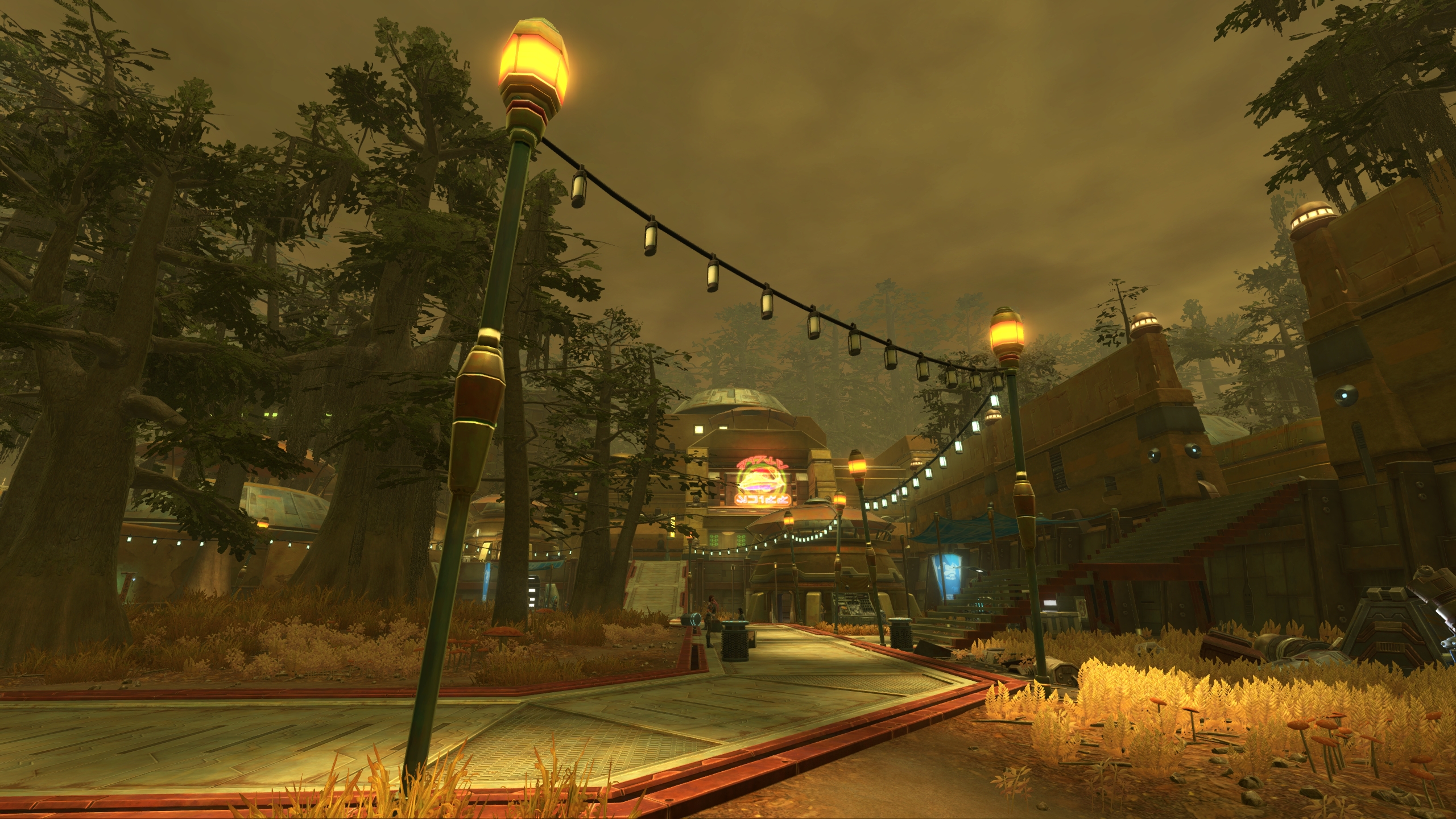
- Minboosa District
- Rebel leaders
- Adi Vonapa and Rakit
- Opposition
- Hutt authority and security
- Wider context
- Desperate Defiance
The Minboosa crisis was not simply a Mandalorian operation. Local workers and enslaved people, represented by leaders including Adi Vonapa and Rakit, rose against the structures controlling the district. The revolt closed transport access and destabilized Hutt authority at exactly the moment Sa'har and the Commander needed to pass through the area.
The rebellion begins from everyday exploitation
Minboosa's labor system tied political authority to extraction and coercion. Workers experienced Hutt power through wages, bondage, security forces, movement restrictions, and control of workplaces.
That makes rebellion an economic and social event before it becomes a military one.
Outside heroes do not own the rebellion
The Alliance Commander's presence can influence the outcome, but Adi, Rakit, and other locals possess their own political agency. Their uprising does not exist simply to provide a route to the next mission.
Treating local actors as protagonists rather than scenery preserves the scale at which the conflict mattered to people living on Hutta.
Transport shutdown converts labor power into strategic power
A rebellion that interrupts shipping can affect actors far beyond the workplace. Sa'har's plan stalls because access to the Hidden Chain shuttle depends on systems local people can disrupt.
Labor therefore becomes a form of logistical power: refusing or preventing movement changes military possibilities.
Event sequence
Workers and enslaved people face coercive Hutt authority.
Local leaders organize resistance.
Shipping and movement are disrupted.
Sa'har and the Commander must work through the crisis.
Hutt control is challenged while the Hidden Chain mission continues.
Explore the event
Why is this not just a side event?
Because control over labor and transport directly changes the main mission's logistics, and because the people of Minboosa have political stakes independent of the player.
How does slavery connect to infrastructure?
Forced labor sustains production and shipping. A revolt therefore threatens both ownership relations and the systems built on that labor.
Does outside intervention make the revolt less local?
No. External actors can affect a rebellion without becoming its original cause or primary source of legitimacy.
Anthropological assessment
The Minboosa rebellion makes class and labor visible inside a saga usually dominated by Jedi, Sith, and warriors. Economic systems are political systems when they determine who works, who moves, and who can use force.
It also demonstrates infrastructural power from below. Workers do not need to control a state to affect galactic events if they can disrupt the ports and facilities on which powerful outsiders depend.
Sources and further reading
3623 BBY · Legends · Source comparison
Historical narrative and cultural analysis
What the source supports
In the Minboosa District on Hutta, labor unrest and opposition to local coercion intersect with the wider conflict surrounding the Hidden Chain. Desperate Defiance introduces workers and rebellion leaders whose concerns cannot be reduced to the ambitions of distant Sith or Mandalorian factions. The social setting shapes why Sa'har Kateen's mission creates opportunities and risks.
Institutions, beliefs and material culture
Labor exploitation, slavery and resistance are political institutions and social practices, not merely scene decoration. Reading the rebellion from the workers' perspective shows that people may pursue immediate freedom and material safety even as powerful outsiders use the same territory for their own objectives. Published mission information does not prove that all workers agreed on a single revolutionary program.
Evidence limits and dating
These events follow SWTOR's Legends narrative. The BBY date is a historical placement and may not appear in the official release notes; a game's 2023–2025 publication date is not a fictional in-universe date. Dialogue and choices may vary, and unreported details remain unknown.
Publisher source: SWTOR primary update record →
Test your historical judgment
Your results will include an explanation of each correct answer and corrections for errors.