
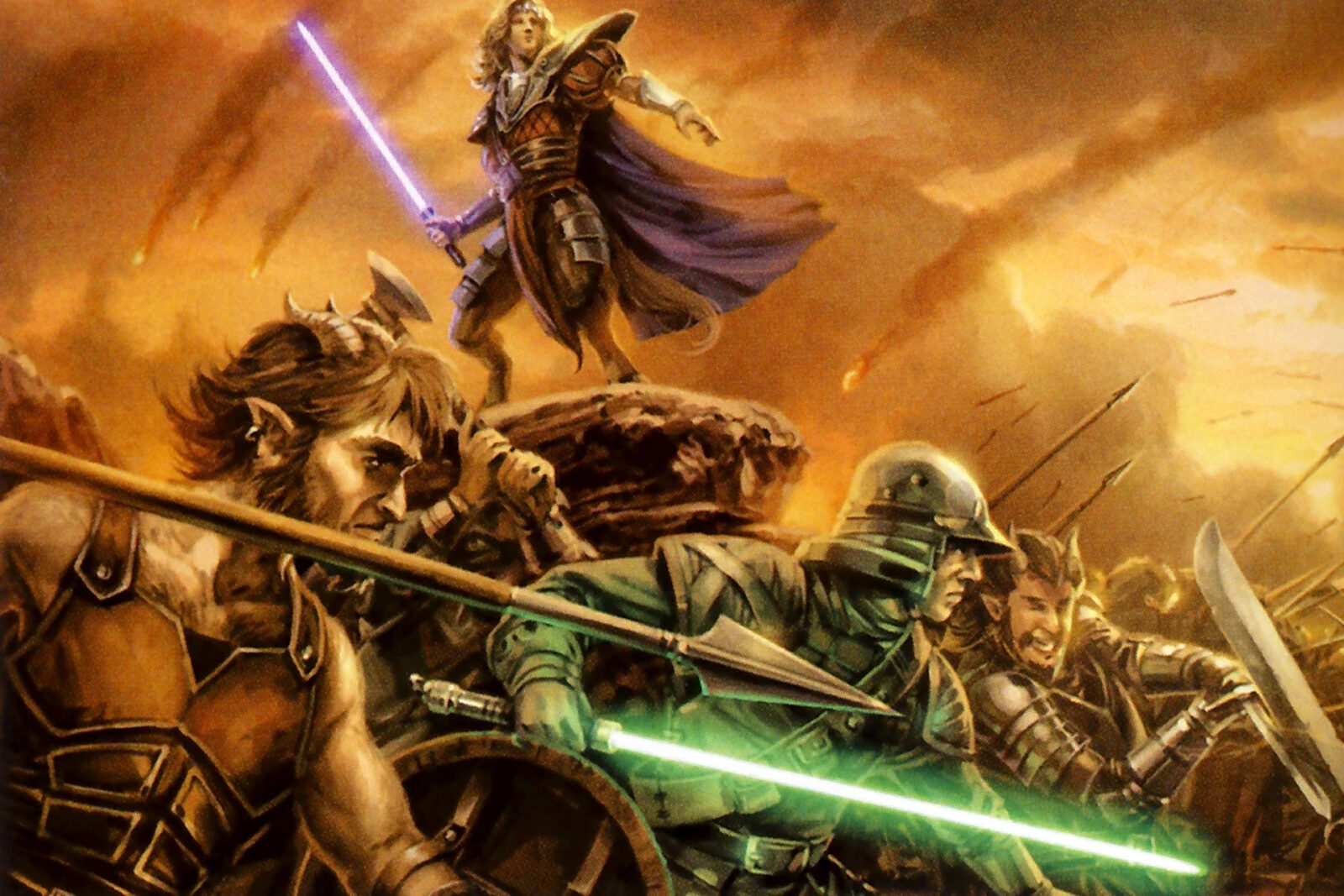
- Date
- c. 1100 BBY
- Continuity
- Legends
- Location
- Core Worlds, Outer Rim, and Sith-held regions
The Republic's power declines while rival Sith warlords fight one another across the Outer Rim.
Decline after centuries of warfare
About 1100 BBY, the Galactic Republic entered the period known in Legends as the Republic Dark Age. Military and financial exhaustion strained its institutions after many centuries of conflict. Communications, trade, and governmental influence became uneven across different regions. This is an approximate historical boundary, not a single day on which the Republic ceased operating.
Why Sith victories did not produce a single empire
The New Sith had made territorial advances, but their rulers failed to agree on stable succession or centralized leadership. Sith domains fragmented, and warlords fought each other even as they attacked Republic territory. Such rivalry prevented the immediate consolidation of their extensive gains.
The vulnerability of ordinary systems
Declining security affected more than fleets and political capitals. Commercial routes, access to impartial courts, and the ability of settlements to obtain assistance became less reliable where competing rulers controlled territory. These are broad institutional consequences of the era, not a claim that every planet experienced identical disruption.
Anthropological assessment
The Republic Dark Age offers a lesson in historical periodization. A powerful label can obscure highly variable local realities. Central institutions may decline without social life ending, and communities adapt in different ways to fragmented political authority.
Interactive evidence lab
Did the Republic vanish completely in 1100 BBY?
No. The date is an approximate marker of institutional decline, not the dissolution of all Republic government.
Study the event from three angles
Primary source and verification
The Essential Atlas; The New Essential Chronology; The Essential Guide to Warfare. Secondary event details may be checked against the referenced continuity record. Illustrations are identified as representative where the exact scene has not been pictured.
Legends · Late New Sith Wars
The Republic's long Dark Age
Story evidence and chronology
After centuries of New Sith Wars, many Republic systems faced collapsing security and infrastructure. Fragmented Sith warlords competed with one another while the Republic struggled to meet its obligations. The c. 1100 BBY designation is a broad period boundary, not one dated official proclamation by all worlds.
Society, coercion and institutional change
The decline of central authority changes everyday life: travel becomes less reliable, local rulers acquire greater responsibility and even Jedi may act as administrators or military defenders. Such effects varied across regions, and one term should not erase the survival of viable communities.
Sources, limits and artwork
This article uses the original Legends books, comics or reference narratives linked below. Distinguish dated events from later character outcomes, and distinguish contextual comic covers from the exact depicted scene. Missing exact casualty totals, dialogue and map positions remain unknown.
Test your historical judgment
Review the answers with corrections and educational explanations.