
Biography
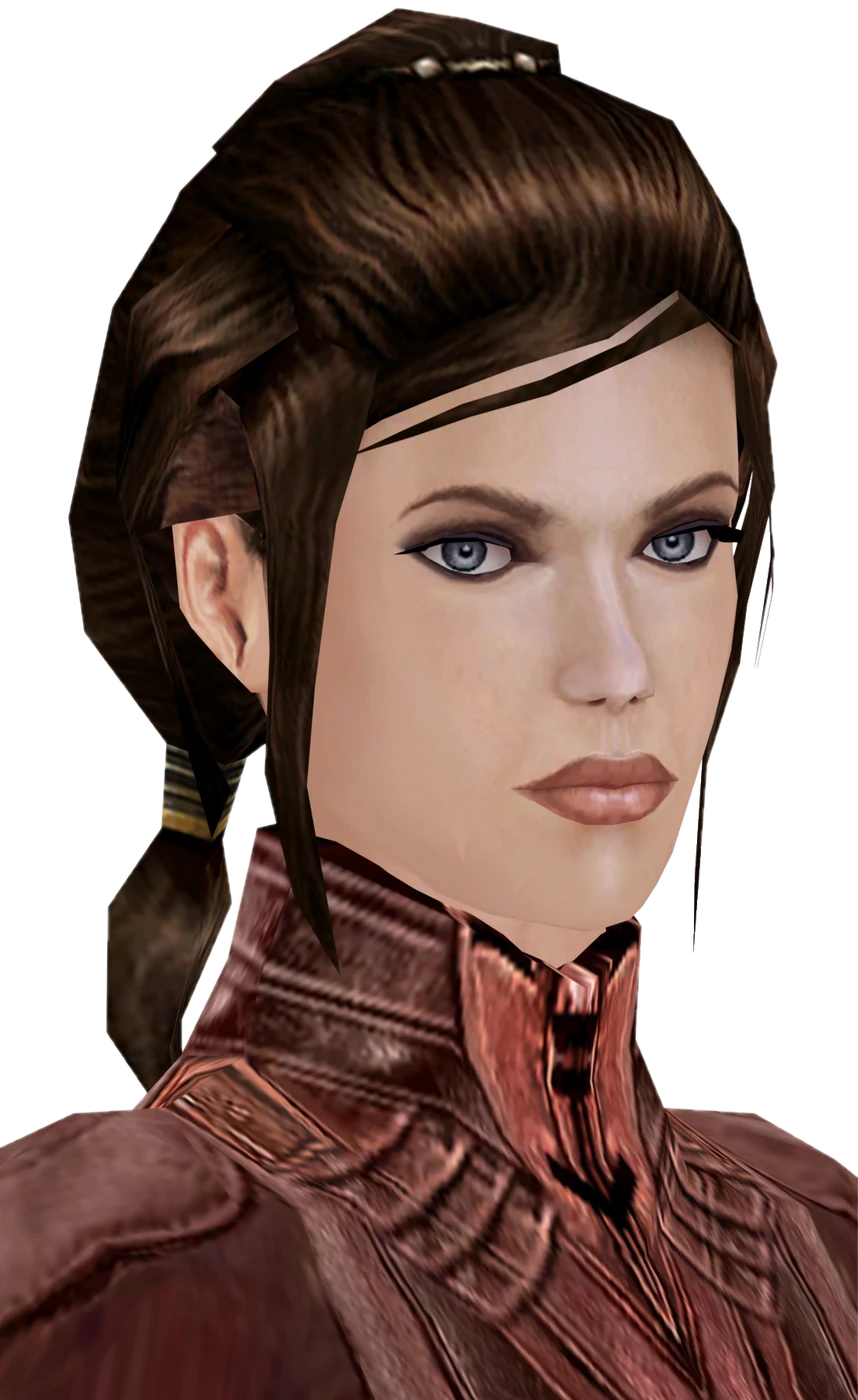
Bastila Shan is a Jedi in the Legends role-playing game Star Wars: Knights of the Old Republic. She possesses battle meditation, an unusual Force ability that can influence the morale and coordination of groups in combat. Her skill makes her valuable to the Republic during the Jedi Civil War. She participates in the Jedi mission against Revan, whose identity is then concealed through the suppression of the former Sith Lord's memories.
The player later searches for Bastila on Taris, and she becomes a major companion aboard the Ebon Hawk. Their journey involves discovering the Star Maps and confronting the danger posed by Malak and the Star Forge. Malak subsequently captures Bastila and pressures her to serve the dark side. Her choices, and the player's responses, become essential to the ending. KOTOR permits different outcomes, while later Legends works follow more specific developments in her life.
Relationships & belonging
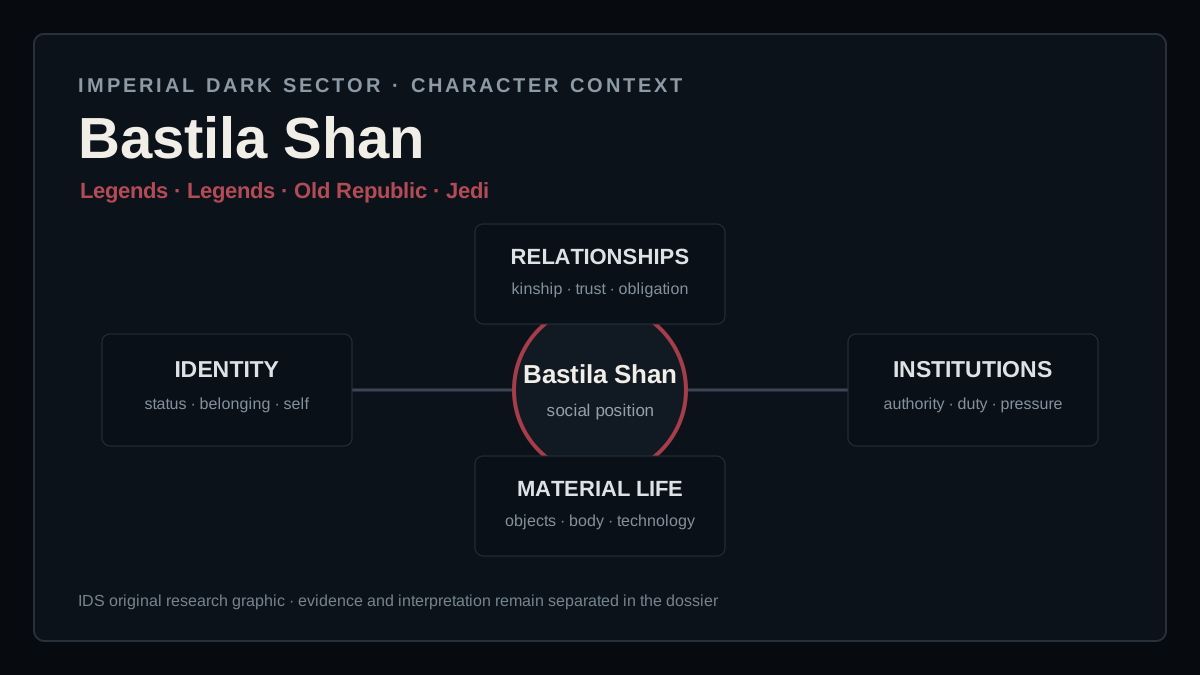
Bastila's relationship with Revan is complicated by the knowledge she initially possesses about the protagonist's past. She must cooperate with a person who does not know their own former identity. Their trust develops amid an institutional decision to withhold information, and it may become romantic depending on player decisions. The situation raises a question about how honest cooperation can be when access to personal history is unequal.
Family relationships also matter. Bastila's conflict with her mother Helena reveals obligations that cannot be reduced to Jedi discipline. The Ebon Hawk's diverse crew adds further forms of belonging, including companionship, disagreement, and practical dependence. These relationships allow Bastila to act as an individual beyond the status given to her by the Council.
Identity & social position
Bastila is not simply a Jedi instructor, love interest, or Force-power specialist. She is a young woman whose exceptional skill gives her strategic status while limiting her independence. Republic leaders value her battle meditation, and Sith leaders hope to redirect it. Her identity is produced through the tension between her own commitments and the way other people classify her as an asset.
As a member of the Shan family and the Jedi Order, Bastila faces demands from kinship as well as religious and institutional authority. Later Legends stories develop her personal history with Revan and their descendants. Those later accounts must be distinguished from the original game's branching choices so that a single version of the player's experience is not falsely presented as the only possible one.
Institutions & power
The Jedi Council considers Bastila important because battle meditation can affect warfare at a scale far beyond individual combat. That importance gives her prestige and responsibility, but also creates pressure to act according to institutional priorities. Her own interests and judgment do not always receive the same priority as the strategic needs that others attribute to her.
The Council's handling of Revan deepens the problem. Bastila cooperates with a plan that conceals the protagonist's earlier actions, creating unequal access to knowledge between companions. Malak's subsequent captivity of Bastila presents a more direct attempt to control her ability by force. The Republic and the Sith both seek access to her unusual capacity, although the methods and political purposes differ.
Beliefs & worldview
Bastila's Jedi training emphasizes discipline, self-control, and responsibility in the use of the Force. Her journey repeatedly tests those commitments. The knowledge she holds about Revan strains trust, while her family problems and relationships aboard the Ebon Hawk introduce obligations that cannot be addressed by reciting a formal rule.
During her confrontation with Malak, the possibility of falling to the dark side becomes an immediate personal struggle. KOTOR allows the player to influence her later choices, so any summary should distinguish the fixed event of her capture from the variable outcome. Her story is most informative when Jedi and Sith loyalties are examined through actions under pressure rather than treated as unchanging character labels.
Material life
Bastila's double-bladed yellow lightsaber is a recognizable part of her appearance in KOTOR. Yet her principal wartime importance comes from battle meditation, a capacity that cannot be reduced to her weapon. Her role demonstrates that the objects used in personal combat and the skills that affect large organizations are not necessarily the same sources of prestige.
The Ebon Hawk serves as a shared environment for the crew's work, travel, and conversations. It provides a setting in which Bastila is a companion rather than only an agent of the Council. Later detention and coercion show the reverse: the organization controlling a person's location and access to others can restrict that person's ability to decide how their skills will be used.
Historical significance
In the Legends history of the Jedi Civil War, Bastila contributes to the Republic's efforts against Malak through battle meditation and her involvement with the Star Forge mission. Her knowledge of Revan's true identity also connects the game's personal story to the political history of the Sith and Jedi.
For the 2003 game's narrative, Bastila is a central figure in the problem of trust. She knows information that the protagonist initially lacks, helps guide the journey, and later faces coercion herself. Her role complicates the assumption that members of a moral or religious institution always have clear control over their own decisions. Later Legends expands the Shan family's place in Old Republic history.
Anthropological assessment
Bastila's exceptional Force ability illustrates how institutions make claims upon individual skills. Battle meditation gives her special prestige, but other people may value the advantage it provides more than her independence. That relationship between capacity, obligation, and institutional authority is central to the way her story is told.
Her unequal knowledge of Revan's past adds an issue of informed trust. The Council's intervention affects a relationship that appears personal but is shaped by decisions made elsewhere. Her family ties and later experiences of captivity create further tensions between autonomy, obedience, and interpersonal obligation. The character is therefore most useful for studying the social consequences of power and knowledge, not simply for comparing light-side and dark-side points.
Material fandom · Collector reference
Collecting this Character
View the Bastila Shan collecting page: reviewed cards, figures, Funko and other formats
Explore related Star Wars media
Browse Star Wars books and collectibles related to this character.
Search Amazon for Bastila Shan ↗As an Amazon Associate I earn from qualifying purchases. Check the product, maker and edition before buying; searches may include unrelated items.
Sources and continuity
This dossier follows the Legends story of Star Wars: Knights of the Old Republic (BioWare and LucasArts, 2003). The game permits different player decisions and endings. Anthropological discussion is commentary on the fictional events, not an additional narrative event.
Character imagery
Bastila Shan in Knights of the Old Republic
Scenes and artwork from the character's published stories.

Connections
Battle meditation and Jedi duty
The relationships and institutions that shape Bastila's decisions.
Source record
Sources & continuity
This file is explicitly labeled Legends. Documented story material is kept distinct from IDS anthropological interpretation, and continuity-specific biography is not silently imported into another timeline.