
Complete profile
Doctor Aphra at a glance
Doctor Chelli Lona Aphra is one of the clearest examples in Star Wars of knowledge functioning as a form of power. She is not Force-sensitive, does not command an army, does not belong comfortably to a major political movement, and rarely possesses stable institutional authority. What she does possess is expertise. Aphra recognizes inscriptions, technologies, cultic traditions, ruins, burial sites, lost weapons, illicit collections, droid systems, and the economic networks through which cultural objects circulate. That expertise repeatedly places her beside people who possess much greater military, political, or supernatural power. She survives by making herself useful to them, escaping them, deceiving them, or locating something they cannot obtain without her.
Aphra is often described as a rogue archaeologist or treasure hunter, but neither label fully captures the tension at the center of her career. She has genuine historical curiosity. She can become intensely excited by an obscure culture, forgotten mechanism, unusual inscription, or disputed account of the past. At the same time, she routinely treats archaeological context as expendable when money, survival, status, or personal obsession is at stake. She steals. She lies about provenance. She sells objects into private markets. She activates dangerous technology without adequate caution. She turns sacred sites into workplaces, escape routes, and battlefields. She is therefore not a parody of archaeology. She is a character through whom Star Wars can ask what happens when real expertise becomes separated from professional ethics.
Her life is also structured by unstable attachment. Aphra wants autonomy, but she repeatedly forms intense relationships with people who can hurt her or whom she can hurt. She wants to be admired, but she distrusts institutions capable of granting respectable recognition. She wants intimacy, but she is quick to conceal information, manipulate situations, and preserve an exit. She claims self-interest, yet repeatedly risks herself for people she could have abandoned. She can recognize her own selfishness with unusual clarity without reliably changing it. This contradiction is not a side detail. It is one of the main engines of her stories.
The result is a character whose adventures can be read at several levels at once. On the surface, Aphra stories are fast-moving archaeological capers filled with traps, droids, criminals, Imperial officers, lost technologies, cursed-looking artifacts, betrayals, jokes, and narrow escapes. Beneath that action lies a persistent set of questions about ownership, historical authority, colonial collecting, institutional legitimacy, professional credentials, family memory, trauma, desire, and whether knowledge of the past creates obligations in the present.

Life history
Early life: scholarship, family conflict, and the origins of distrust
Canonical comic material places Aphra’s childhood inside a family already divided over what the past was worth and what scholarship demanded from the living. Her father, Korin Aphra, was a scholar whose interests included the Jedi and the Ordu Aspectu. His research was not a hobby around the edges of family life. It consumed his attention. His investment in ancient questions helped teach Chelli that the past could be thrilling, consequential, and worth pursuing, but it also connected scholarship with neglect. Knowledge was something a parent could love so intensely that the people beside him felt secondary.
Her mother, Lona Aphra, offered a different model. She was skeptical of the absolutism that could accompany ideological or scholarly obsession, and she eventually left Korin, taking Chelli with her. Their move to Arbiflux gave Aphra experience far from the formal academic spaces associated with her father. It also exposed her to the instability of Imperial expansion. Lona was killed during violence connected to Imperial efforts to destabilize the world. Chelli survived and was returned to Korin. The event links one of Aphra’s most important personal losses to the political conditions of the Empire, even though she would later accept employment from Darth Vader himself.
That apparent contradiction matters. Aphra does not behave like a character whose politics can be summarized by a stable ideological identity. She often understands systems well enough to know they are dangerous while still entering them for access, protection, money, or opportunity. Her mother’s death does not turn her into a committed Rebel. Her father’s failures do not make her reject archaeology. Instead, both experiences seem to reinforce an approach centered on personal maneuverability. Large institutions, moral programs, and even family promises can fail. If survival depends on certainty, Aphra tries to make herself the certainty.
Secondary chronology commonly places her birth in 24 BBY. That date situates her childhood during the final decades of the Republic and her adolescence and education under the Empire. The shift matters because Aphra’s professional formation occurs in a galaxy where archives, universities, local collections, archaeological sites, and historical narratives exist under authoritarian rule. Imperial power is not merely a military background to her life. It affects what survives, who can travel, which discoveries are destroyed by protocol, which histories become dangerous, and who can convert knowledge into institutional authority.
The destruction or loss of cultural material is therefore not abstract to Aphra. Her stories repeatedly return to vanished archives, buried sites, censored histories, ruined temples, illicit collections, and objects that have been removed from their original contexts. Some of this is simply the adventure language of Star Wars archaeology. But within her personal history it also has emotional continuity. Aphra grew up with the knowledge that places and people could disappear. Her answer is not preservationist restraint. It is often acquisition. She wants to find the thing before someone else does, know what it does before someone else understands it, and possess enough information to remain difficult to control.
IDS interpretation: Aphra’s hunger for artifacts can be read partly as a response to instability. This is not a clinical diagnosis and the comics do not reduce her behavior to one childhood cause. The stronger claim is structural. Her life repeatedly teaches her that control over knowledge, objects, and escape routes increases the chance of survival.
Parents, memory, and unfinished arguments
The Aphra family
Korin Aphra is one of the most revealing relationships in Chelli’s life because he is simultaneously a source of knowledge, resentment, resemblance, and obligation. Aphra can mock his obsessions and resent the damage they caused while behaving in ways that reproduce them. Both father and daughter are capable of letting the past reorganize the present. Both can pursue obscure historical questions long after other people would consider the cost irrational. Their difference is often method rather than appetite. Korin wants historical meaning and vindication. Chelli wants discovery, advantage, excitement, and sometimes money, but she is no less capable of fixation.
Their reunion over the Ordu Aspectu turns professional legitimacy into family leverage. Korin helps expose the weakness in Aphra’s doctorate and uses the resulting suspension of her credentials to pressure her into assisting his research. It is an unusually personal form of academic coercion. Aphra’s professional identity becomes a bargaining chip in a dispute with her father, while the historical problem they investigate is also the subject that consumed him during her childhood. The story therefore collapses family history, disciplinary authority, and archaeological research into the same conflict.
Lona Aphra’s importance is different. She is absent for much of Chelli’s adult life because she died when Chelli was young, but memory of her remains emotionally potent. Later stories make Aphra’s memories themselves vulnerable to interrogation and manipulation, turning Lona into part of the material through which enemies can attack Chelli’s identity. Lona represents a past that Aphra cannot simply sell, falsify, or outrun. She is also associated with a critique of rigid moral categories and obsessive idealism, ideas that resonate with Chelli’s adult suspicion of heroic certainty.
Aphra’s relationships with both parents complicate any claim that she simply does not care. She often behaves as if emotional detachment is a strategic strength, yet family repeatedly penetrates that defense. Korin can infuriate her precisely because his opinion matters. Lona’s memory can hurt because love and grief persist. When Aphra is forced to confront what she has become, family history supplies evidence that she did not begin as a person without attachments. She learned to treat attachment as dangerous.
Family also gives the archaeology a different meaning. The Ordu Aspectu is not just another contract. It is inherited unfinished business. Ruins become sites where family arguments continue after years of separation. Historical evidence is asked to settle questions of pride, obsession, and legitimacy that cannot actually be solved by an artifact. This is one of Aphra’s most anthropologically useful themes: objects can carry social relationships without resolving them. A relic may authenticate a claim about the past while leaving the human conflict around that claim intact.
University of Bar’leth
Schooling, professional training, and the doctorate she did not earn honestly
Aphra’s education matters because she is not an amateur who merely calls theft archaeology. She studied at the University of Bar’leth, and the stories treat her as someone with real disciplinary knowledge. Secondary comic references specify study in galactic history and ancient civilizations while she worked toward a doctorate in archaeology. She learned enough conventional scholarship to understand methods, arguments, professional status, archives, academic hierarchies, and the difference between a discovery that could transform a field and an object that was merely expensive.
At the same time, Aphra was an adversarial student. Her conflict with Sava Toob-Nix became a struggle over what counted as legitimate archaeology and who had the authority to decide. Aphra favored dangerous fieldwork and dramatic discovery. Toob-Nix regarded her as flashy, undisciplined, and unsuitable. Their hostility was personal as well as professional. The result is important because the eventual fraud does not emerge from ignorance. Aphra knows the standards she violates. She understands institutional procedure well enough to manipulate it.
Her university years also produced relationships that would matter long after graduation. Sana Starros knew her there, and their connection became romantic before collapsing into one of the defining unstable relationships of Aphra’s adult life. Eustacia Okka was another university connection who later became part of Aphra’s professional world. Kho Phon Farrus also traces a rivalry back to the Bar’leth environment. The university is therefore not merely a credentialing institution in Aphra’s biography. It is the social field in which lovers, colleagues, rivals, and future archaeological disputes begin.
The doctorate itself is one of the most important pieces of Aphra’s character. Official StarWars.com material summarizes the outcome by saying she received her doctorate “under duress,” and the comics show why. Her doctoral research failed to produce the spectacular result she needed. Her supervisor possessed illegal abersyn symbiotes and had no intention of approving her. Aphra responded by stealing the symbiotes, planting them at her field site on Boothi XII, and presenting them as an archaeological discovery. Imperial protocol then ensured the dangerous organisms were destroyed, eliminating the most important physical evidence of the fraud.
This was not simply plagiarism or a false citation. It was fabrication of archaeological context. Aphra manufactured provenance. She moved material from one location to another and constructed a false relationship between object, place, and time. In archaeology, context is often what allows an artifact to become evidence. By falsifying context, Aphra did more than steal an object. She produced a false history that other scholars could spend their careers trying to explain.
That distinction makes the fraud especially revealing. Aphra’s later career repeatedly depends on excellent interpretation of genuine archaeological evidence, yet one of the foundational achievements behind her professional title was deliberately fake. She is therefore both a real expert and a fraudulent doctor. Those facts do not cancel each other. They make her professional identity unstable. She possesses competence without clean legitimacy.
The fraud also helps explain why credential loss is so threatening to her. Without institutional recognition, many legitimate routes for selling or transferring artifacts close. Buyers can doubt provenance. Professional bodies can exclude her. Scholars can refuse cooperation. The black market becomes more attractive because it asks fewer questions about disciplinary ethics. Aphra already prefers illicit networks, but suspension of her doctorate narrows the boundary between rogue scholarship and outright criminal collecting even further.
From an anthropological perspective, the Bar’leth story is a compact study of credential power. Toob-Nix can determine whether Aphra becomes a doctor because institutions give supervisors gatekeeping authority. Aphra defeats that authority not by reforming the institution but by exploiting Toob-Nix’s own misconduct. Each possesses compromising information about the other. Academic legitimacy becomes the outcome of mutual vulnerability rather than a transparent evaluation of scholarship.
Fields of knowledge
What did Doctor Aphra actually study?
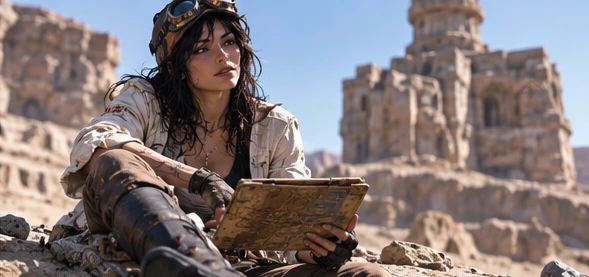
Aphra’s formal field is archaeology, but the stories require a much broader working knowledge. She operates across galactic history, ancient civilizations, material culture, archaeological survey, inscriptions, tomb and temple architecture, technological relics, droid systems, antiquities markets, and the histories of Force-related groups. She is especially drawn to subjects that respectable institutions consider marginal, dangerous, mythologized, inaccessible, or professionally risky.
Galactic history is foundational. Aphra has to know enough chronology to recognize when an object belongs to a relevant era and enough political history to understand why possession matters. A relic from a forgotten local culture may have different implications from Jedi material, High Republic technology, or machinery associated with a vanished occult group. Dating is never merely descriptive in her work. It influences danger, market value, and who will begin chasing her.
Ancient civilizations are equally important because Aphra works at the level of cultural systems rather than isolated collectibles. She encounters architecture, ritual spaces, encoded traditions, burial contexts, cults, sects, and institutional remains. The Ordu Aspectu case demonstrates how a historical group can survive as a disputed narrative long after its members are gone. Different people can interpret the same record as evidence of heresy, tragedy, scientific ambition, or Jedi failure. Aphra’s job is often to reconstruct enough of these competing accounts to locate something material.
Archaeoxenobiology enters her education through the abersyn symbiote fraud. Even though the discovery was falsified, the episode shows that archaeological practice in Star Wars can encompass biological remains or organisms whose historical context matters. Aphra’s fraud worked precisely because the planted specimens could plausibly be interpreted as an extraordinary ancient survival. She understood enough about the category of evidence to know how the institution would react.
Occult archaeology becomes increasingly important later, particularly through the Ascendant. The Ascendant attempted to reproduce effects resembling the Force through technology. Their remains blur distinctions between religion, engineering, ritual, and weaponry. Aphra’s investigation of the Spark Eternal forces her to treat objects not simply as symbols of belief but as functioning systems capable of altering bodies and minds. The University of Bar’leth itself was built over Ascendant ruins, creating an extraordinary irony: beneath the respectable institution that trained Aphra lay precisely the kind of forbidden material that would dominate her later career.
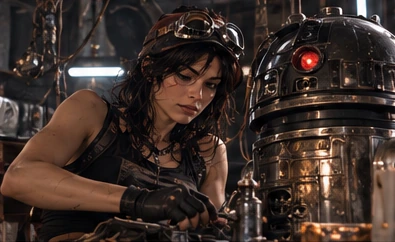
Aphra also possesses practical technical literacy. She works with droids, slicing, weapons, ships, traps, interfaces, and improvised field equipment. She is not presented as the galaxy’s greatest engineer, but her archaeology depends on understanding machines as material culture. Ancient technology has to be powered, decoded, repaired, disabled, moved, or survived. This practical competence separates her from a scholar who can interpret a text but cannot operate in a hazardous site.
Finally, she studies markets whether or not she calls that study. An artifact in Aphra’s hands exists simultaneously as historical evidence and as a commodity. She evaluates buyers, scarcity, legal restrictions, criminal demand, collector psychology, and the risks produced by ownership. Her career demonstrates that antiquities knowledge includes social knowledge. To sell an object, one must know not only what it is but who desires it, who claims it, who can authenticate it, who can seize it, and who is willing to kill for it.
Career atlas
Doctor Aphra’s archaeology career
Her career is easiest to understand as four phases. They are all shown at once here because the important change is not a date-by-date sequence. It is how her training, patrons, risks, and ethical compromises change over time.

Employer, threat, and survival test
Working for Darth Vader
Aphra’s recruitment by Darth Vader is the event that transformed her from an obscure rogue archaeologist into a person operating near the center of galactic power. Vader needed resources and specialists for activities he could not simply route through ordinary Imperial channels. Aphra was useful because she combined technical skill, criminal access, historical knowledge, and a willingness to do things that conventional professionals would refuse. She became part of his secret operations alongside violent droids and bounty hunters.
For Aphra, the arrangement offered extraordinary opportunity. Vader could finance or enable operations far beyond the scale of an independent scholar. He had access to intelligence, transport, weapons, and fear. Association with him could open doors by making resistance irrational. But the same relationship also made every success dangerous. The more Aphra knew about Vader’s private objectives, the more she became a liability. She was intelligent enough to understand from early in the relationship that employment by Darth Vader did not have a retirement plan.
This is one reason her survival is so revealing. Aphra does not defeat Vader. She plans around him. When he finally decides she has outlived her usefulness and vents her into space, she survives because she anticipated the possibility and created a contingency. That is one of the purest expressions of her worldview. Power cannot always be confronted, persuaded, or morally transformed. Sometimes the rational response is to assume betrayal and prepare the mechanism that lets you survive it.
Her work for Vader also shows how expertise becomes morally compromised through patronage. Aphra may not share Vader’s ideology, but her labor helps him pursue private objectives. An archaeologist does not become politically neutral merely because she is motivated by money or curiosity rather than loyalty. Knowledge supplied to violent institutions becomes part of their capacity to act. Aphra often understands this, but understanding does not reliably cause refusal.
Vader’s interest in Luke Skywalker pulls Aphra into one of the central secrets of the period. She contributes to the chain of investigation through which Vader learns more about the pilot who destroyed the Death Star and about the history connecting Luke to Anakin Skywalker and Padmé Amidala. Here again, historical knowledge has present consequences. Genealogy, medical information, old relationships, and buried truths are not passive records. They can redirect the behavior of one of the most powerful people in the Empire.
Aphra’s emotional relationship to Vader is mostly defined by fear, fascination, and the challenge of surviving proximity to him rather than affection. She can appreciate the scale of what she has gotten herself into while recognizing that his attention is lethal. Her humor around danger should not be mistaken for lack of fear. Aphra often jokes because she is afraid and still needs to think.
After surviving him, she is not liberated from the habits the relationship reinforced. Vader confirms one of her worst expectations about other people: usefulness ends, and then the powerful dispose of you. The problem is that Aphra can reproduce the same logic at smaller scales. She sometimes treats companions as resources, withholds information, and preserves herself at their expense. Vader is therefore both an employer she escapes and an extreme model of instrumental relationships that Aphra must struggle not to imitate.

Essential story archive
Major Doctor Aphra comic stories
Series fact: The 2020 Doctor Aphra run reached 40 issues. The later Chaos Agent series moved her story into the New Republic era.
These are the stories that do the most to establish Aphra’s archaeology, relationships, survival habits, and personal history. The longer appearance-by-appearance list has been cut so this section functions as an essential reading map.
Darth Vader: recruitment and the secret droid army
Aphra enters Vader’s orbit as a specialist willing to obtain dangerous technology and work outside legal channels. This establishes her relationship with 0-0-0 and BT-1, her criminal-professional network, and the central bargain of her life: extraordinary access in exchange for proximity to lethal power.
End of Games: Vader tries to kill her
Vader’s attempt to eliminate Aphra confirms what she has suspected about powerful employers. Her contingency plan saves her. The event is essential because it turns distrust from a personality trait into something reinforced by experience.
The Ordu Aspectu
The first solo arc puts her father, doctorate, professional legitimacy, and archaeology at the center of the story. The Ordu Aspectu mystery also shows that archaeological evidence does not arrive with one obvious meaning. Competing histories have to be reconstructed from incomplete material.
The Screaming Citadel
Aphra recruits Luke Skywalker because his Force connection can help activate the Immortal Rur crystal. It is a concise example of what makes her dangerous to people she likes: genuine connection can coexist with manipulation when a discovery is at stake.
The Rings of Vaale
Aphra assembles a new crew to pursue a legendary archaeological prize while Ronen Tagge seeks the same material. The arc makes collecting ethics, private wealth, destruction, and ownership part of the adventure rather than background detail.
The Ascendant and the Spark Eternal
The Ascendant tried to reproduce Force-like effects through technology. Their ruins connect directly back to Bar’leth, while the Spark Eternal makes Aphra herself part of the continuing history of the artifact. It is one of the richest archaeology stories in either Aphra series.
Chaos Agent
The New Republic-era continuation pairs Aphra with Luke again and changes the institutional problem around her. The question is no longer only whether she can survive empires and collectors. It is whether her expertise can function inside a public system that expects accountability and trust.
Interactive relationship file
Family, lovers, friends, employers, and enemies
Aphra’s social world is unstable by design. A lover can become a pursuer, an employer can become an execution threat, and a droid can move from tool to captor. Filter the cards to see how quickly the categories overlap.
Korin Aphra
Korin shaped Chelli’s interest in the past and showed her how obsession can damage a family. Their Ordu Aspectu expedition makes archaeology into unfinished family business.
Lona Aphra
Lona’s death remains one of the deepest losses in Aphra’s life. Later attacks on Aphra’s memory make Lona part of the struggle over who Chelli believes she has become.
Sana Starros
Sana knew Aphra at Bar’leth before the Vader years. Their romance ended badly, but Sana repeatedly returns as smuggler, ally, critic, rescuer, and someone who knows Aphra’s patterns too well.
Magna Tolvan
Tolvan begins as a pursuer and becomes a lover. Their attraction is inseparable from secrecy, institutional danger, and the possibility that either woman can become the other’s vulnerability.
Darth Vader
Vader gives Aphra access to extraordinary operations while making her expendable. Her survival after he disposes of her becomes the strongest proof that she plans for betrayal because betrayal has repeatedly been rational to expect.
Black Krrsantan
Krrsantan’s relationship with Aphra is transactional, violent, and sometimes surprisingly dependable. Explicit danger and explicit payment are easier for her to understand than sentimental promises.
0-0-0 / Triple-Zero
Triple-Zero can be equipment, colleague, threat, and controller. The relationship repeatedly reverses who is using whom.
BT-1
BT-1 brings heavy firepower into an astromech-shaped body and helps turn one of Star Wars’ most familiar droid pairings into something deliberately dangerous.
Luke Skywalker
Luke gives Aphra access to something she cannot manufacture: a Force-sensitive partner who believes knowledge can matter for more than profit. She betrays him, yet their paths cross again more than once.
Ronen Tagge
Tagge’s destructive relationship with rarity gives Aphra an opponent whose collector ethics can make her own look restrained by comparison.
Kho Phon Farrus
Kho’s rivalry with Aphra reaches back to Bar’leth and later centers on Ascendant relics. Their conflict is professional, personal, and driven by competing obsessions.
Eustacia Okka
Okka connects Aphra’s student past to her later archaeological life and shows how reputations, old friendships, and professional networks travel with scholars into the field.
File fact: Sana Starros knew Aphra during her university years, long before the Vader period made Doctor Aphra notorious.

Romance, attraction, and self-sabotage
Sana Starros, Magna Tolvan, and Aphra’s love life
Aphra is canonically a lesbian, and her romantic relationships are not decorative additions to an otherwise self-contained adventure character. They are among the clearest places where the consequences of her survival habits become visible. A person can maintain operational secrecy when dealing with a buyer or an employer. Intimacy is harder. Lovers notice missing information, divided loyalties, disappearing acts, and the moment self-protection becomes betrayal.
Sana Starros is especially important because the relationship reaches back to Aphra’s university years. Sana knew Chelli before Vader, before the most famous catastrophes, and before many of the relationships that later defined her reputation. That history gives Sana a perspective other characters lack. She knows that Aphra did not emerge fully formed as a notorious rogue archaeologist. She knew the student capable of charm, deception, ambition, and attachment before those traits hardened into an adult survival style.
The romance ended badly, but Sana’s repeated return demonstrates that “former lover” is too narrow a description. They can become business partners, reluctant allies, rescuers, critics, and people who know exactly which emotional buttons to press. Sana is often positioned closer to a pro-social moral center than Aphra, but the relationship works because it is not simply saint versus scoundrel. Sana understands criminal economies and dangerous work. Her objection is not that Aphra is adventurous. It is that Aphra too often makes another person pay the hidden price of her escape plan.
Magna Tolvan produces a different dynamic. Tolvan begins as an Imperial officer pursuing Aphra. Attraction develops across political and professional opposition, and the danger is part of the relationship from the start. Their first major romantic escalation occurs under bizarre and lethal circumstances, which is entirely appropriate for Aphra. The relationship converts pursuit into intimacy without eliminating pursuit. Tolvan can care about Aphra and still exist inside institutions whose demands conflict with that care.
With both Sana and Tolvan, Aphra repeatedly encounters a problem she cannot solve by being cleverer about artifacts. Love requires disclosure. It requires accepting that another person may possess information capable of hurting you. Aphra’s preferred response to vulnerability is to preserve an exit, but a permanent exit strategy can become an emotional wall. Her romantic failures therefore follow the same structure as her professional life: she is excellent at surviving immediate danger and less reliable at building conditions in which danger does not have to be expected all the time.
There are moments when Aphra seems happiest not because she has obtained an object but because someone sees through her and remains present anyway. That possibility frightens her because it weakens the identity she performs as a purely self-interested operator. If another person matters, then betrayal costs more. If Aphra admits the cost, she loses the comforting claim that survival is the only outcome she truly values.

Social world
Work friends, temporary crews, rivals, and enemies
Aphra’s career depends on assembling temporary social systems. A dig may require a pilot, slicer, droid specialist, mercenary, scholar, buyer, translator, or person with access to restricted space. She rarely commands a stable organization that can supply all of those roles internally. Instead, she builds networks mission by mission. This makes her professionally flexible but socially vulnerable. Every new job can require negotiation with people who remember what happened on the last one.
Her work friends are therefore often people with strong boundaries around trust. Black Krrsantan can work with her because the arrangement can be transactional. Droids can stay in her orbit because usefulness and threat are explicit. Sana can collaborate because she already knows the risks. New crew members frequently discover that Aphra’s charisma is not the same thing as reliability. She can inspire participation without creating durable security.
Her enemies are similarly diverse. Some want an artifact. Some want revenge. Some represent institutions she has deceived. Some are rival archaeologists. Some are former partners. Some become enemies because Aphra has information she should not possess. Darth Vader is the extreme version of the last category, but the pattern repeats throughout her career: knowledge creates opportunity and danger simultaneously.
Ronen Tagge is important because his antagonism is connected to collecting itself. Kho Phon Farrus is important because rivalry emerges from a shared professional world. Triple-Zero becomes important because a tool can become a coercive social actor. Imperial authorities matter because illegality is partly produced by political institutions. Aphra’s enemy list therefore cannot be separated from the structures in which she works. She is not simply unlucky. Her methods systematically generate conflict.
Yet Aphra also accumulates people willing to return. That fact prevents the simple interpretation that she is incapable of friendship. The better description is that she makes friendship difficult. She can be funny, exciting, brilliant, observant, and unexpectedly caring. She can also lie, vanish, manipulate, and choose the option that preserves herself. People come back because the positive qualities are real, not because the damage is imaginary.
Her social life thus resembles her archaeology. Nothing stays in a single category. An enemy can contain useful knowledge. A lover can become an ally. A colleague can become a rival. A dangerous droid can become part of a crew. Aphra is constantly reclassifying people according to immediate conditions, while the people around her resist being reduced to functions. Much of her character development comes from discovering that relationships have histories just as artifacts do. Context matters.
Interactive motive console
What keeps pulling Aphra back into trouble?
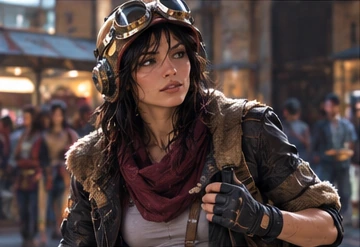
Aphra does not keep returning to dangerous ruins, criminal deals, impossible employers, and unstable relationships for one simple reason. Her choices usually come from several motives operating at the same time. Curiosity tells her that the mystery is worth opening. Pride tells her she should be the person who solves it. Money promises independence. Danger makes the discovery feel immediate. Survival teaches her to keep an exit ready. Attachment then complicates the plan by giving her people she cannot treat as disposable, even when she tries.
This is why the familiar description of Aphra as merely “reckless” is too shallow. She is capable of careful planning, technical preparation, contingency thinking, and extremely fast risk assessment. The problem is that she often uses those abilities to make an unreasonable situation survivable rather than to decide not to enter it. She can recognize that a vault is trapped, that an employer is murderous, or that a relic should probably remain untouched and still conclude that the correct response is to prepare better equipment, hide another escape route, and go in anyway.
Her archaeology and her personal life follow the same pattern. Aphra is drawn toward things that promise knowledge, recognition, leverage, excitement, or emotional connection, then becomes uncomfortable with the obligations attached to them. She wants the discovery but not the institution that controls it. She wants the relationship but not the vulnerability it requires. She wants the lucrative job but not the employer’s ownership of her. Much of her trouble begins in the gap between wanting access and resisting the conditions of access.
Explore the motives below. Each one shows what the motive gives Aphra, what it costs her, and how it tends to appear in her stories.
Curiosity
Aphra’s curiosity is genuine scholarship, not a pose she uses to justify theft. She wants to know how a lost machine worked, what a ruined culture believed, why an account of the past does not fit the surviving evidence, and what everyone else has overlooked. The more obscure or forbidden the answer, the more powerful the pull becomes. That intellectual hunger is one reason she can notice patterns other people miss. It is also why a warning label often functions less like a barrier than an invitation.
How it appears: mysteries such as the Ordu Aspectu, the Ascendant, and dangerous ancient technologies become difficult for her to leave alone because solving them promises both knowledge and the satisfaction of being the person who understood first.
The conflict: curiosity makes her a real archaeologist, but it can also make her ignore the point at which investigation becomes recklessness.

Why the cycle keeps repeating
Aphra’s attraction to danger should not be mistaken for fearlessness. She is frequently frightened, and she is often perfectly aware that a situation is getting worse. The important pattern is what she does with that fear. Instead of treating fear as a reason to withdraw, she often converts it into a technical problem. She looks for hidden information, alternate exits, a person she can bargain with, a droid she can reprogram, a lie that will buy another minute, or a contingency no one else knows exists. Her confidence comes less from believing she cannot be hurt than from believing she can improvise one move longer than everyone around her.
That survival habit was reinforced by working for Darth Vader. Employment under Vader turns usefulness into temporary protection. Aphra learns that being indispensable can keep a dangerous patron from killing her today, but it does not make tomorrow safe. The rational response is to accumulate leverage and prepare for betrayal. The problem is that this logic survives after the immediate crisis. She begins to treat contingency planning as a normal condition of work and sometimes of intimacy. An exit strategy protects her from coercion, but it also makes complete trust nearly impossible.
Money matters for the same reason. Credits are not only a reward at the end of an adventure. They fund ships, fuel, equipment, repairs, hired help, bribes, forged identities, medical care, and the ability to refuse the next employer. Profit is therefore connected to freedom. Yet once archaeological material becomes a source of liquidity, the market starts influencing which objects are worth finding. A historically important site can lose to a dangerous relic with a wealthy buyer. Aphra’s professional knowledge lets her understand why that is ethically destructive while her material circumstances keep making the temptation practical.
Recognition adds another contradiction. Aphra mocks respectable institutions and often behaves as though their approval is meaningless, yet she insists on being Doctor Aphra. Her fraudulent path to the doctorate reveals how badly she wanted access to the status the title could provide. She wants to be recognized as brilliant while rejecting the gatekeepers who decide what legitimate brilliance looks like. That tension helps explain why being underestimated can provoke her so effectively. Proving someone wrong is not merely satisfying. It confirms the identity she has spent years constructing.
Attachment is the force most likely to disrupt all of those calculations. Sana Starros, Magna Tolvan, her parents, Luke Skywalker, recurring crew members, and even murderous droids become parts of a social world Aphra cannot reduce to profit and risk. She may lie to people she cares about, abandon them, return to them, rescue them, or insist that they do not matter just before acting as though they do. These relationships are not evidence that she secretly possesses a simple heroic core. They show that self-interest is an incomplete description of her behavior.
The recurring Aphra pattern is therefore not “she never learns.” She often does learn. She becomes better at identifying danger, understanding her own failures, recognizing manipulation, and seeing the damage caused by treating people or artifacts as tools. What changes more slowly is the structure of her decisions. Curiosity still feels like purpose. Danger still sharpens her attention. Escape still feels safer than dependence. Recognition still matters. People still get through her defenses. Growth occurs inside that pattern rather than replacing it entirely, which is why the same basic ingredients can keep producing new trouble without making every story identical.
Emotion and evidence
Aphra’s emotional fault lines
Aphra is most visibly alive when competence, discovery, danger, and recognition converge. Solving an impossible archaeological problem gives her more than money. It proves that she read the evidence correctly, survived the risk, and found something other people missed. She also enjoys verbal sparring, flirting, improvisation, drinks after a job, and people who can keep up with her. That matters because it undermines the identity she often performs. Aphra repeatedly claims that self-interest is enough, but her strongest relationships show that she does not actually want a solitary life.
What gets through the armor is not routine danger. She expects danger. Loss, abandonment, coercive control, and evidence that she has hurt someone she genuinely values affect her more deeply. Her mother’s death remains part of that emotional history. Her father’s judgment matters despite her resistance to it. Failed relationships hurt because they expose the cost of always preserving an escape route. Guilt works the same way. Aphra can know that she has done something wrong without immediately becoming better at avoiding the same pattern. That gap between insight and behavior is one of her most consistent emotional tensions.
The result is a character who can look happiest immediately after something reckless worked and most exposed when someone remains important after the job is over. She is good at surviving the crisis. She is less comfortable with the quieter consequences that remain when there is no blaster fire left to solve.

Restricted file
Aphra’s secrets
Aphra treats information the way other people treat weapons. Some secrets protect her. Some create leverage. Some are simply things she cannot admit without changing how people see her.
FILE 01The doctorate fraudProfessional risk: extreme
Her title rests on genuine expertise and a fabricated archaeological discovery involving abersyn symbiotes. Exposure threatens academic credibility, lawful antiquities access, and the identity she built around being “Doctor” Aphra.
FILE 02Contingencies against employersSurvival value: extreme
Aphra assumes powerful employers may eventually decide she knows too much. The contingency that saves her after Vader ejects her into space is the clearest example of secrecy functioning as survival technology.
FILE 03False provenance and substituted objectsMarket risk: high
She understands that controlling an artifact’s story can be as useful as controlling the artifact. A forged context, swapped object, or misleading chain of custody can change what buyers, rivals, and institutions believe.
FILE 04What she knows about powerful peoplePolitical risk: lethal
Employment by Vader and repeated contact with major galactic figures gives Aphra knowledge that can become leverage. It also gives people with enormous power reasons to silence her.
FILE 05Fear beneath the jokesPersonal exposure: high
Aphra’s humor keeps dangerous situations socially fluid while she searches for a way out. Treating danger lightly does not mean she underestimates it. Often the joke is part of the plan.
FILE 06She cares more than she claimsPersonal exposure: critical
The gap between “I only care about myself” and her actual behavior is one of her longest-running secrets, including from herself. The people she tries to treat as optional repeatedly become the people whose loss matters most.
What does she want?
Personal goals
Aphra’s short-term goals change constantly, but several long-term desires recur. She wants freedom of movement. She wants access to the galaxy’s strangest historical problems. She wants enough money and leverage to choose her own work. She wants recognition for being brilliant without accepting all of the discipline that professional recognition normally demands. She wants relationships without surrendering the control that intimacy requires.
She also wants to survive her own reputation. As the stories accumulate, Aphra is no longer an unknown archaeologist who can enter every job cleanly. People know her. Buyers know her methods. former partners remember betrayals. Institutions have records. Enemies compare notes. Reputation becomes an archaeological layer of its own, one she has to work through every time she meets someone who has heard a story about Doctor Aphra.
Another goal is access to the unknown. Aphra is not satisfied by repeating safe work. The best prize is often something no one fully understands. This makes her vulnerable to precisely the artifacts most likely to be dangerous. The unknown offers professional distinction and emotional stimulation at once.
By the New Republic era, a new question emerges: can Aphra use the same expertise within a public institution without losing the independence she treats as essential? Working with Luke and participating in artifact retrieval for a post-Imperial government does not erase her past. It tests whether her skills can serve a collective project rather than only personal survival and private deals.
The answer remains intentionally unstable. Aphra is compelling because reform does not occur as a clean conversion. She can make a better choice and later make a selfish one. She can care without becoming safe. Growth appears as increased awareness, occasional sacrifice, and a wider circle of people whose well-being affects her decisions, not as the disappearance of the traits that made her recognizable.

Field practice
How Doctor Aphra actually does archaeology
Aphra is not an amateur thief using “archaeologist” as a costume. She researches, identifies, interprets, dates, and contextualizes material culture. The problem is that she combines those real skills with methods that a preservation-minded archaeological team would reject.
Research first, danger second
Before the blaster fire begins, Aphra usually has already done the quieter work. She follows inscriptions, maps, collector rumors, archives, legends, old technical records, and fragments of disputed history. Her strongest skill is pattern recognition. She can connect an object to a culture, a forgotten event, a religious tradition, or a machine that no one else realizes still works.

Fieldwork becomes improvisation
Ancient sites in Star Wars are rarely passive. Doors activate, droids wake up, traps still function, and relics can behave more like weapons than museum pieces. Aphra treats slicing, repair, firearms, deception, and escape planning as part of field practice because surviving the site is often inseparable from understanding it.

The ethical failure usually comes at extraction
A preservation-focused team would record provenience, stabilize the site, document surrounding material, consult relevant communities, and separate research goals from private financial incentives. Aphra often prioritizes the object that can be moved, sold, activated, or used. Removing it may destroy the contextual relationships that make it historically intelligible.

The escape plan is part of the dig plan
For Aphra, extraction includes herself. Alternate routes, false identities, hidden transport, armed associates, and contingency plans are central to an occupation conducted among empires, collectors, criminal syndicates, and rivals. She often survives because she assumes the job will end more badly than everyone else does.
Field fact: The University of Bar’leth later proves to have been built over Ascendant ruins, making Aphra’s own university part of the archaeological history she eventually investigates.
Interactive field exercise
The Aphra archaeology ethics lab
This version goes beyond a single “good” or “bad” choice. You are balancing preservation, survival, profit, trust, and curiosity across eight situations. Each answer changes your field profile. Some choices preserve objects but damage people. Others save lives while destroying context. Aphra’s problem is that the most immediately effective choice is often the one that creates the largest ethical debt later.
Make a choice in any scenario to begin building your field profile.
A sealed temple contains a functioning weapon
The archaeological context is intact, but a syndicate team is less than an hour away.
Select a response.
A collector offers enough credits to erase every debt
The object is unique. The buyer will keep it private and may never allow scholars or descendant communities to see it again.
Select a response.
Your employer will probably kill you when the job is over
You possess information that makes you useful now and disposable later.
Select a response.
A local community says the relic is not yours to excavate
Your evidence suggests it could rewrite an important piece of galactic history. The community regards the site as sacred and asks you to leave.
Select a response.
Your rival is minutes from reaching the same chamber
You can document the room properly or grab the one object you know the rival wants. You do not have time for both.
Select a response.
The artifact might save someone you love
Activating it could destroy the site and may permanently damage the object. Waiting for study could cost a life.
Select a response.
Your sponsor asks you to falsify provenance
The artifact is genuine, but its real origin would trigger legal claims and probably end the expedition.
Select a response.
The “artifact” may contain a conscious personality
It can answer questions no living scholar can answer, but activating it may create a new autonomous being with its own interests.
Select a response.
Field profile in progress
Complete the scenarios above to build a full field profile.
Your result will explain which priorities dominate your decisions and what that means for the way you would practice archaeology under pressure.
Your comparison with Aphra will appear here after the final scenario.
IDS analysis
Anthropological assessment: Doctor Aphra and the politics of the past
Aphra is unusually valuable for an anthropological Star Wars archive because her stories make material culture active in social life. An artifact is rarely only an old object. It can be sacred property, scientific evidence, family inheritance, state resource, commodity, weapon, status symbol, or proof that an official historical narrative is wrong. Conflict begins when different actors assign these categories differently.
Her career also foregrounds provenance. Museums and collectors often care about authenticity, but archaeology requires more than proof that an object is old. Where it was found, what surrounded it, how it was deposited, and how it moved afterward can matter as much as the object itself. Aphra’s doctoral fraud is therefore an especially serious violation. She did not only lie about authorship. She fabricated the relationship between evidence and place.
The black market around Aphra shows how cultural heritage becomes commodified. Scarcity increases price. Danger can increase prestige. A collector may value an object because no one else can possess it. Criminality can become part of the object’s aura. Aphra understands these dynamics instinctively. She sells not just material but stories about material. The buyer acquires a relic and the claim to have obtained something forbidden.
Her adventures also resemble debates about colonial collecting and the authority to remove objects from local contexts. Star Wars worlds contain communities with their own histories, sacred traditions, and political claims, yet outside experts, corporations, empires, and collectors can treat a site as available simply because they possess the technology to enter it. Aphra often participates in this extractive logic. Her charm does not neutralize it.
At the same time, official institutions are not automatically ethical alternatives. The Empire destroys, confiscates, censors, and weaponizes. Universities can contain abusive gatekeepers. Private scholars can become obsessed. Wealthy collectors can destroy what they own. Criminals can preserve something accidentally because they want to sell it. Aphra stories are strongest when they refuse the lazy equation “institutional equals good, outlaw equals bad.” Ethical evaluation depends on practice, power, accountability, and consequences.
The Ascendant material adds another dimension by blurring religion and technology. Their devices attempt to reproduce powers associated with the Force. For an anthropological reader, the important question is not whether the Ascendant were “really religious” or “really technological.” Their material culture shows that those categories can overlap. Ritual, belief, engineering, embodiment, and political desire can be parts of the same system. Aphra’s archaeological expertise is necessary because the meaning of the devices cannot be understood by engineering alone.
Her relationships reveal a parallel lesson about social identity. Aphra is not reducible to occupation, sexuality, criminal status, or political affiliation. She moves among categories and institutions without being exhausted by any of them. She is a daughter, former student, doctor by compromised credential, archaeologist by real expertise, lesbian, lover, criminal, contractor, survivor, and occasional ally of people with much more conventional heroic identities. Those roles can conflict.
Aphra also demonstrates that expertise is morally incomplete. Knowing more does not automatically make a person better. Knowledge increases capacity. What matters next is how that capacity is used, who bears the risk, who receives the benefits, and whether affected people have any say. This is one reason she is such a productive contrast with idealized scholarly figures. She is smart enough that her ethical failures cannot be explained by ignorance.
Finally, Aphra makes historical memory personal. Her father’s obsessions, her mother’s death, her fraudulent doctorate, her lovers, her employers, and the artifacts she has pursued all become layers of a biography she cannot simply leave behind. She understands better than most characters that the past survives in objects. Her harder lesson is that it also survives in people.
Later career
Aphra in the New Republic era
The post-Endor setting changes the political environment without changing Aphra’s personality overnight. The Emperor is gone. Darth Vader is gone. The New Republic is attempting to build a different state. But archaeological sites, black markets, private collectors, old Imperial networks, and unresolved cultural claims remain. Political transition does not reset the material past.
Doctor Aphra - Chaos Agent places her in this transitional environment and pairs her with Luke Skywalker on artifact work. Marvel’s series page currently lists five published issues, beginning June 18, 2025. The return to Luke is narratively useful because their earlier history contains both cooperation and betrayal. A new political era cannot erase the interpersonal record any more than a new government can erase the history of an artifact.
The New Republic also creates the possibility that Aphra’s expertise could become bureaucratically useful. Governments need people who can locate, authenticate, recover, and understand cultural property. Yet institutional work requires documentation and accountability, exactly the areas in which Aphra has historically resisted constraint. The question is not whether she is qualified. She is. The question is whether qualification can be separated from reliability.
That tension gives her later career room to develop without transforming her into a conventional hero. Aphra can help recover cultural objects and still think about leverage. She can work beside Luke and still consider betrayal. She can participate in a public project and still protect private contingencies. Change becomes visible through which option she ultimately chooses and whose interests she allows into the calculation.

File fragments
Random Aphra file fragment
The standalone fact list has been removed. Those details now live where they belong: her first appearance is discussed with the comics, Bar’leth facts with education, Vader survival with the career section, and the 40-issue 2020 run with the publication history.
Press the button to open a random file fragment.
Where to read next
Essential Doctor Aphra reading order
Research trail
Material fandom · Collector reference
Collecting this Character
Explore related Star Wars media
Browse Star Wars books and collectibles related to this character.
Search Amazon for Doctor Aphra ↗As an Amazon Associate I earn from qualifying purchases. Check the product, maker and edition before buying; searches may include unrelated items.
Sources and evidence notes
This expanded dossier prioritizes Lucasfilm and Marvel sources for broad characterization and publication facts. Comic-derived chronology and detailed biographical reconstruction are cross-checked against secondary Star Wars reference material where official summaries do not reproduce the full events. Interpretive sections are labeled as IDS analysis rather than presented as dialogue or internal thoughts Aphra never states.
- Doctor Aphra Databank · StarWars.com ↗
- Who Is Doctor Aphra? · StarWars.com ↗
- Doctor Aphra: A Reader’s Guide · StarWars.com ↗
- Official Pride feature: Aphra, Sana, and Tolvan · StarWars.com ↗
- The Personal Impact of Doctor Aphra · StarWars.com ↗
- Inside Intel: The Ascendant · StarWars.com ↗
- Who Is Sana Starros? · StarWars.com ↗
- Doctor Aphra (2020) series · Marvel ↗
- Doctor Aphra (2020) #40 · Marvel ↗
- Doctor Aphra - Chaos Agent · Marvel ↗
- Chelli Lona Aphra reference chronology · Wookieepedia ↗ · secondary chronology used for detailed comic-event cross-checking.
Archaeology without institutional restraint
Doctor Aphra treats the past as a field of opportunity. Ancient weapons, ruins, artifacts, droids, and forbidden sites can become sources of money, information, leverage, or danger depending on who controls them.
That makes her an unusually useful character for IDS because archaeology is never neutral in her stories. Recovering an object immediately raises questions about ownership, interpretation, theft, preservation, and who is willing to kill for access.
Survival through unstable relationships
Aphra repeatedly survives by building relationships with people she may later betray, disappoint, manipulate, or genuinely care about. Her alliances with Vader, Sana Starros, Triple-Zero, BT-1, and others rarely fit simple categories of friendship or employment.
The pattern gives her stories an underworld social structure where trust is valuable precisely because it is scarce. Aphra’s intelligence keeps her mobile, but the consequences of using people accumulate around her.