
01 · Overview
What defines this tradition or weapon?
Makashi represents the point at which lightsaber combat becomes a specialized dueling art rather than an extension of broad battlefield swordplay. Its movements are associated with precision, controlled footwork, efficient parries, and attacks that exploit small openings. Instead of overpowering an opponent through repeated force, the practitioner tries to make every movement serve a positional purpose.
02 · Historical development
Why did it emerge?
The form is traditionally linked to periods in which lightsaber-wielding opponents became common enough to require a dedicated answer. That historical framing is important because it explains why Makashi places so much attention on blade-to-blade geometry, weapon retention, and single-opponent timing. It is a product of a social environment in which trained Force users increasingly had to fight other trained Force users.
03 · Combat logic
How does it change an exchange?
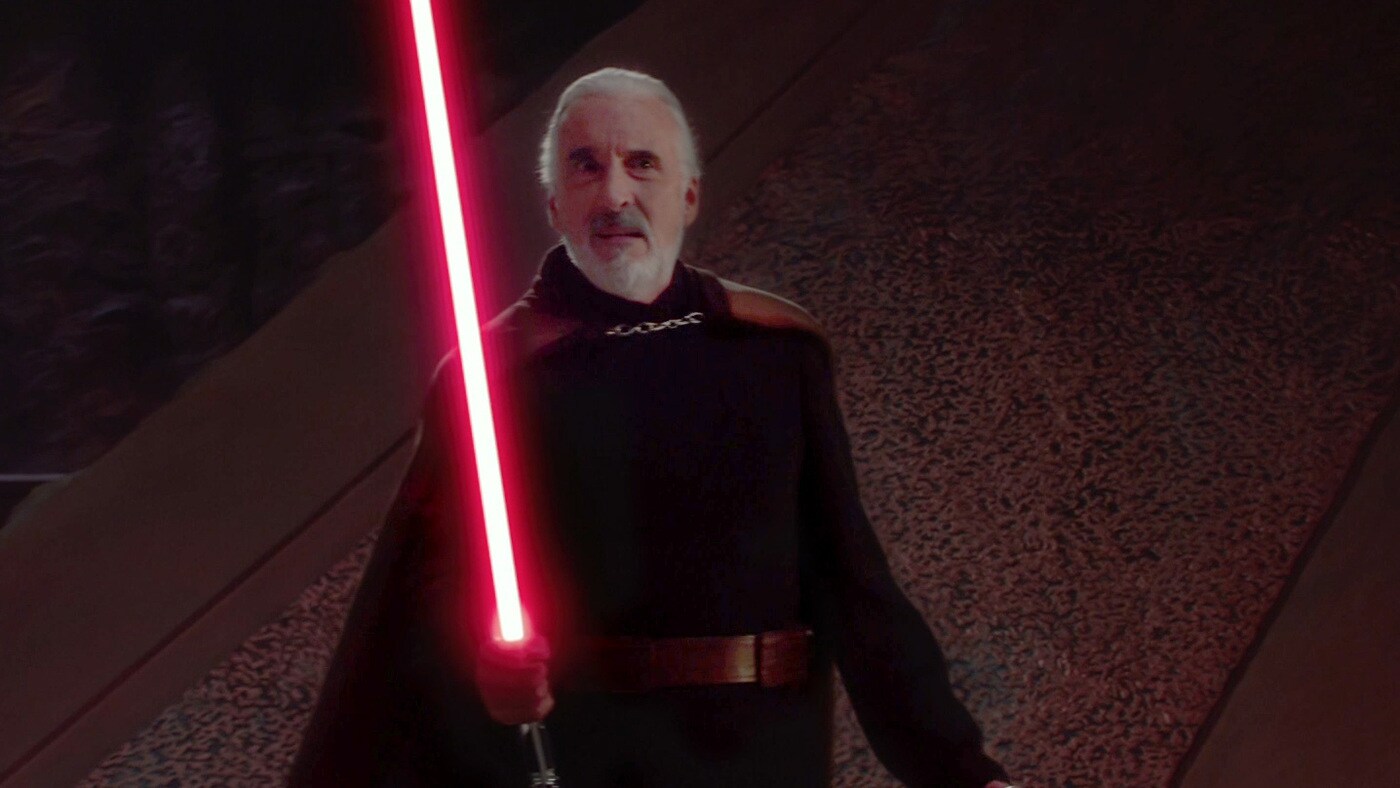
Makashi encourages economy. The blade often stays closer to a controlled line, footwork manages measure and angle, and the user seeks a clean opportunity instead of filling space with large swings. Curved-hilt lightsabers, most famously associated with Count Dooku, reinforce this visual identity by changing wrist alignment and emphasizing directional control. The weapon does not create Makashi, but it can complement its dueling priorities.
04 · Limits & counters
Where does it become vulnerable?
A form optimized for a single armed opponent can become less comfortable when surrounded, pinned by massed fire, or forced to protect a group. The same narrow efficiency that makes Makashi dangerous in a duel can make it less forgiving when threats arrive from multiple directions. Practitioners therefore benefit from broader defensive knowledge rather than treating a preferred form as an exclusive rule set.
05 · IDS analysis
What does it reveal about Star Wars society?
Makashi demonstrates how prestige and combat skill can reinforce one another. Its reputation for refinement, elegance, and technical mastery creates a social language around dueling. In characters such as Dooku, style becomes part of political self-presentation: precision, aristocratic posture, and controlled violence communicate authority before the duel is decided.
06 · Source trail
Sources & continuity notes
IDS separates current canon evidence from Legends reference traditions. The links below are starting points for the claims summarized in this file.
Mentioned in this file