Social history · Anthropology · Ordinary worlds
Daily Life in Star Wars
Most people in the Star Wars galaxy are not Jedi, Sith, generals, senators, or famous smugglers. They eat, work, commute, raise children, repair machines, pay for goods, seek medical care, worship, study, socialize, dress for local climates, and navigate rules created by governments, employers, families, guilds, criminal groups, and religious institutions. This hub follows those ordinary systems.
Daily-life map
Start with an ordinary question
These topics work together. A meal depends on agriculture, trade, household structure, class, technology, religion, and local ecology. A job depends on training, tools, employers, political order, transportation, and the rights a worker actually possesses.
Food & drink
What do people eat, and what does a meal tell us?
Food in Star Wars is shaped by ecology, trade, technology, class, occupation, and migration. Frontier households may rely on local production or preserved supplies. Urban populations depend on long supply chains, markets, vendors, restaurants, corporate distribution, and imported ingredients. Military bases and starships turn eating into logistics, while cantinas and dining rooms turn it into social life.
Meals also mark identity. What is ordinary on one world may be rare or expensive on another. Shared food can create hospitality, family routine, celebration, or political negotiation. Drinks served in cantinas reveal leisure economies and service labor, while rationing or scarcity can show the consequences of war and isolation.
Work & labor
The galaxy runs on people doing jobs
Star Wars constantly shows labor even when the plot focuses elsewhere: farmers, miners, shipbuilders, mechanics, pilots, medics, clerks, droid technicians, bartenders, factory workers, prison laborers, soldiers, bounty hunters, traders, couriers, administrators, and servants. Work establishes class position and determines where people live, what skills they learn, what risks they face, and how much freedom they have to move.
The social conditions of work differ radically. Some labor is salaried or independent. Some is military service, debt obligation, incarceration, coerced extraction, or outright slavery. Corellian shipyards, Ferrix salvage work, Kaminoan cloning, Kessel extraction, moisture farming, and the industrial worlds of the Empire all show that political systems depend on material production.
Housing & domestic space
Where people live reveals social position
Homes range from rural farmsteads and clan compounds to cramped urban apartments, palace complexes, military barracks, starship quarters, communal enclaves, refugee shelters, and hidden safehouses. Housing reflects climate and technology, but also wealth, legal status, occupation, family structure, security, and access to land.
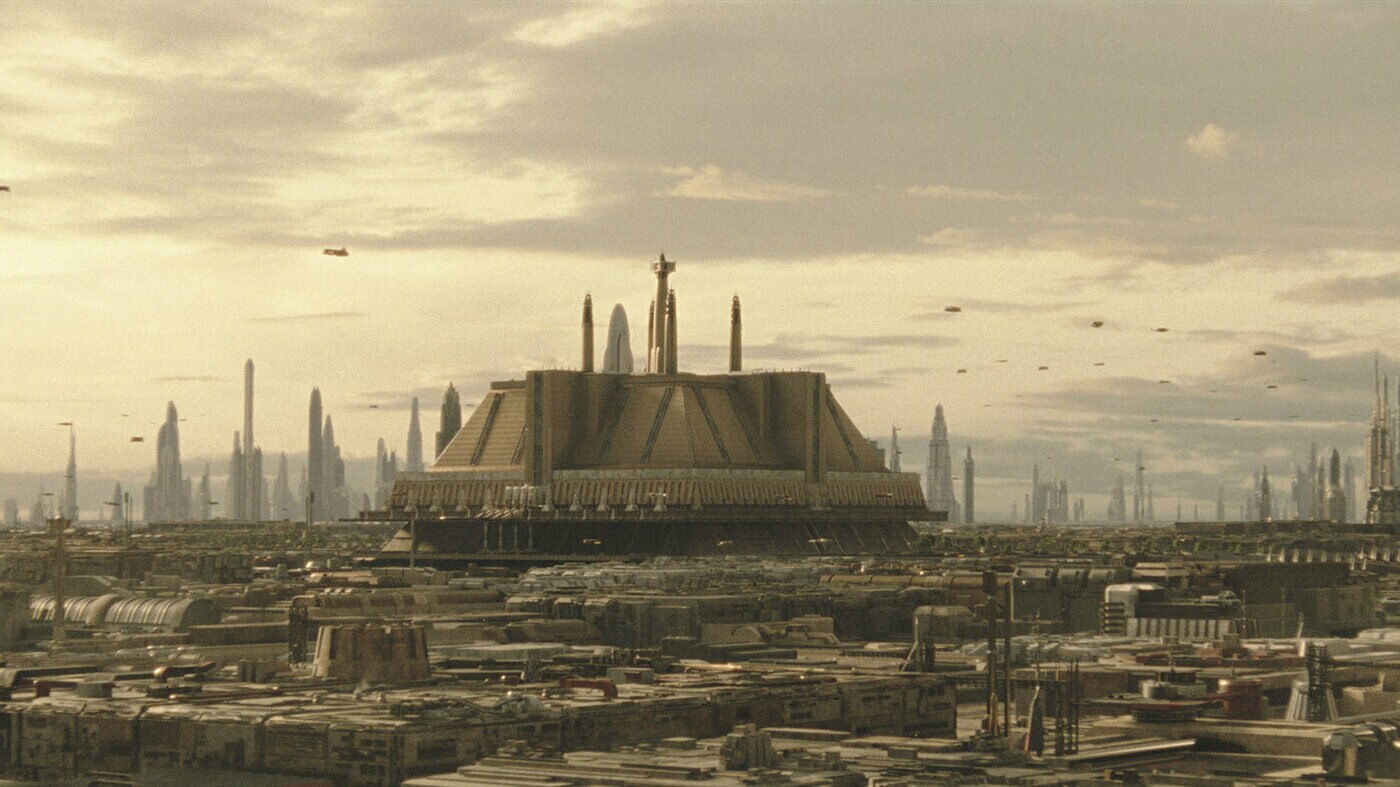
Domestic space is politically important because it determines privacy and vulnerability. An apartment on Coruscant exists inside dense infrastructure and surveillance. A Tatooine homestead organizes household labor around environmental scarcity. A starship can function simultaneously as vehicle, workplace, storage space, and home. Exile and war can turn housing from a stable residence into a temporary or hidden arrangement.
Family & kinship
Family is larger than bloodline
Star Wars uses biological descent constantly, but everyday kinship is much broader. Adoption, foundlings, clans, crews, masters and apprentices, foster households, military brotherhood, and long-term partnerships all create obligations that can function like family. Leia is raised by Bail and Breha Organa. Din Djarin and Grogu become parent and child through care and public recognition. The Ghost crew becomes a durable household through shared work, danger, and mutual responsibility.
Kinship determines inheritance, political legitimacy, identity, caregiving, and social expectations. It can also create conflict when family obligations compete with institutional rules, as they do for Jedi, Mandalorians, aristocratic houses, criminal clans, and political dynasties.
Leisure & entertainment
What do people do when they are not working?
Cantinas, music, dancing, racing, gambling, festivals, sporting events, gaming tables, droid entertainment, casinos, performance venues, and local celebrations give Star Wars communities social spaces outside formal work. Leisure reveals class because access is unequal. A luxury casino on Canto Bight and a crowded frontier cantina may both be entertainment spaces, but they organize status, labor, risk, and consumption very differently.
Entertainment also creates public culture. Music travels between worlds. Racing produces celebrity and local prestige. Gambling connects leisure to debt and criminal economies. Festivals and commemorations can reinforce political or religious identity. These activities show people participating in shared life rather than simply reacting to galactic conflict.
Education & socialization
How does a society teach children what is normal?
Education includes schools, academies, apprenticeship, military training, religious instruction, family teaching, occupational learning, and informal mentorship. Jedi younglings learn inside an institution that combines spiritual practice, history, ethics, physical training, and controlled recruitment. Imperial academies produce military and technical personnel. At Attin shows a highly managed childhood in which education helps reproduce a protected social order.
Education matters because it transmits more than information. It teaches authority, discipline, identity, social roles, acceptable behavior, and expectations about the future. Different systems produce different kinds of citizens, workers, soldiers, religious specialists, or political subjects.
Medicine & care
Healing depends on technology, institutions, and access
Star Wars medicine includes bacta tanks, field medics, prosthetics, medical droids, hospitals, emergency evacuation, cloning science, cybernetics, and improvised care in remote settings. Technology can be advanced while access remains uneven. A military medical center, wealthy palace, rebel base, frontier settlement, and prison do not offer the same resources or the same relationship between patient and institution.
Medicine also changes the social meaning of the body. Prosthetics can restore function. Cybernetics can become part of identity. Cloning turns reproduction and genetics into state infrastructure. Bacta allows severe injuries to be treated, but treatment still depends on possessing the material, equipment, trained personnel, and secure time needed for recovery.
Transportation & mobility
Distance shapes opportunity
Daily mobility includes walking, speeders, air taxis, public and private ships, freighters, ferries, military transports, mounts, and hyperspace travel. Access to transportation affects work, trade, education, migration, family contact, and political participation. A person with a starship experiences the galaxy differently from someone whose life is confined to one settlement or planet.
Vehicles also reproduce inequality. Some are privately owned, some belong to employers or governments, and some are unavailable without wealth, licensing, technical expertise, or political permission. Travel networks make cosmopolitan centers possible while leaving other communities isolated.
Clothing & appearance
Dress communicates identity before anyone speaks
Robes, uniforms, armor, work clothes, ceremonial dress, jewelry, helmets, rank markings, hairstyles, and local textiles communicate occupation, class, affiliation, gender presentation, religious commitment, climate adaptation, and political status. Imperial uniforms create bureaucratic sameness. Mandalorian armor can mark clan history and creed. Senatorial clothing turns political office into public display.
Dress can also conceal or transform identity. Disguises allow movement across controlled spaces. Uniforms grant or remove authority. Armor can be inherited, customized, repaired, or ritually significant. Clothing is therefore material culture carried directly on the body.
Markets & exchange
Credits are only one part of economic life
Star Wars economies operate through wages, trade, barter, contracts, debt, tribute, salvage, smuggling, taxation, criminal protection, military procurement, and resource extraction. Markets connect distant worlds, but they do not eliminate local systems. Tatooine commerce, Corellian shipbuilding, Ferrix salvage, Canto Bight luxury, and Hutt patronage represent very different forms of exchange.
Economic life also depends on trust and institutions. A currency has value only where others accept it. A contract matters only if someone can enforce it. Smuggling becomes profitable because borders, taxes, prohibition, or scarcity create opportunities outside legal markets. Everyday exchange therefore links household decisions to galactic politics.
Religion & worldview
Belief enters ordinary life through practice
Religion in Star Wars is not limited to Force users fighting with lightsabers. Worldviews appear through ritual, pilgrimage, sacred places, funerals, moral instruction, vows, relics, ancestors, architecture, calendars, clothing, naming, and everyday ideas about fate or proper conduct. The Jedi, Sith, Nightsisters, Guardians of the Whills, Mandalorian creeds, and other traditions organize belief differently.
Religious life also changes under political pressure. Temples can be destroyed, practitioners persecuted, traditions dispersed, and sacred objects hidden or repurposed. Families and small communities may preserve practices even when formal institutions disappear.
Crime, law & informal order
What happens where formal government is weak?
Crime in Star Wars includes smuggling, theft, piracy, trafficking, assassination, corruption, extortion, spice distribution, illegal salvage, and organized syndicates. But criminal worlds also contain rules. Pirate crews, Hutt kajidics, bounty-hunting networks, local gangs, and syndicates depend on reputation, contracts, hierarchy, punishment, and negotiated territory.
The boundary between crime and law is political. An activity may be legal on one world and prohibited on another. Resistance movements can be classified as criminals or terrorists by the states they oppose. Corporations can exercise police powers. Criminal organizations can provide protection or dispute resolution where governments do not. Everyday people navigate these overlapping authorities rather than a simple divide between law and chaos.
Ordinary life
The galaxy between major historical events
Daily life is where the large structures of Star Wars become real. A regime change matters because identification rules change, soldiers appear, workplaces are reorganized, prices shift, travel becomes dangerous, or particular groups become targets. A war matters because parents disappear, supply chains break, schools close, hospitals fill, housing becomes temporary, and people decide whether to collaborate, resist, flee, or adapt.
Looking at ordinary life also prevents the galaxy from collapsing into a story about famous individuals. Institutions survive because clerks process records, technicians maintain machines, workers produce goods, families transmit memory, teachers train children, traders move supplies, medics treat injuries, and communities reproduce social expectations from one day to the next. Those ordinary activities are the infrastructure of every Republic, Empire, rebellion, clan, cult, corporation, and settlement.
This is why IDS treats daily life as a bridge section. Use it to move from a specific object or routine into wider questions about power, culture, belief, class, gender, kinship, ecology, history, and material life.
Evidence trail
Concrete examples, not invented sociology
IDS builds these themes from events, places, objects, institutions, and practices actually shown or described in Star Wars sources. Official Databank records provide examples such as bacta treatment, civilian and military transportation, cantina social life, Coruscant urban infrastructure, and Corellian shipbuilding. Interpretation is separated from the underlying fictional evidence.
Continue outward
Daily life connects the archive
Move from everyday practices into local ecology, settlement, government, economy, and points of interest.
CultureWhat makes a practice meaningful?Compare kinship, tradition, worldview, language, identity, memory, and contested belonging.
BeliefHow does worldview enter ordinary life?Follow rituals, sacred places, institutions, cosmology, ancestors, persecution, and religious change.
MethodHow does IDS analyze social life?See how anthropology is used to connect institutions, material culture, kinship, power, and everyday practice.