Crew and working life
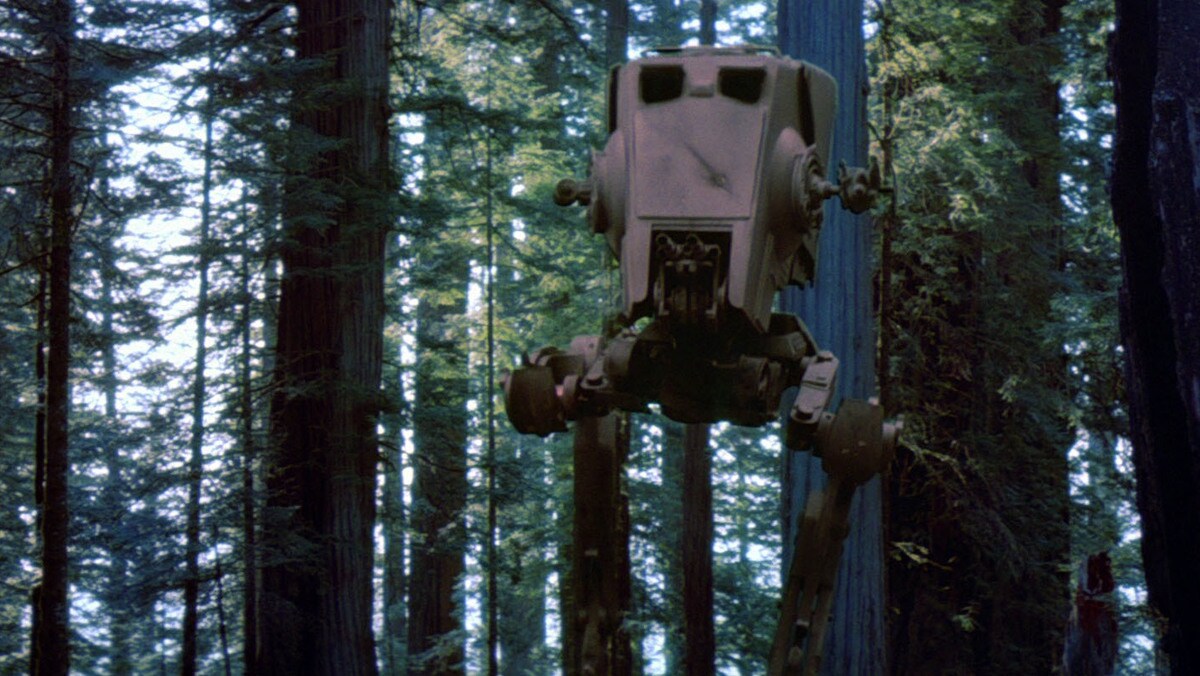
A small crew operates weapons and movement while ground technicians handle repairs. Its limited crew makes the walker easier to transfer between organizations.
Maintenance and technical labor
Maintenance can continue outside major Imperial bases, which helps explain why surviving vehicles remain useful to local strongmen and raiders after the Empire's decline.
Ownership, authority, and status
The AT-ST's movement from state military property to raider possession demonstrates how weapons can outlive the political systems that built them.
Doctrine or livelihood
Doctrine emphasizes mobile fire support and patrol rather than siege-scale assault. The walker intimidates infantry while retaining enough speed for local operations.
Modification and adaptation
Post-Imperial users may adapt or simply preserve existing vehicles. Survival itself becomes a form of modification when formal supply chains disappear.
Mobility and historical meaning
The AT-ST's afterlife shows how leftover military technology can reorganize local power long after a war's official front has moved elsewhere.
Why it matters
A vehicle is more than hardware
AT-ST Walker becomes historically useful when its technical design is read together with the people and institutions around it. Crew training determines what the machine can do. Maintenance determines whether it remains available. Ownership determines who gets access. Doctrine gives the vehicle a role inside a larger political or economic system. Modification records local knowledge and changing needs. Mobility then connects all of those elements by deciding which people, goods, weapons, and ideas can move through space.
Source trail
Sources & evidence
- Official Star WarsOfficial Star Wars reference
IDS method: named classes, affiliations, and story uses follow official Star Wars material. The labor, ownership, and mobility analysis is IDS editorial interpretation. Read the editorial standard →