
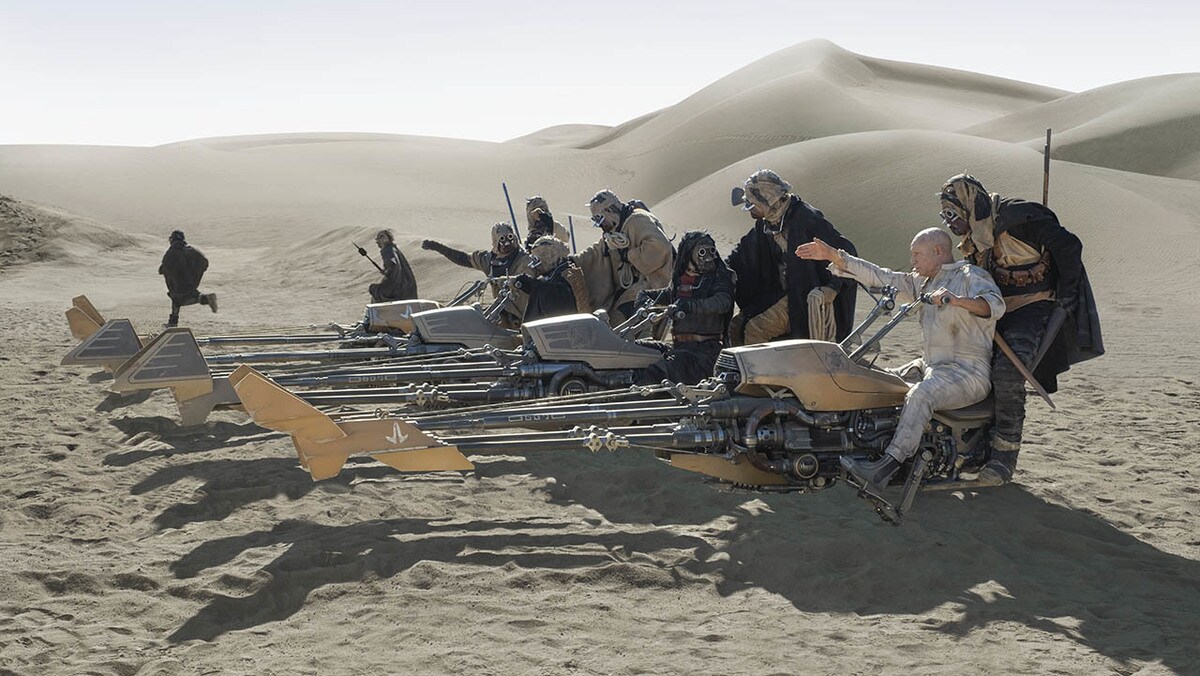
Crew and working life
A single rider controls the vehicle, placing navigation, risk, and basic maintenance in one person's hands. Military organizations still add mechanics, fueling, and assignment systems around the rider.
Maintenance and technical labor
Repulsorcraft require routine servicing but far less infrastructure than walkers or starships. That makes bikes practical in forests, settlements, and frontier zones.
Ownership, authority, and status
Ownership varies widely from state-issued military vehicles to private or criminal transport. The same technology can cross social boundaries more easily than specialized war machines.
Doctrine or livelihood
Military doctrine uses them for reconnaissance and pursuit, while civilians use comparable craft for ordinary movement. Function depends more on context than on radically different technology.
Modification and adaptation
Owners can alter controls, cargo fittings, paint, and performance. Small vehicles are especially open to local repair cultures and personalization.
Mobility and historical meaning
Speeder bikes democratize fast local mobility. Their political meaning changes according to who has access to them and what forms of movement authorities permit.
Why it matters
A vehicle is more than hardware
Speeder Bike becomes historically useful when its technical design is read together with the people and institutions around it. Crew training determines what the machine can do. Maintenance determines whether it remains available. Ownership determines who gets access. Doctrine gives the vehicle a role inside a larger political or economic system. Modification records local knowledge and changing needs. Mobility then connects all of those elements by deciding which people, goods, weapons, and ideas can move through space.
Source trail
Sources & evidence
- Official Star WarsOfficial Star Wars reference
IDS method: named classes, affiliations, and story uses follow official Star Wars material. The labor, ownership, and mobility analysis is IDS editorial interpretation. Read the editorial standard →