
Around 3966 BBY, Darth Nyriss led Imperial forces into a sector controlled by the warlord Ugroth to suppress a potential uprising against Vitiate's hidden Sith Empire. Ugroth swore fealty to Nyriss rather than continue resistance. To Republic observers, none of this was part of the visible galactic crisis. The Sith Empire was still concealed while the Mandalorian Wars occupied public attention elsewhere.
Vitiate's state was already policing internal regions while the Republic did not know it existed.
Nyriss exercised military authority as a senior Sith political figure.
This event runs parallel to the Mandalorian Wars but is not part of them.
A rebellion the Republic never saw
The incident reveals a second political map behind the familiar Old Republic timeline. Vitiate's Empire had its own sectors, warlords, rebellions, and enforcement campaigns.
The Republic's ignorance did not make that society less institutionally developed.
Fealty instead of annihilation
Ugroth submitted to Nyriss, showing that Sith expansion did not always require exterminating a defeated ruler.
Submission could preserve a local leader while making that leader part of an imperial hierarchy.
Nyriss memorializes victory
Nyriss later displayed a bust of Ugroth in her residence. The object turned political submission into a trophy and a story about her authority.
Explore the event
Why is this on the same timeline as the Mandalorian Wars?
Because it occurred at the same time. One purpose of the IDS timeline is to show simultaneous histories rather than only the events visible to Coruscant.
How secure is the date?
It is a derived approximate date, not a contemporary timestamp. The novel supplies a relative interval of twelve years.
Anthropological assessment
Ugroth's sector exposes the limits of center-based history. A timeline built only from Republic archives would omit an entire imperial society operating beyond its knowledge.
The bust in Nyriss's residence also shows how conquest is curated. Political submission becomes part of elite material culture and personal prestige.
Sources and further reading
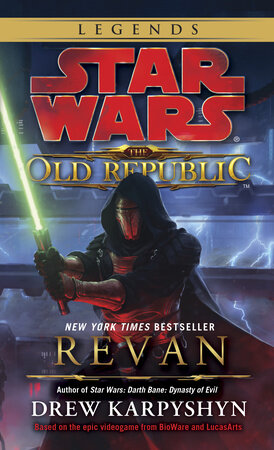
- Drew Karpyshyn, The Old Republic: Revan.