





COMPLETE RESEARCH RECORDExplore the five detailed chaptersHistory, physical design, practical limitations and cultural interpretation
01 · Overview
What defines this tradition or weapon?
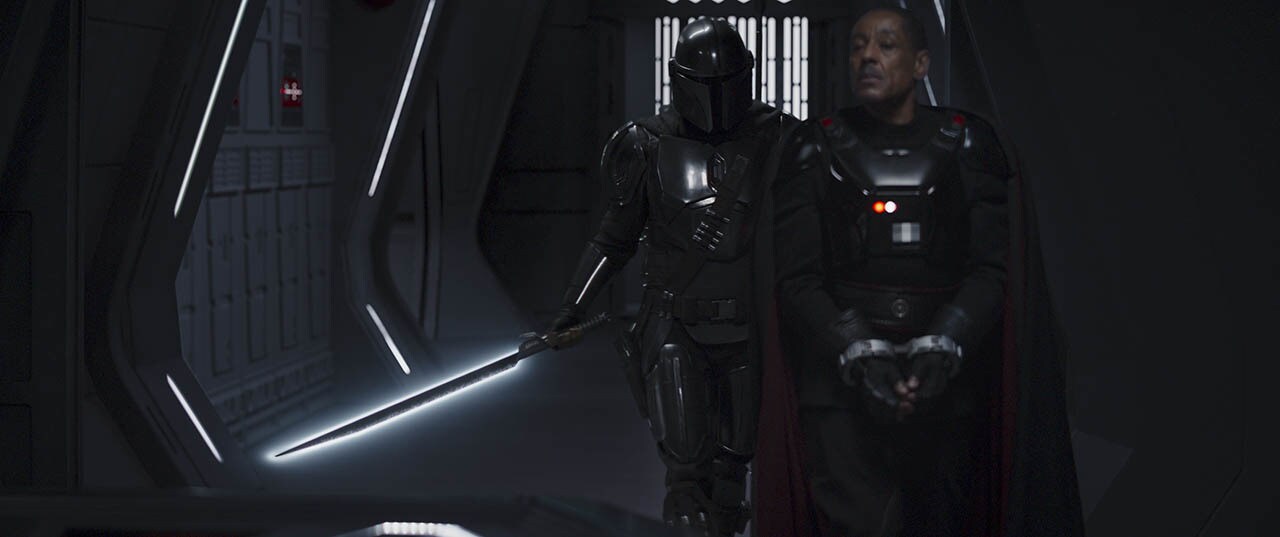
The Darksaber is technically a lightsaber, but treating it only as a weapon misses most of its significance. Forged by Tarre Vizsla, the first Mandalorian Jedi, it becomes a political object whose possession is repeatedly used to make claims about Mandalorian leadership. A duel can therefore decide more than immediate survival; it can become a public argument about legitimacy.
02 · Historical development
Why did it emerge?
Its history crosses institutions that are often treated separately: Jedi, House Vizsla, Death Watch, Maul's rule, Imperial occupation, rebel networks, and post-Imperial Mandalorian restoration. Each transfer changes the object's meaning because the surrounding political community interprets ownership differently.
03 · Combat logic
How does it change an exchange?
The blade has a distinctive black center and white edge, and wielders often describe a relationship between the weapon and their mental state or connection to it. In practical combat it still functions as a lightsaber, but the user carries the additional problem of fighting under the weight of what the object represents to observers.
04 · Limits & counters
Where does it become vulnerable?
The Darksaber's greatest limitation is social rather than mechanical. Possession can create rival claims, ritual expectations, and political pressure. A person may be capable of using the blade yet unable or unwilling to fulfill the leadership role others attach to it. The object can therefore trap the owner inside meanings created by a community.
05 · IDS analysis
What does it reveal about Star Wars society?
Few Star Wars objects better demonstrate that weapons can become political institutions. The Darksaber is a relic, trophy, succession device, heritage object, and battlefield tool at once. IDS treats its history as material politics: authority is carried in an object because communities agree, contest, and sometimes kill over what that object means.
Leadership claims changed with the person holding it
The Darksaber passed through the hands of figures with incompatible political goals, including Pre Vizsla, Maul, Sabine Wren, Bo-Katan Kryze, Moff Gideon and Din Djarin. The official Databank identifies the weapon as an important symbol of Mandalorian leadership. Its history therefore cannot be explained simply through weight, reach or blade shape. People treated possession as evidence for a claim to rule, while rival factions disputed who deserved recognition. Winning a fight, being given the weapon and commanding a stable coalition are distinct events. The weapon's social significance depended on how Mandalorians interpreted its transfer.
An artifact cannot settle every political disagreement
Mandalore included pacifist reformers, Death Watch, clans in exile and members of the Children of the Watch. Those communities did not hold one view of political or religious authority. The Darksaber could become a common reference point without erasing their disagreements. During the struggle to reclaim Mandalore, Bo-Katan's leadership depended on alliances and material resources beyond a single heirloom. The weapon was valuable as a focus for memory and legitimacy, but it could not independently organize settlement, defense or collective decision-making. That is an IDS interpretation of the canon events, not a claim that the Darksaber contained a literal power to confer governmental authority.
06 · Source trail
Sources & continuity notes
IDS separates current canon evidence from Legends reference traditions. The links below are starting points for the claims summarized in this file.
IDS original research focus
How can a weapon become a political institution?
The Darksaber demonstrates that political authority can become attached to material objects. Its significance depends on collective recognition, stories of succession, ritualized victory, and competing interpretations of Mandalorian legitimacy. IDS therefore treats possession as a social fact rather than a mechanical one: the blade matters politically because communities continue to argue about what ownership means.
This panel is an original Imperial Dark Sector synthesis. It identifies the analytical question guiding this file rather than restating an official Star Wars description. How IDS separates evidence from interpretation →