Crew and working life
A racer may have one pilot, but performance depends on mechanics, pit labor, parts suppliers, sponsors, and people who prepare the machine before the event.
Maintenance and technical labor
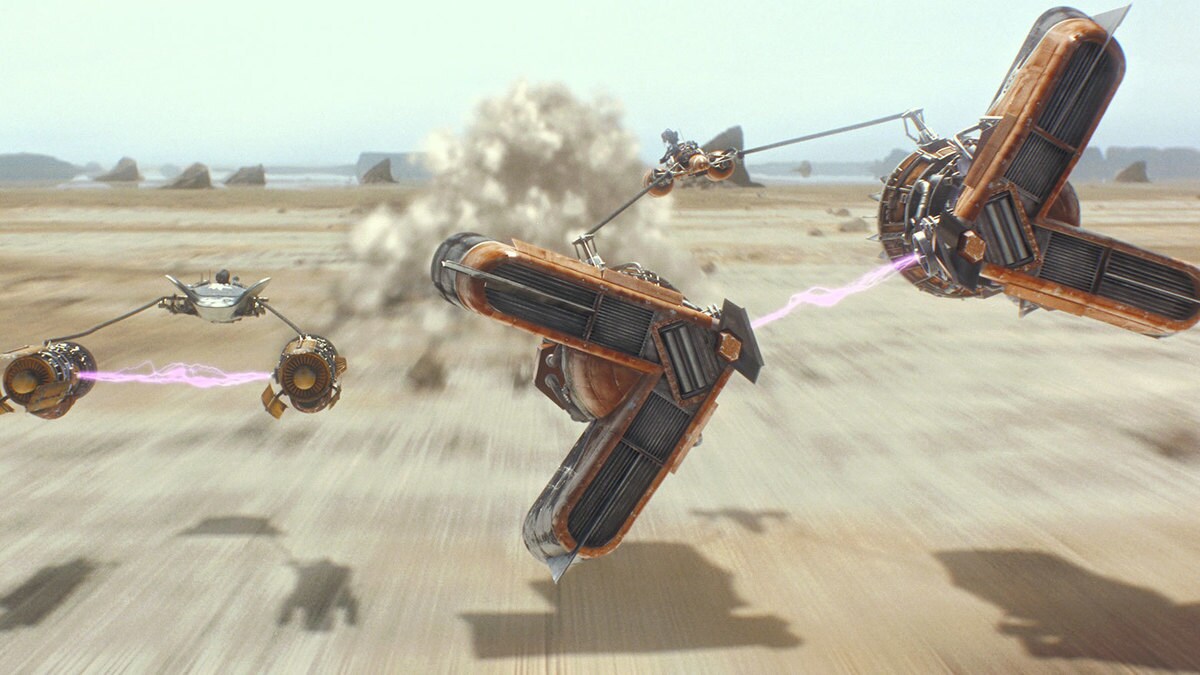
Maintenance is central because racing pushes engines to failure. Anakin's work on his own pod makes technical labor part of the competition rather than an invisible background task.
Ownership, authority, and status
Ownership links wealth and access. Some racers rely on patrons or powerful owners, while Anakin's status as an enslaved child makes his technical skill operate inside someone else's property claims.
Doctrine or livelihood
The relevant doctrine is competitive rather than military: maximize speed, survive the course, and convert performance into winnings, prestige, or gambling revenue.
Modification and adaptation
Podracers are heavily individualized. Engines, frames, controls, and tuning reflect local engineering knowledge and the pilot's preferences.
Mobility and historical meaning
Podracing shows mobility as entertainment and social hierarchy. Speed can create fame, money, and opportunity while exposing workers and pilots to extraordinary risk.
Why it matters
A vehicle is more than hardware
Podracer becomes historically useful when its technical design is read together with the people and institutions around it. Crew training determines what the machine can do. Maintenance determines whether it remains available. Ownership determines who gets access. Doctrine gives the vehicle a role inside a larger political or economic system. Modification records local knowledge and changing needs. Mobility then connects all of those elements by deciding which people, goods, weapons, and ideas can move through space.
Source trail
Sources & evidence
- Official Star WarsOfficial Star Wars reference
IDS method: named classes, affiliations, and story uses follow official Star Wars material. The labor, ownership, and mobility analysis is IDS editorial interpretation. Read the editorial standard →