
- Date
- 16 ABY
- Continuity
- Legends
- Region
- Koornacht Cluster and Coruscant
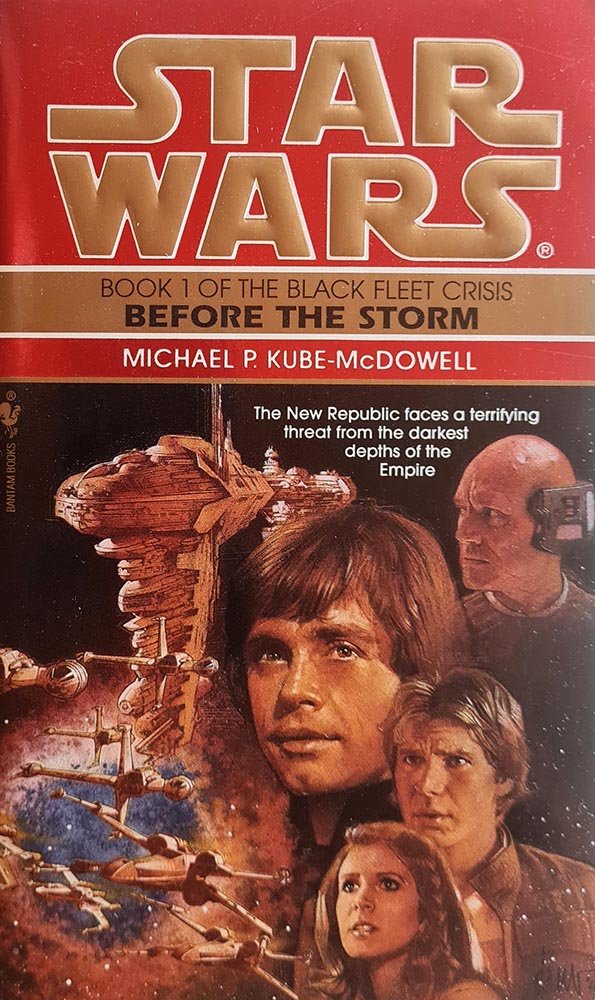
Research note: This story belongs to the Legends continuity and is separate from post-2014 Canon. The cover is authentic source artwork, not a new depiction of every scene described. Facts are drawn from the published novels; social interpretation is labeled as such.
The New Republic faces a little-known neighboring state
In 16 ABY the Yevethan Duskhan League controlled systems in the Koornacht Cluster and began negotiations with the New Republic. Chief of State Leia Organa Solo hoped diplomatic contact might expand peaceful relations and limit future threats. Nil Spaar, the League's leader, used the negotiations to manipulate perceptions and conceal the depth of his government's military ambitions.
The shadow of Black Sword Command
Years earlier, Yevethan forces seized Imperial ships and yards from the departing occupation force around N'zoth. Their technicians and leaders had since expanded this captured industrial foundation, creating a formidable fleet that combined former Imperial vessels with new thrustship designs. Their rise was partly enabled by technology the Empire had left behind and by the imprisonment of surviving Imperial personnel.
A xenocidal campaign begins
The Yevethan government began the Great Purge against non-Yevethan populations in the cluster. Worlds and colonies were attacked in campaigns directed at people because they did not belong to the ruling species. The killings transformed an uncertain diplomatic situation into a moral and strategic crisis for the New Republic.
Testimony challenges diplomatic appearances
Survivors and military observers warned that Nil Spaar was not offering ordinary coexistence. Plat Mallar, a survivor of a massacre, became important to the public record. The Republic had to decide whether its desire to avoid another war could justify further delays while civilians were being targeted.
An unstable New Republic coalition
The Black Fleet Crisis unfolded amid political disagreement over military force and executive decision-making. Different ministers, commanders and member worlds did not share identical risk assessments. Leia had to respond to both mass violence beyond the Republic's immediate borders and attempts to exploit domestic divisions.
Anthropological assessment
The crisis raises the distinction between diplomatic recognition and acquiescence in persecution. Treating all states as interchangeable negotiating partners can obscure systematic violence against an excluded population. Refugee testimony and material evidence may reveal what an official government spokesperson attempts to hide.
Interactive research lab
Check what the novels actually establish. Answers are reviewed together below, followed by a research perspective selector.