
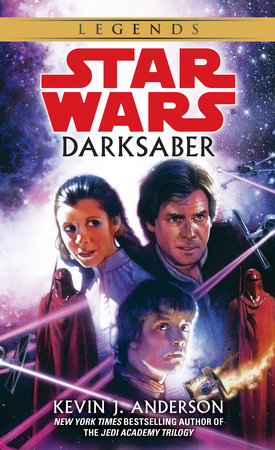
Research notes: This event belongs to Legends rather than current Canon. The cover shows official publication art, not a claim to photograph a historical scene. Source assertions are distinguished from original anthropological analysis.
A crime lord attempts to inherit the Death Star's power
In 12 ABY Durga Besadii Tai, leader of an influential Hutt criminal organization, concluded that a superlaser capable of destroying planets could provide enormous leverage over governments and rivals. The Emperor and his original Death Star were gone, but the designs for the earlier battle station had not vanished. Durga arranged to obtain them while presenting himself as an actor with legitimate diplomatic and commercial interests. The proposed weapon would not be a second moon-sized station: its main feature would be a long cylindrical superlaser intended for extortion and coercion.
A sham company in the asteroid field
Durga founded Orko SkyMine Asteroid Processing Corporation as a public explanation for industrial activity in the Hoth asteroid belt. The mining company was a cover for weapons construction. Bevel Lemelisk, a former Death Star designer, adapted the stolen plans into a stripped-down, comparatively inexpensive weapon called the Darksaber. Its facilities used automated extractors, industrial equipment and Taurill workers. Serious problems with quality control made Lemelisk increasingly doubtful that the apparatus could operate as claimed.
The New Republic uncovers the plan
Luke Skywalker and Han Solo learned of the project while investigating Jabba the Hutt's former palace and the movement of superweapon information. Durga used a visit to the New Republic's government as cover while accomplices obtained the plans from Coruscant. Republic intelligence then mounted a covert effort involving General Crix Madine to identify and disable the weapon before Durga could demonstrate it against an inhabited world.
Crix Madine dies and Wedge responds
Madine infiltrated the construction site and succeeded in locating the station, but was captured by Durga's forces. The Hutt executed the New Republic general. Before dying, Madine had transmitted information that brought General Wedge Antilles and a strike force into the Hoth system. The Republic moved to prevent a new political actor from inheriting the capacity for mass destruction associated with the old Imperial superweapons.
A catastrophic first launch
Durga attempted to escape through the dangerous asteroid field and ordered the unfinished Darksaber to fire. The system failed. Two massive asteroids crushed the vulnerable cylindrical installation, killing Durga and ending his scheme. Lemelisk escaped the immediate destruction but was later captured and faced prosecution for his previous work on superweapons. The crisis ended without the new superlaser successfully destroying a planet.
Anthropological assessment: private violence and corporate camouflage
The Darksaber project shows how an organization can claim to be a conventional business while secretly preparing a weapon intended to dominate entire worlds. Durga's corporate identity made industrial purchases, labor arrangements and transport look like ordinary commerce. Yet the underlying aim was political extortion. The story also explores how supposedly superior technologies can fail when the people funding them ignore craft knowledge, maintenance and worker conditions.
Interactive historical evidence lab
Distinguish the documented event from assumptions, then consider how a decision might affect power. Review results appear immediately below the controls.
Decision lab: where would you look first?
Compare historical perspectives
Original-source evidence and uncertainty
Kevin J. Anderson's Darksaber is the original Legends novel about Durga the Hutt's attempt to create a Death Star-style superweapon. The publisher synopsis confirms the threat and the surviving Imperial faction under Admiral Daala and Gilad Pellaeon. It does not confirm every engineering detail or the exact course of the asteroid-field failure. Those specifics require direct review of the novel. The novel was published in the 1990s; that is not the fictional year 12 ABY.
Source register: Darksaber at Penguin Random House. Dates and narrative details not contained in a publisher synopsis still require checking the relevant original pages.
Sources and verification
Kevin J. Anderson, Darksaber (1995), placed in 12 ABY by The Essential Reader's Companion.