
- Year
- 36 ABY
- Continuity
- Legends
- Setting
- Utegetu Nebula and Tenupe
Archive methodology: This is Legends, not current film Canon. Dates correspond to published narratives. Illustrations may be later character portraits; source-based history is separated from editorial anthropology.
The truce collapses
In 36 ABY, the Killik Colony and the Chiss Ascendancy returned to war after conflicts over borders and the influence of the Dark Nest. The Galactic Alliance and Jedi found themselves caught between actors with competing claims, and Jedi allegiance to Joiner communities complicated negotiations.
A sequence of interstellar engagements
The war moved through several systems and culminated in fighting around Tenupe. Ships, planetary installations and supply routes became targets, revealing that even a dispute over frontier settlements could disrupt distant communities.
The hidden Dark Nest is confronted
Luke Skywalker and his allies exposed the manipulation by Lomi Plo and Gorog. The destruction of that influence removed an important cause of mistrust and helped establish an end to the fighting. A military result did not imply the complete disappearance of Killik culture.
Consequences for the Jedi Order
The war strained the New Jedi Order's relationship with the Galactic Alliance. The Jedi had to reconsider how closely its decisions should be tied to the government's military priorities, a question that would return during later internal wars.
Anthropological assessment
The Swarm War contrasts sovereignty defined by territorial borders with collective social systems that do not organize membership in the same way. Understanding the difference matters when assigning blame or interpreting peace terms.
Interactive history lab
Did the Swarm War take place during Palpatine's Clone Wars?
Documented answer: No. It was a Legends conflict in 36 ABY, long after the Galactic Civil War.
Choose which perspective to investigate:
Published evidence and limits
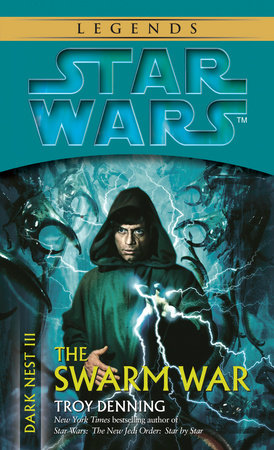
The Swarm War is book three of the Dark Nest trilogy, following the disputes established in The Joiner King and The Unseen Queen. Its publication date is not the in-universe 36 ABY chronology. The book cover identifies the source rather than depicting a confirmed moment in the fighting at Tenupe.
Original published work: The Swarm War at Penguin Random House. The publisher synopsis identifies the book and story but does not replace direct inspection of each chapter.
Legends · Original publication analysis · 6–45 ABY
The end of the Swarm War cannot be reduced to one tactical victory
The Chiss–Killik crisis becomes a wider confrontation after the failure of the earlier Qoribu settlement. The publisher's account of The Swarm War identifies a border war threatening to destabilize the galaxy and describes Jedi efforts to restrain both the Chiss and the Colony. The fighting around Tenupe is one part of that larger political and military landscape. Claims about the precise sequence of individual ship movements, casualties or negotiations require the novel rather than an inference from the brief promotional description.
The Gorog Dark Nest and Lomi Plo manipulate the crisis, but this does not mean every Killik nest knowingly accepts the same goals. The novel also treats some Jedi as Joiners whose affiliation with a collective places them in tension with Luke Skywalker's efforts to coordinate the Order. The conflict therefore has an institutional dimension as well as a naval one. It raises questions about responsibility when people can experience political attachments through shared awareness rather than through the familiar structures of a military chain of command.
IDS distinguishes a military outcome from the elimination of the social practices of an entire species. The exposure of the Dark Nest does not provide evidence that every Killik was displaced or deprived of communal life. The Qoribu entry explains the failed diplomacy, while the later crisis around Abeloth concerns a different sequence of allegiance and hidden influence. This article's date refers to the Legends battle, not the novel's real-world publication year.
Test the evidence: Was every Killik an informed member of Lomi Plo's Dark Nest?
Source judgment: No. The narrative distinguishes the larger Colony from a covert manipulative organization. A source-based account must preserve those institutional differences.
Primary-work publisher record: Troy Denning, The Swarm War; related issue, volume or series description. The source links establish published books, the narrative premise and specified supporting claims; they do not replace close reading of every novel chapter or comic panel. Historical and institutional conclusions are original IDS interpretation, not additional Legends dialogue.