
Kerra Holt is the central Jedi of Star Wars: Knight Errant, set during the New Sith Wars more than a millennium before the films. Raised amid the collapse of Republic protection in the Grumani sector, she becomes a Jedi Knight whose missions repeatedly place her among civilians trapped between competing Sith regimes.
Biography
Kerra occupies an unusual social position for a Jedi Knight. She carries the authority, training, and religious identity of the Jedi Order, yet she operates for long periods beyond the everyday reach of the Republic and outside the protection of a large Jedi institution. Her home region is divided among Sith domains such as the Daimanate and Odionate, each presenting its ruler as the center of political reality. In that setting, “Jedi” is not merely a professional title. It marks Kerra as an outsider to Sith sovereignty, a potential protector to civilians, and a dangerous political actor to regimes that claim total authority. Her refugee background complicates that role further because she is not simply arriving from the Core to rescue strangers. She has personal ties to the same history of conquest and displacement. Her identity combines institutional training with the perspective of someone whose homeland became a battlefield.
Relationships & belonging
Kerra’s relationships are built under conditions where stable institutions are scarce. Vannar Treece is her mentor and commander during Operation Influx, but his mission also demonstrates the limits of organized Jedi intervention in the region. After catastrophe isolates Kerra, she repeatedly depends on temporary alliances with refugees, workers, local communities, smugglers, and even enemies whose interests briefly overlap with hers. These relationships do not form a single permanent household or military unit. They are situational networks built around survival, evacuation, information, and resistance. That makes Kerra useful for the IDS archive because belonging in her story is practical rather than ceremonial. Trust is measured by who will share risk, hide a fugitive, move civilians, or oppose a Sith ruler. Her independence is therefore not simple individualism. It grows from repeated collaboration with people whose political choices are constrained by occupation and fragmentation.
Identity & social position
Material life is central to Kerra’s story because movement through Sith space depends on more than Force ability. Lightsabers, blasters, mining installations, transport routes, hyperspace lanes, factories, refugee shelters, communications systems, and improvised vehicles all determine what actions are possible. Operation Influx itself is organized around baradium production, showing how control of a material resource can alter the balance among Sith regimes. Kerra’s mobility also distinguishes her from the rulers she opposes. Sith authority is often anchored in fortresses, industrial systems, military bases, and controlled populations, while Kerra survives by moving between those structures and using whatever networks remain available. Her lightsaber identifies her as a Jedi, but the surrounding material world explains the practical limits of that identity. A single Jedi can cut through a barrier or win a duel. Evacuating civilians, crossing hostile territory, or disrupting a war economy requires logistics, allies, and knowledge of infrastructure.
Institutions & power
The political institutions surrounding Kerra are fragmented by design. Sith Lords such as Daiman and Odion do not merely command armies. They organize territories around personal cosmologies, economic extraction, forced labor, propaganda, and competing claims to absolute rule. The result is a region where civilians may move from one coercive system into another without ever reaching neutral space. Kerra’s work therefore differs from the familiar image of a Jedi mediating a dispute inside a functioning Republic. She acts where law has been replaced by overlapping warlord sovereignties and where the Republic’s strategic retreat has left local populations exposed. Her missions repeatedly ask whether resistance can protect people without simply reproducing another hierarchy. The character is especially valuable for political anthropology because she makes sovereignty visible at ground level: checkpoints, factories, refugee movement, military recruitment, resource control, and the everyday consequences of rulers who define entire populations through their private wars.
Beliefs & worldview
Kerra remains committed to Jedi ethics even when the institutions that normally support those ethics are distant. Her opposition to the Sith is not only a contest over Force traditions. It is a rejection of political systems that reduce people to subjects, workers, soldiers, or expendable bodies. This matters because the Knight Errant setting surrounds her with rulers who turn metaphysical belief into administrative practice. Daiman’s belief that he created the universe and Odion’s obsession with destruction are not private eccentricities. Their worldviews structure governments, armies, labor systems, and propaganda. Kerra’s Jedi identity therefore becomes a competing moral practice centered on protection, restraint, and responsibility to people who may never become Republic citizens. Her recurring difficulty is that compassion does not supply unlimited resources. She must choose where to intervene, whom she can save, and when a direct attack may worsen the danger to civilians.
Material life
Kerra Holt’s biography begins with displacement rather than institutional security. Aquilaris, where she lived as a child, became part of a region overrun by competing Sith powers after the Republic withdrew from much of the Grumani sector. The loss of ordinary political protection shaped the meaning of her later Jedi service. By the time she joined Jedi Master Vannar Treece’s mission into Sith territory, Kerra was not entering an abstract frontier. She was returning to a social landscape defined by refugees, militarized borders, forced labor, and rulers who treated populations as resources in private wars. StarWars.com’s Knight Errant gazetteer identifies her as Treece’s young aide and later as a newly knighted Jedi returning to her home sector. Her story therefore connects personal memory to a wider historical problem: what responsibility does a Jedi carry when formal Republic sovereignty has already receded and civilians remain behind?
Historical significance
Kerra Holt is historically significant within Legends because Knight Errant shifts attention away from the better-known Rule of Two period and into an earlier era of fragmented Sith rule. Her story presents the New Sith Wars from the perspective of people living inside contested territories rather than from the viewpoint of a single galactic capital. That makes her an unusually strong IDS character for examining political fragmentation, refugee experience, competing sovereignties, and the limits of humanitarian intervention. The character also challenges a simple story in which Jedi authority automatically follows Republic power. Kerra remains a Jedi even where Republic institutions have retreated, forcing the question of what the role means without courts, armies, or stable government behind it. Her importance is therefore not only that she fights Sith Lords. It is that her biography shows how ethical commitments are tested when institutional capacity is weak and political violence is ordinary.
Anthropological assessment
Kerra Holt is the central Jedi of Star Wars: Knight Errant , set during the New Sith Wars more than a millennium before the films. Raised amid the collapse of Republic protection in the Grumani sector, she becomes a Jedi Knight whose missions repeatedly place her among civilians trapped between competing Sith regimes.
Kerra Holt is especially useful for examining how individual choices are shaped by social position rather than occurring in isolation. Connections to Jedi Order, the work of Jedi Knight · Field operative / protector, and the character's documented relationships show how authority, loyalty, reputation, and access to resources are produced through institutions and everyday interaction. The character also helps reveal how larger political systems become personal: rules are enforced by particular people, identities are negotiated in specific relationships, and material settings make differences in rank and power visible.
Character imagery
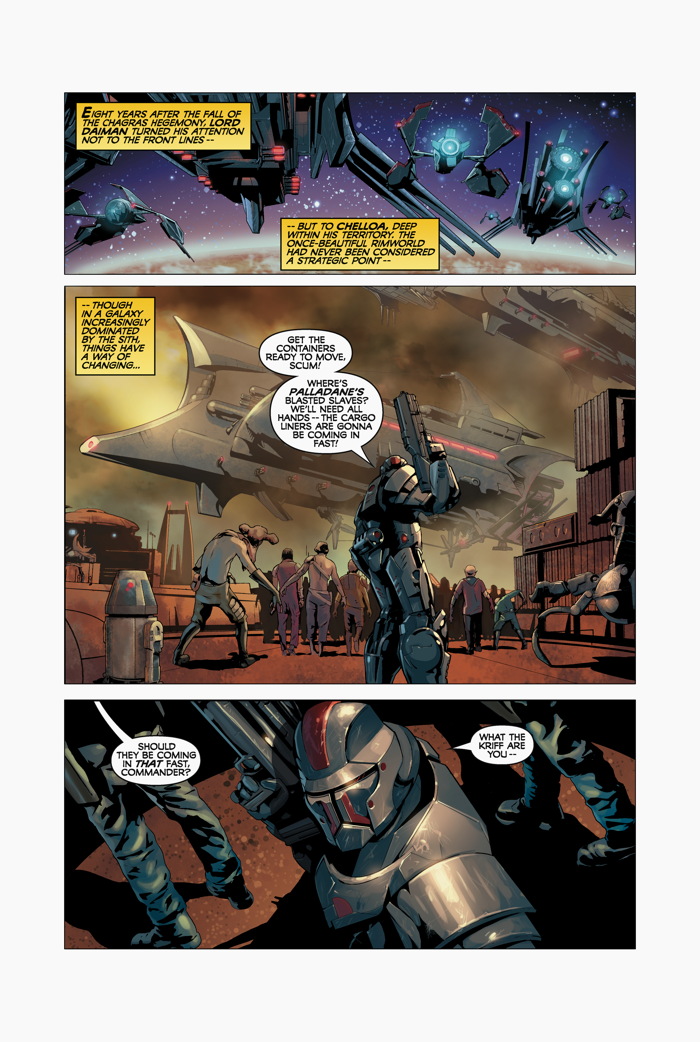
Kerra Holt in Knight Errant
Character-focused visual reference from an official Dark Horse Comics preview.
Material fandom · Collector reference
Collecting this Character
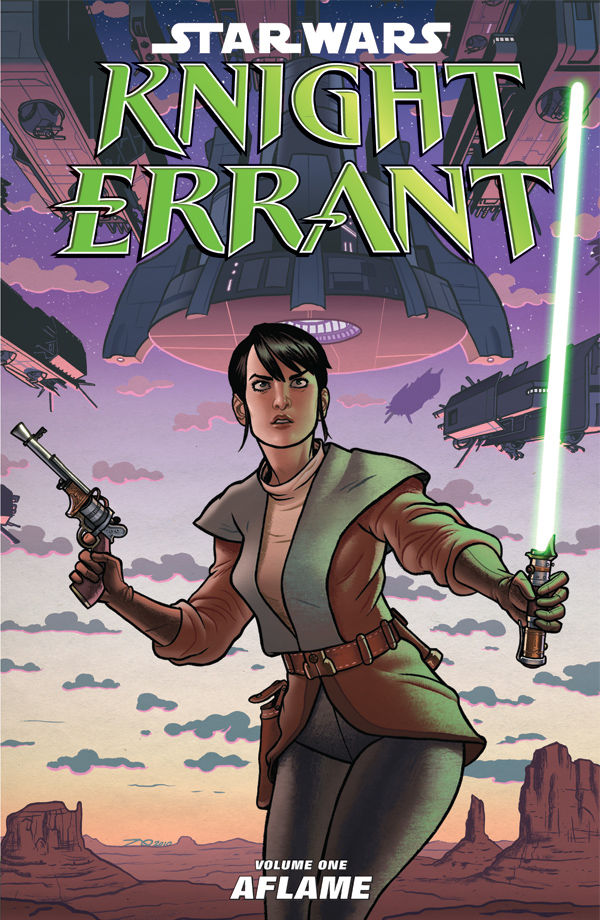
Kerra Holt in print
Character-focused comic issues, variants, trades, and hardcovers can be a major part of a Kerra Holt collection. The pictured cover is a verified source image already used by IDS.