Jabba the Hutt’s Kowakian monkey-lizard court jester and pet, whose tolerated mockery reveals how entertainment and hierarchy coexist inside a violent criminal court.
By Imperial Dark Sector
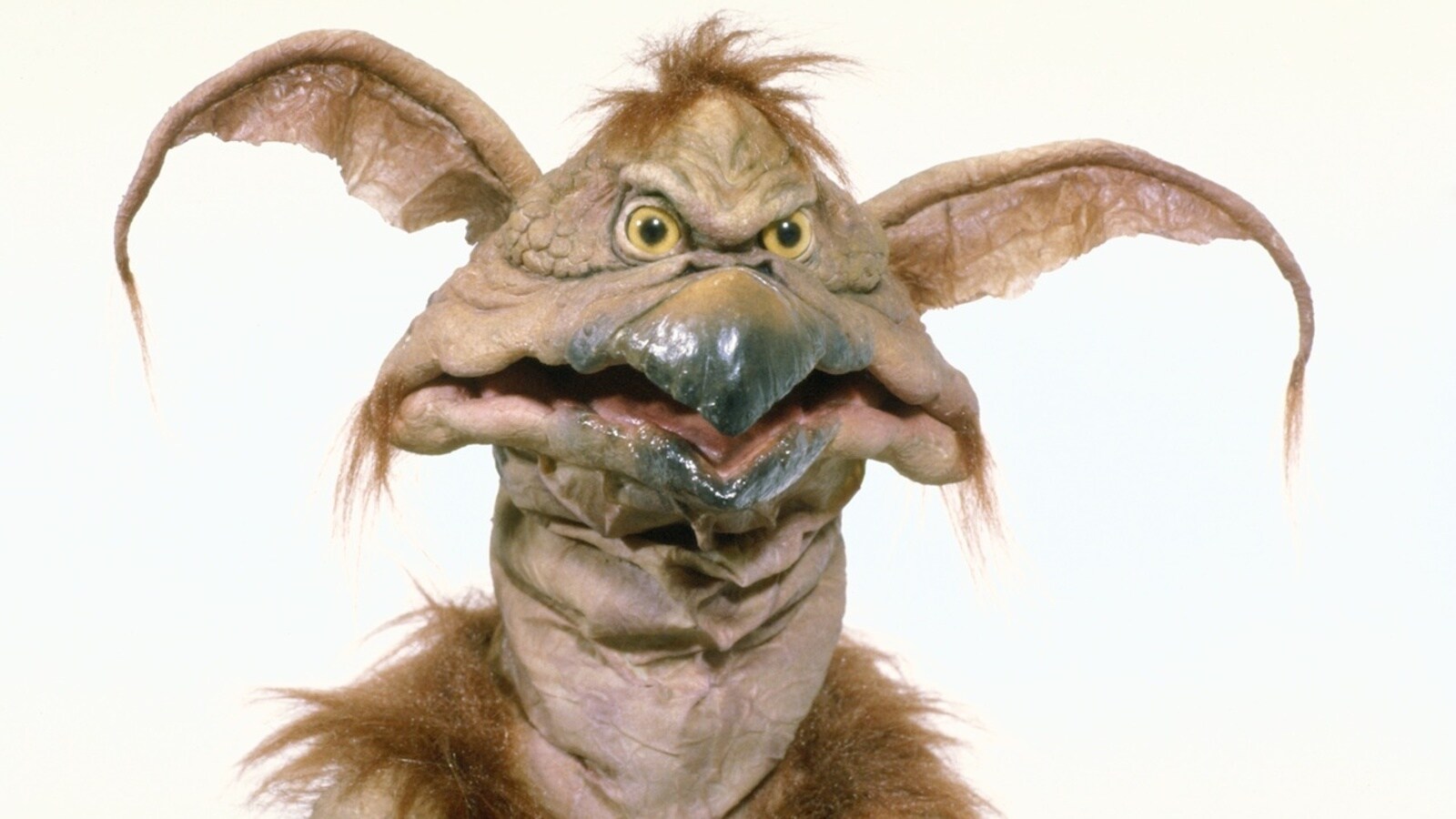
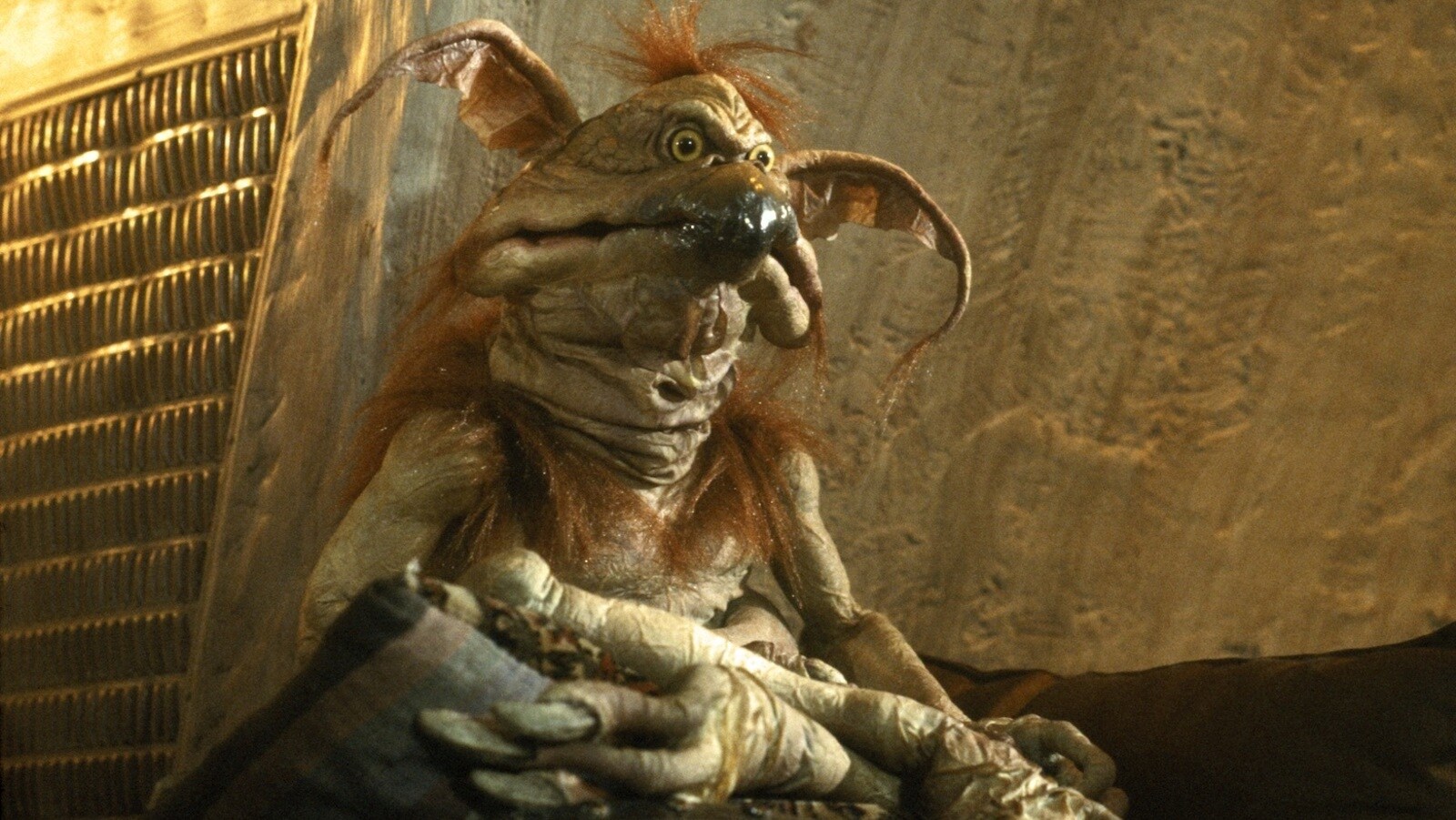
Salacious B. Crumb is a Kowakian monkey-lizard kept near Jabba the Hutt’s dais in the palace on Tatooine. His shrill laughter and mimicry make him a constant presence in the court’s public performances.
Crumb can mock visitors and courtiers because his behavior amuses Jabba. The apparent freedom is therefore conditional: his social position depends on the ruler’s tolerance and entertainment value.
His presence alongside dancers, musicians, guards, enslaved people, and advisers helps show Jabba’s palace as a court rather than only a criminal headquarters. Spectacle is part of political authority.
Crumb dies during the destruction of Jabba’s sail barge after the rescue of Han Solo turns the court’s planned execution into disaster.
Character dossier
Quick facts
ContinuityCanon
EraOriginal Trilogy
SpeciesKowakian monkey-lizard
Height0.7 m
HomeworldKowak
Primary settingJabba's Palace, Tatooine
Social roleCourt jester, favored pet, entertainer
AffiliationJabba the Hutt's court
Key relationshipJabba the Hutt
Biography
Salacious B. Crumb is the best-known Kowakian monkey-lizard in Jabba the Hutt's palace. He remains close to Jabba's dais and participates in the social theater of the court through laughter, mimicry, noise, and harassment of visitors. His screen time is brief, but his location matters. He is positioned beside the ruler rather than among ordinary workers, prisoners, or guards. That placement marks him as a favored dependent whose survival and privileges come from Jabba's personal tolerance.
Relationships & belonging
Crumb's most important relationship is with Jabba. His apparent freedom to laugh at others exists because the most powerful person in the room finds him entertaining. He also shares the palace with Bib Fortuna, Max Rebo's musicians, dancers, guards, enslaved people, bounty hunters, and visiting criminals. Those relationships place him inside a courtly network rather than outside society as a simple pet. Belonging is conditional, hierarchical, and dependent on continued usefulness to the ruler.
Identity & social position
As a Kowakian monkey-lizard, Crumb occupies an ambiguous category between animal companion and socially responsive court performer. The palace treats him as property and entertainment, yet his behavior is recognized as intentional enough to amuse, annoy, and interact with others. That ambiguity is analytically important. Intelligence does not automatically produce equal status. Institutions decide which capacities count and whether recognition leads to rights, protection, or merely greater entertainment value.
Institutions & power
Jabba's palace operates as a criminal court with a ruler, advisers, guards, clients, entertainers, servants, captives, and favored dependents. Crumb's role helps reveal that structure. Court humor can look disorderly while actually confirming hierarchy because the jester's license exists only through elite permission. He can mock others, but not because the palace is egalitarian. His position demonstrates how authoritarian institutions can contain limited spaces of tolerated transgression without threatening the ruler's control.
Beliefs & worldview
Canon does not provide a developed account of Crumb's internal beliefs, religion, or moral worldview. IDS therefore does not invent one. What can be documented is behavior: attention to Jabba, laughter at violence and humiliation, mimicry, and participation in palace spectacle. Those actions are best interpreted as part of his learned social environment and species behavior rather than proof of a formal ideology. The distinction keeps observed conduct separate from unsupported claims about intention.
Material life
Crumb's material world is the architecture and furnishing of Jabba's palace and sail barge: the throne dais, cushions, food, chains, performance areas, weapons, guards, and the machinery of public punishment. His small body is repeatedly framed against the scale and luxury of Hutt power. These surroundings make his status visible. He does not possess an office or uniform. Proximity to Jabba and access to elite space function as the material signs of his place in the court.
Historical significance
Salacious B. Crumb became one of the most recognizable minor creatures in Return of the Jedi because his laugh gives Jabba's court a distinctive sound and social texture. He also provides a named individual through which the broader Kowakian monkey-lizard species can be distinguished from a generic creature category. For IDS, his significance lies less in political agency than in what his role reveals about court life, tolerated mockery, animal status, spectacle, and the distribution of privilege inside a violent hierarchy.
Visual record
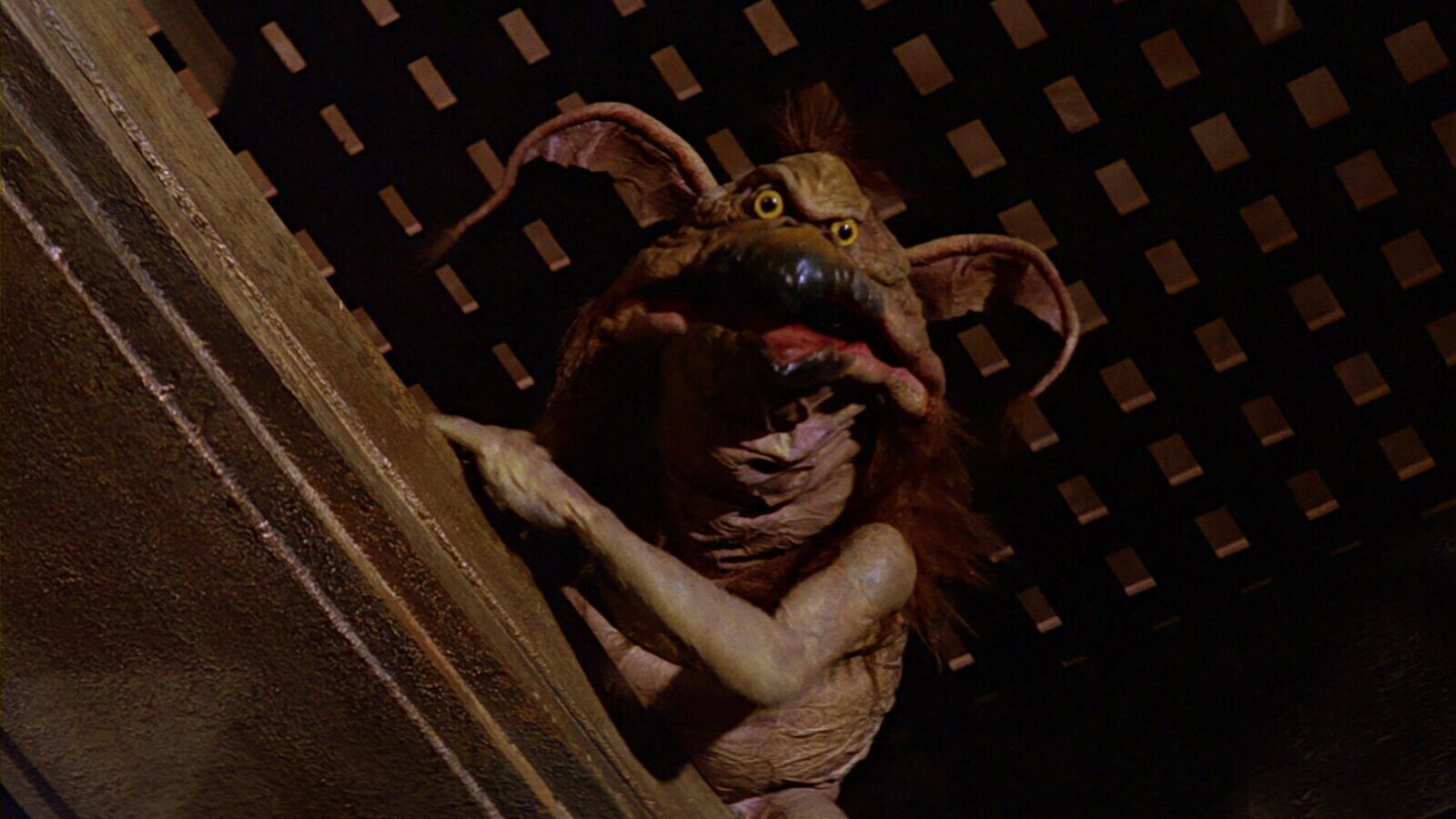
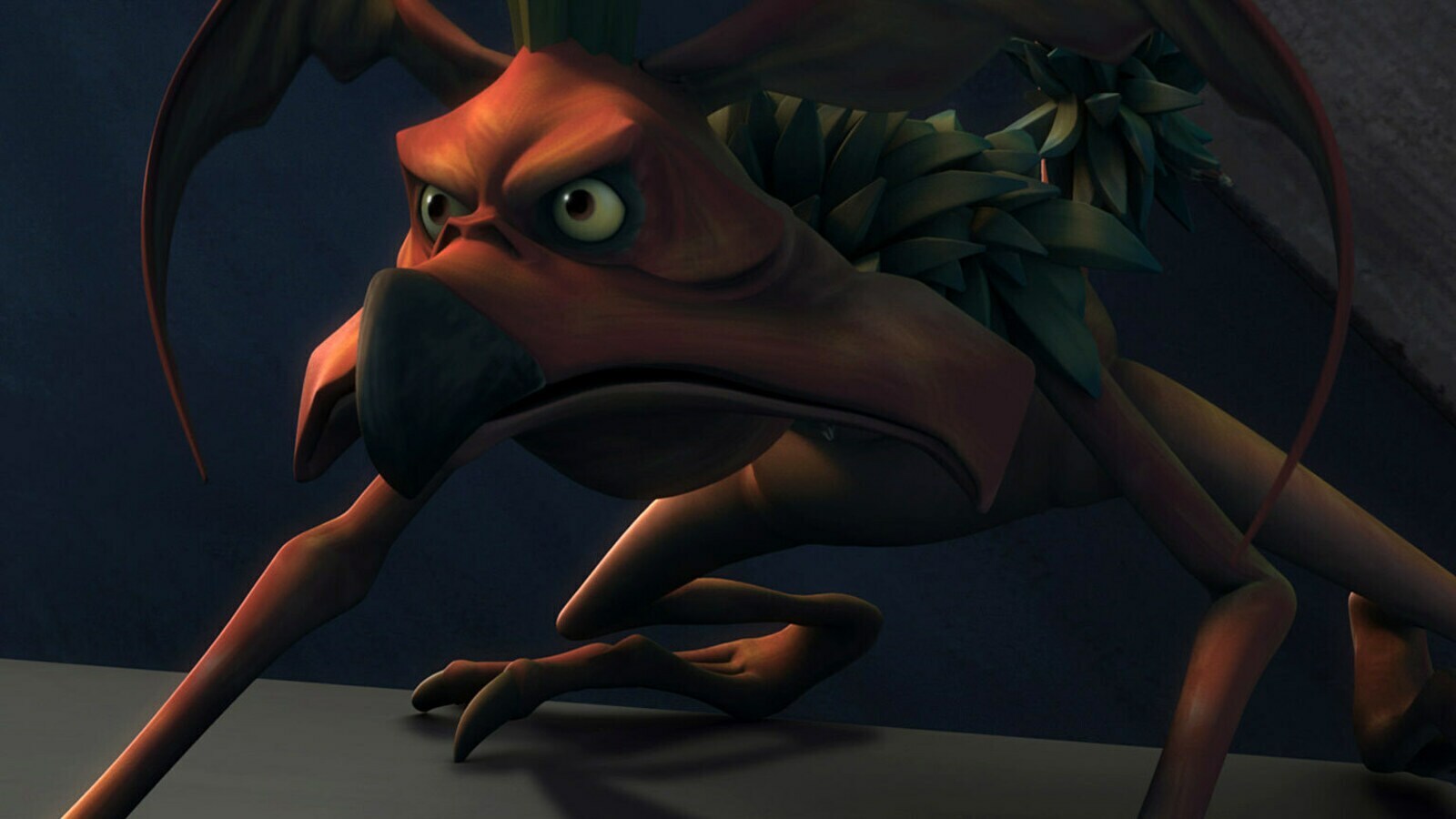
Salacious B. Crumb in context
Distinct official or source-page images are localized when available so the dossier is not dependent on fragile hotlinks.
Quick facts
ContinuityCanon
EraOriginal Trilogy
SpeciesKowakian monkey-lizard
Height0.7 m
HomeworldKowak
Primary settingJabba's Palace, Tatooine
Social roleCourt jester, favored pet, entertainer
AffiliationJabba the Hutt's court
Key relationshipJabba the Hutt
Relationships & belonging
Crumb's most important relationship is with Jabba. His apparent freedom to laugh at others exists because the most powerful person in the room finds him entertaining. He also shares the palace with Bib Fortuna, Max Rebo's musicians, dancers, guards, enslaved people, bounty hunters, and visiting criminals. Those relationships place him inside a courtly network rather than outside society as a simple pet. Belonging is conditional, hierarchical, and dependent on continued usefulness to the ruler.
Identity & social position
As a Kowakian monkey-lizard, Crumb occupies an ambiguous category between animal companion and socially responsive court performer. The palace treats him as property and entertainment, yet his behavior is recognized as intentional enough to amuse, annoy, and interact with others. That ambiguity is analytically important. Intelligence does not automatically produce equal status. Institutions decide which capacities count and whether recognition leads to rights, protection, or merely greater entertainment value.
Institutions & power
Jabba's palace operates as a criminal court with a ruler, advisers, guards, clients, entertainers, servants, captives, and favored dependents. Crumb's role helps reveal that structure. Court humor can look disorderly while actually confirming hierarchy because the jester's license exists only through elite permission. He can mock others, but not because the palace is egalitarian. His position demonstrates how authoritarian institutions can contain limited spaces of tolerated transgression without threatening the ruler's control.
Beliefs & worldview
Canon does not provide a developed account of Crumb's internal beliefs, religion, or moral worldview. IDS therefore does not invent one. What can be documented is behavior: attention to Jabba, laughter at violence and humiliation, mimicry, and participation in palace spectacle. Those actions are best interpreted as part of his learned social environment and species behavior rather than proof of a formal ideology. The distinction keeps observed conduct separate from unsupported claims about intention.
Material life
Crumb's material world is the architecture and furnishing of Jabba's palace and sail barge: the throne dais, cushions, food, chains, performance areas, weapons, guards, and the machinery of public punishment. His small body is repeatedly framed against the scale and luxury of Hutt power. These surroundings make his status visible. He does not possess an office or uniform. Proximity to Jabba and access to elite space function as the material signs of his place in the court.
Historical significance
Salacious B. Crumb became one of the most recognizable minor creatures in Return of the Jedi because his laugh gives Jabba's court a distinctive sound and social texture. He also provides a named individual through which the broader Kowakian monkey-lizard species can be distinguished from a generic creature category. For IDS, his significance lies less in political agency than in what his role reveals about court life, tolerated mockery, animal status, spectacle, and the distribution of privilege inside a violent hierarchy.
Visual record
Salacious B. Crumb in context
Distinct official or source-page images are localized when available so the dossier is not dependent on fragile hotlinks.
Social position and institutions
Jabba’s court distributes roles among guards, advisers, entertainers, enslaved workers, and favored animals. Crumb’s unusual status is intelligible only inside that social arrangement.
Material culture and everyday practice
The throne dais, palace architecture, food scraps, sail barge, and performance spaces place entertainment inside the material display of Hutt wealth and domination.