Hoth is not an empty battlefield. The wampa’s habitat overlaps with Rebel occupation, and its lair persists beneath military mapping and technology.
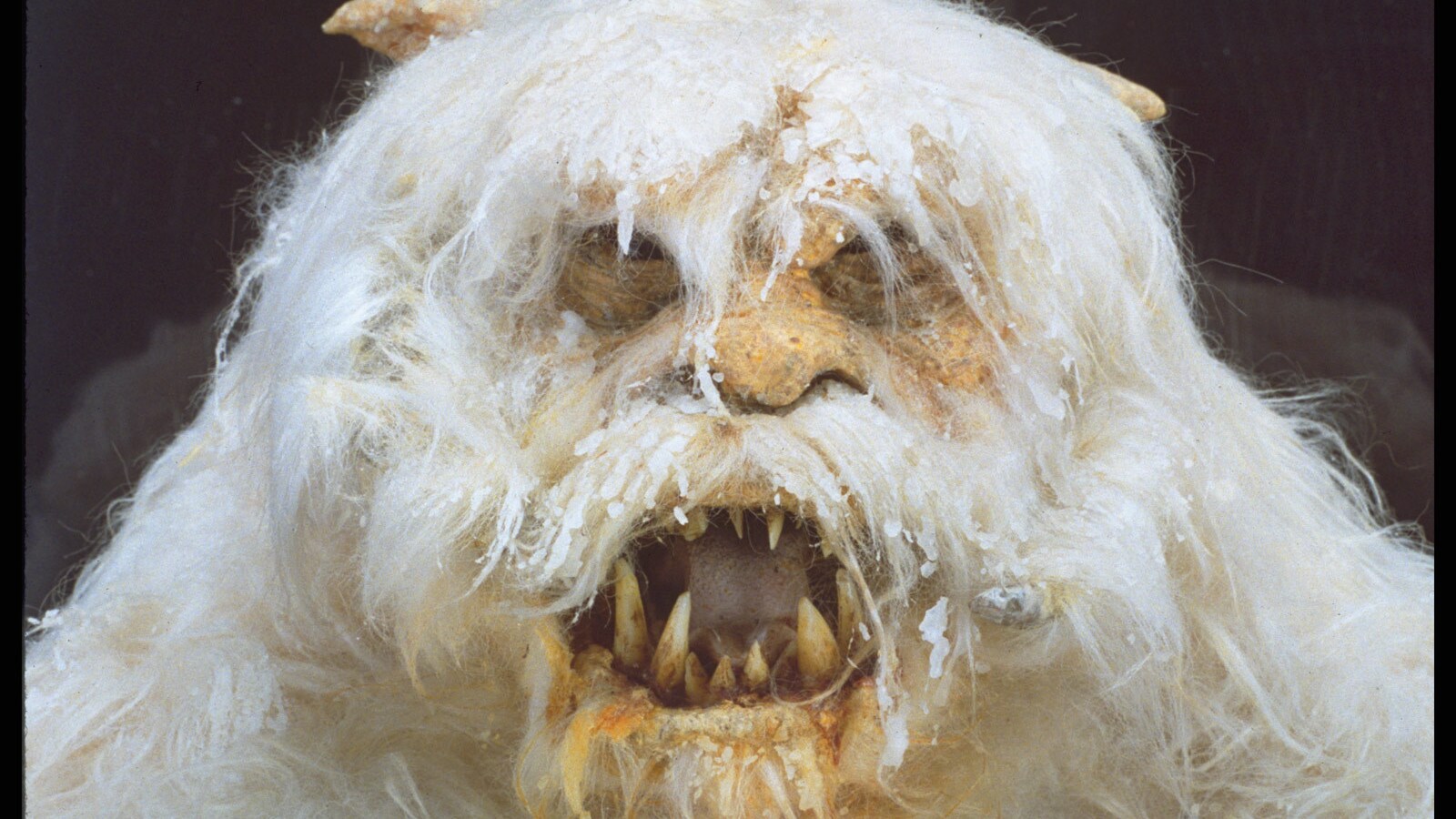
https://www.starwars.com/databank/wampa
Character in social context
the Wampas enters this archive through animals / creatures. The short account describes Hoth is not an empty battlefield. The wampa’s habitat overlaps with Rebel occupation, and its lair persists beneath military mapping and technology.. That sentence identifies more than a dramatic appearance. It places the Wampas inside Lothal’s grasslands, farms, settlements, and Imperial frontier, where movement, food, shelter, danger, and human interpretation are connected.
The page describes Hoth predators whose camouflage and lairs reveal how survival becomes classified as monstrosity.. Read anthropologically, that description asks who has the power to name the Wampas, who can approach or contain the Wampas, and whose practical knowledge is treated as authoritative. The wampa is a lesson in situated knowledge. Rebels classify it as a threat, while its behavior reflects viable ecology: concealment, shelter, and predation in snow. The point is not to replace story history with speculation, but to examine the social arrangements that make the story’s image of animal life persuasive.
An animal or creature can be politically important without speaking human language. Bodies become evidence, habitats become territory, and encounters become tests of courage or control. The archive therefore follows the relations around the Wampas, not just the creature as an isolated design.
Species, habitat, and classification
Ecology is part of the biography. the Wampas is shaped by Lothal’s grasslands, farms, settlements, and Imperial frontier, and the species becomes legible through the conditions in which it is encountered. A habitat is not scenery behind the plot. It organizes routes, vulnerability, seasonal knowledge, and the boundaries between settlement and wilderness.
Classification produces consequences. The same body may be described as a companion, pest, resource, weapon, omen, or monster depending on the institution doing the describing. Those labels direct care, confinement, trade, hunting, and violence. They also determine which observations count as science and which are dismissed as superstition or local knowledge.
The story’s categories should be kept distinct from interpretation. Confirmed facts establish where the Wampas appears and what happens there. Anthropological analysis then asks how species categories become social categories, and how those categories are used to distribute safety, value, and belonging.
Capture, care, and multispecies labor
The relationship between people and the Wampas includes work. herders, farmers, children, soldiers, and other residents who live alongside nonhuman life. The work may be visible as handling or combat, or it may disappear into food, transport, maintenance, and routine care. Treating those activities as labor makes the social world around the creature easier to see.
Care is never only kindness. Feeding, breeding, training, healing, tracking, and protecting a creature can create obligation while also creating ownership. The question is who controls the terms of care and whether the Wampas can leave the relationship. This is where domestic life, commerce, security, and coercion overlap.
The archive also records failed care. Capture, abandonment, displacement, and habitat destruction show that multispecies relations are political even when no government appears on screen. the Wampas becomes evidence of how institutions manage dependency and how quickly dependency can be turned into disposability.
Ritual, spectacle, and political economy
Encounters with the Wampas often function as rituals. the struggle over whether local ecology is treated as community, resource, nuisance, or security problem. The setting teaches viewers how to feel: fear, amusement, admiration, disgust, or triumph. Repetition turns a single encounter into a social lesson about who may command and who must endure.
Spectacle is an economic arrangement as well as a visual one. The labor of capture, transport, preparation, narration, and viewing creates value around the body of the Wampas. Even a brief scene can therefore contain a market, a hierarchy, and a theory of what life is for.
Reading the encounter as political economy does not make the creature less dramatic. It explains why the scene matters beyond action. The body of the Wampas carries the costs of institutions that profit from danger while presenting that danger as natural.
Body, environment, and material knowledge
The body of the Wampas is a record of adaptation and a surface on which other societies project meaning. Claws, scales, feathers, horns, teeth, size, speed, and sound can all become evidence in a classification system. The visual language of the story turns morphology into social information.
Material culture makes the relationship concrete. pastures, fences, transport, tools, and the built environment that separates settlement from habitat. These objects reveal what people fear, what they know how to maintain, and what they are willing to build in order to control or coexist with another species.
A habitat also stores knowledge. Tracks, calls, feeding patterns, nesting sites, and migration routes are forms of expertise. When authorities ignore local observers, they do not simply lose information. They reorganize power by deciding whose evidence is allowed to guide policy.
Community, memory, and representation
No species is represented by one image alone. Stories, toys, cards, archives, and repeated scenes teach audiences what the Wampas is supposed to mean. Representation can preserve attention, but it can also flatten a living ecology into a single pose of threat or cuteness.
The visual record should therefore be read as a history of relationships. A full-size image can show habitat, scale, posture, handlers, architecture, or the absence of all four. Those details help distinguish the creature’s confirmed story context from later collector interpretation.
For collectors, Wampas cards are best grouped with habitat, species, community, and story-context references rather than isolated monster portraits.. That practice is more than organization. It resists the idea that a creature is only a picture and keeps material culture connected to ecology.
Anthropological assessment
The strongest anthropological claim in this file is that The wampa is a lesson in situated knowledge. Rebels classify it as a threat, while its behavior reflects viable ecology: concealment, shelter, and predation in snow. The claim matters because it links bodily difference to institutions. What looks like a natural fact is also produced through naming, architecture, labor, ritual, and unequal access to knowledge.
This assessment is interpretation, not a replacement for canon. Confirmed story history establishes the scenes and relationships. The anthropological reading asks what those scenes reveal about classification, care, work, authority, and the boundary between community and environment.
The result is a different kind of creature file. the Wampas is not reduced to a monster, mount, pet, resource, or background detail. The profile treats the Wampas as part of a multispecies history whose material traces remain visible in bodies, habitats, objects, images, and memory.
Hoth is not empty
The Rebel Alliance treats Hoth as a remote place suitable for hiding, but the wampa makes clear that remoteness does not mean emptiness. The ice fields are already habitat, and a new military base overlaps with the range of local predators.
Luke’s attack and captivity are therefore consequences of entering an existing ecological system, not simply bad luck in an otherwise vacant landscape.
Predator from another point of view
From the Rebel perspective, the wampa is a threat that must be detected and survived. From an ecological perspective, hunting, concealment, and shelter are ordinary survival behaviors.
That difference in classification is useful for IDS. It separates danger to human characters from moral judgment about an animal acting within its habitat.
Encounter, injury, and the limits of classification
Luke’s escape from the wampa cave turns the animal into a direct threat within the story, but the scene also shows how little the Rebels know about the species before they establish a base on Hoth.
The encounter becomes part of military knowledge only after injury has already occurred. That sequence matters because classification often follows contact: a community learns what an environment contains by being forced to respond to it.
Collector note: Wampas cards are best grouped with habitat, species, community, and story-context references rather than isolated monster portraits.
Connected archive