01 · Orientation
Summary
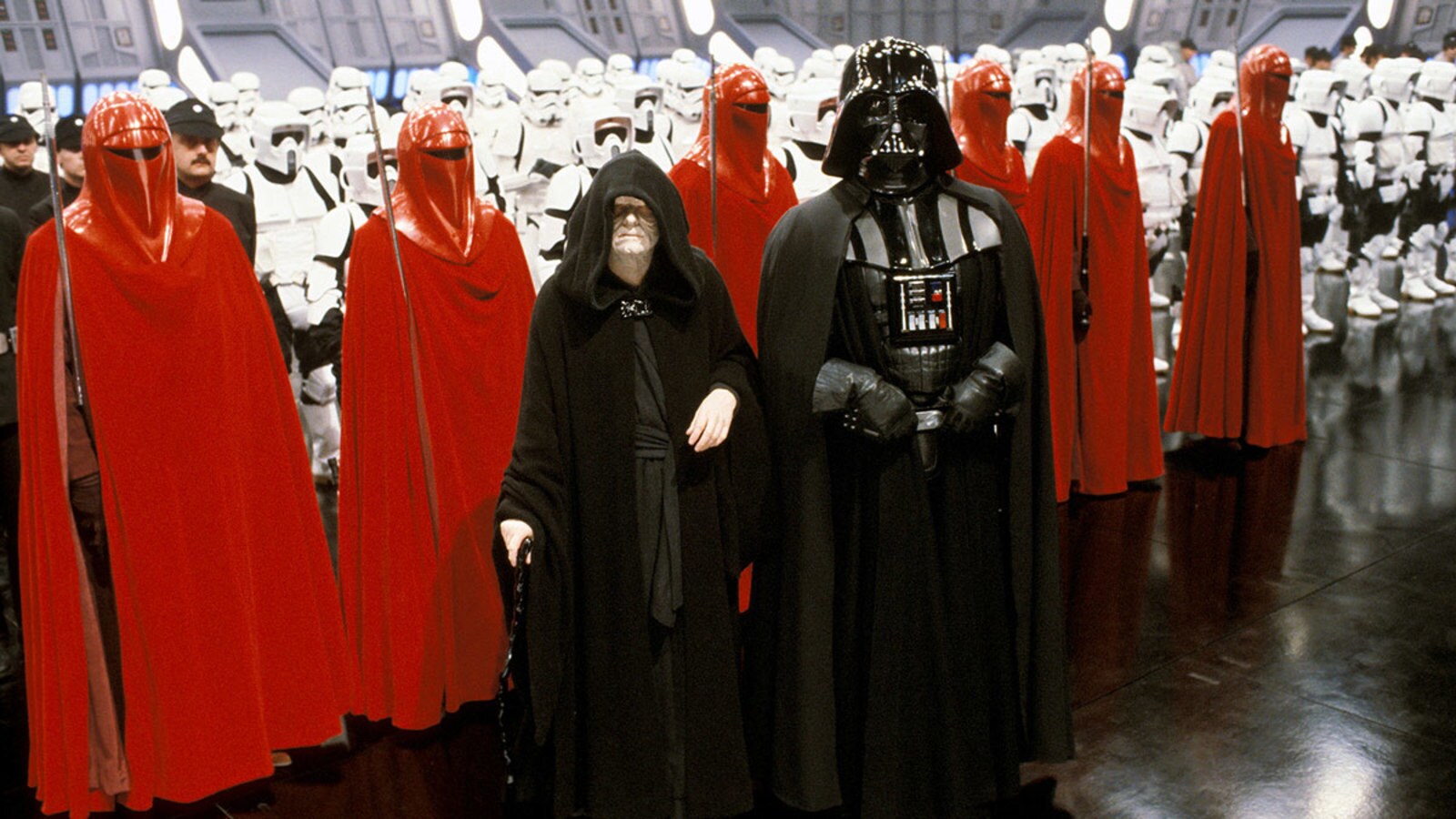
Imperial political culture made hierarchy, discipline, central authority, militarization, loyalty, and administrative order into everyday expectations across state institutions.
02 · Identity
Belonging and social identity
Imperial identity could be learned in academies, military units, offices, youth environments, elite networks, and occupied administrations. Rank and service gave people a language for status and belonging.
03 · Worldview & religion
Belief, cosmology, and moral order
Imperial political culture presents hierarchy, security, efficiency, obedience, technological control, and centralized order as solutions to disorder. It is a political worldview that teaches people to see rank and administrative control as normal features of social stability.
The Empire is not publicly organized as a Sith state religion. Palpatine's Sith identity remains concealed from most subjects while Jedi institutions and the Church of the Force are suppressed. Imperial ideology can therefore operate as a powerful civic worldview while official religious life remains controlled, marginalized, or politically dangerous.
04 · Practice
Everyday life, ritual, and material culture
Uniforms, insignia, protocol, ceremony, command etiquette, surveillance, performance metrics, reporting systems, propaganda, and bureaucratic documentation turned political ideology into daily routine.
05 · Institutions
Social organization and authority
The military, civil service, academies, intelligence services, governorships, ministries, prisons, and scientific programs each reproduced related but not identical forms of Imperial culture.
06 · Change over time
History and cultural transformation
Imperial culture grew from late-Republic institutions and wartime habits rather than appearing from nothing. After Endor, officers and remnants preserved many of these practices even when central state authority collapsed.
Connected archive