
Authoritarian power depends on language because force has to be organized before it can be applied. Someone must become legible to the system as a target. A person who is merely inconvenient can be described as disorderly. A dissenter can become an insurgent. A traveler can become a suspect. A suspect can become a prisoner. A prisoner can become labor. Each change in classification narrows the person's options while expanding the state's authority over them.
The power of a category
A label can become an action
Imperial officers constantly convert messy social realities into simpler administrative terms. The process is useful to the regime because categories make large populations manageable. A file does not need to understand an entire person. It needs enough information to decide whether to watch, question, move, punish, recruit, exploit, or eliminate them.
The danger is that classification can erase context. Cassian Andor can be arrested under an alias for a minor public incident while his actual political history remains unknown. A prisoner can become a production unit. A funeral crowd can become a security threat. An entire resistance network can be described as criminality rather than political opposition.


Dedra Meero and the discovery of a pattern
Andor gives classification a face through Dedra Meero. Her professional skill is not physical intimidation. It is the ability to recognize relationships between reports that other Imperial supervisors keep separated by jurisdiction. A stolen Starpath unit, thefts from military installations, rebel activity, and irregular local incidents become meaningful when she places them inside one category: organized insurgency.
That act of interpretation is powerful because the category reorganizes evidence. Once Dedra convinces superiors that separate incidents belong to a coordinated network, the Empire can justify wider surveillance and more aggressive measures. Classification does not simply describe a threat after it has been proven. It helps produce the institutional reality in which the threat is pursued.
“Criminal” can erase a political argument
One of the Empire's most useful moves is to describe opposition as ordinary lawbreaking. The word criminal narrows the frame. Instead of asking why people resist Imperial rule, the institution can ask which rule they violated, where they should be detained, and what sentence should follow. Political conflict becomes police work.
This does not mean every person targeted by Imperial law is secretly a rebel. The point is that legal and security categories can overlap in ways that benefit the regime. A smuggler, dissident, saboteur, partisan, and ordinary person caught in a security sweep may enter the same machinery even though their motives and actions differ dramatically.
Cassian Andor: the wrong name, the wrong charge, the same prison
Cassian's arrest on Niamos is one of the sharpest examples. Under the alias Keef Girgo, he is detained not for Aldhani or for his deeper anti-Imperial history but for a minor incident. Official Star Wars material describes him as charged with “civil disruption” and sentenced to years of Imperial labor. The institution does not need to know who he really is in order to control his body.
This reveals something important about bureaucratic repression: accuracy is not always necessary for domination. The Empire misclassifies Cassian's biography yet still places him inside a prison system that serves Imperial production. From the prison's point of view, the category prisoner is enough.
Narkina 5: when a person becomes output
At Narkina 5, classification is built into architecture. Men are divided into levels, rooms, tables, shifts, quotas, sentences, and performance rankings. Their personal histories matter less than whether the table meets production targets. The prison turns human beings into measurable industrial capacity.
The floor manager system makes the process especially effective. Kino Loy is still a prisoner, but he is given responsibility for discipline because the system makes him accountable for the performance of others. The category of prisoner therefore contains internal ranks. Some inmates gain tiny privileges by helping the institution run, even though none of them control the terms of confinement.
Rebel, insurgent, partisan: political words with consequences
Star Wars uses several terms for armed opposition, and the differences matter. “Rebel” can become a shared identity among people resisting the Empire. “Partisan” can describe a more specific militant formation. “Insurgent” is often the language of a security state describing people who threaten order. A person may accept one term and reject another even when the same institution applies all of them from the outside.
Language therefore creates competing maps of legitimacy. The Empire describes itself as the state and its opponents as unlawful threats. Rebels describe Imperial institutions as illegitimate and their own violence as resistance. The question is not only which side has a weapon. It is which side gets to make its vocabulary appear neutral.
Associations become evidence
Imperial classification rarely stops with one person. Intelligence work turns relationships into risk. Who visited the suspect? Who shares a workplace? Who used the same equipment? Who traveled through the same port? Who attended the same funeral? Once someone is classified as dangerous, ordinary relationships can be reread as evidence of conspiracy.
This is why surveillance produces social consequences even before arrest. People may distance themselves from friends, avoid meetings, stop speaking openly, or change routines because association itself can become incriminating. The state does not need to ban every relationship. It can make relationships costly.
Interactive Imperial file
Change the label and watch the institution change
These are recurring narrative categories rather than a complete official Imperial codebook. Select a label to see what the category emphasizes and what kind of institutional action it tends to invite.
A relationship becomes something to investigate
The suspect category does not require guilt to be established. It opens a person to monitoring, questioning, record searches, association mapping, and the accumulation of further evidence. Suspicion is valuable because it allows the security system to act before a case is complete.
Institutional effect: surveillance expands before punishment is formally imposed.Uniforms classify before anyone speaks
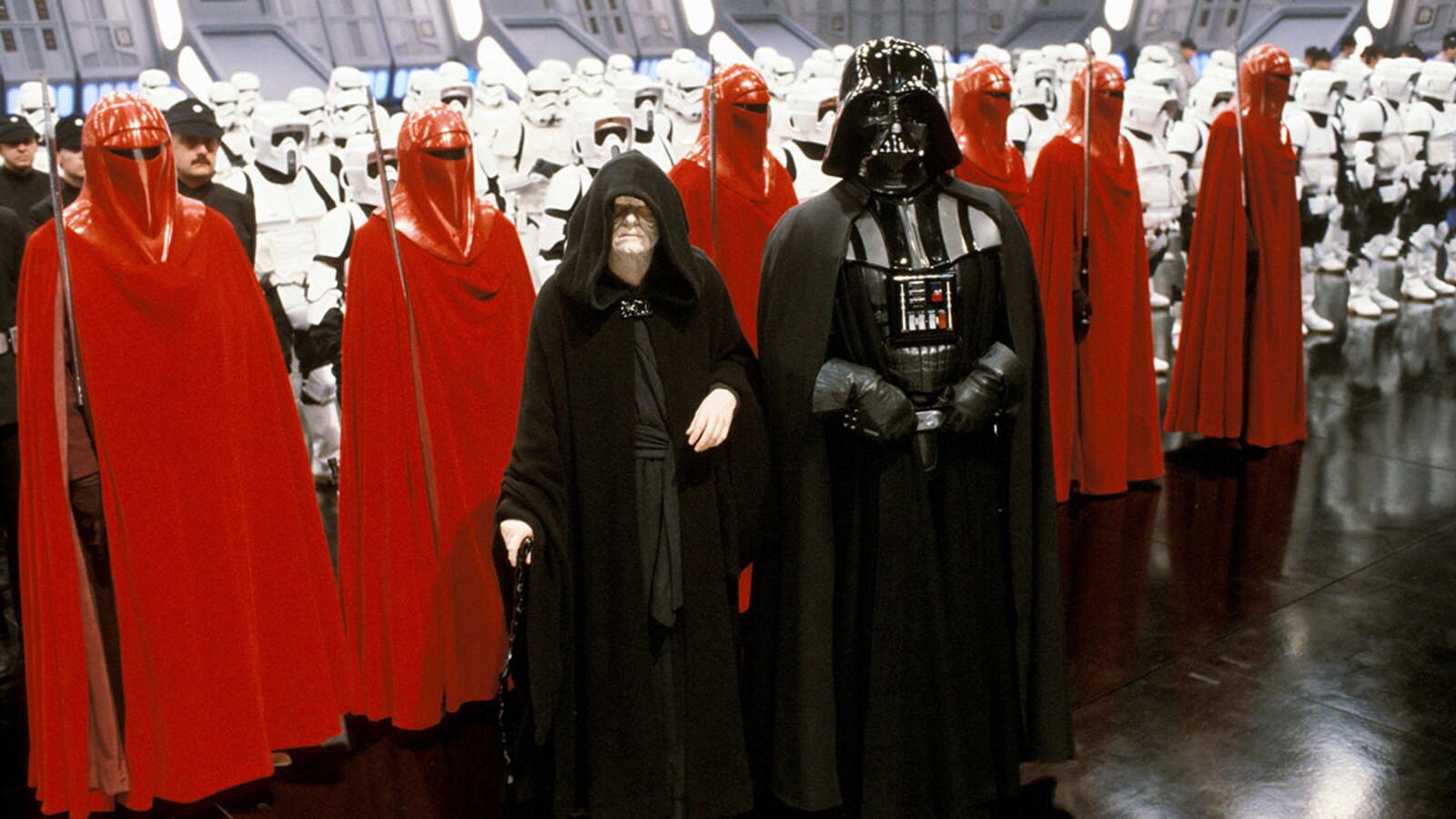
Not all classification is written. Imperial uniforms, rank plaques, helmets, prisoner clothing, workspaces, and architecture make categories visible. They tell people who may issue orders, who must obey, who belongs in a restricted space, and who can be searched or moved without explanation.
This is material classification. A uniform compresses institutional information into an image. It allows strangers to recognize hierarchy instantly. Star Wars understands this visually, which is why Imperial design is so effective: categories can be read from across a room.
Species, difference, and the limits of the archive
The Empire is frequently represented as human-dominated, and many Star Wars stories show unequal treatment of nonhuman peoples. But the surviving screen canon does not provide one simple, comprehensive Imperial legal chart for species categories. IDS therefore avoids inventing a universal race code where the sources do not establish one.
The broader pattern is still important. A state can make difference politically meaningful through recruitment, settlement, military policy, labor systems, exclusion from institutions, or assumptions about loyalty. The careful question is not “what did the Empire call every species?” but “where does the story show some populations having less access to authority, mobility, safety, or recognition?”
Film & television examples
Where classification becomes visible
ISB pattern recognition
Separate thefts, contacts, and movements become one insurgent pattern once Dedra gives them a shared security meaning.
Narkina 5
A civilian arrest becomes a prison sentence; a prisoner becomes a worker; a worker becomes output measured against quota.

Lothal security categories
Sabotage, youth resistance, rebel broadcasting, and local organizing are translated into Imperial security problems requiring escalating enforcement.
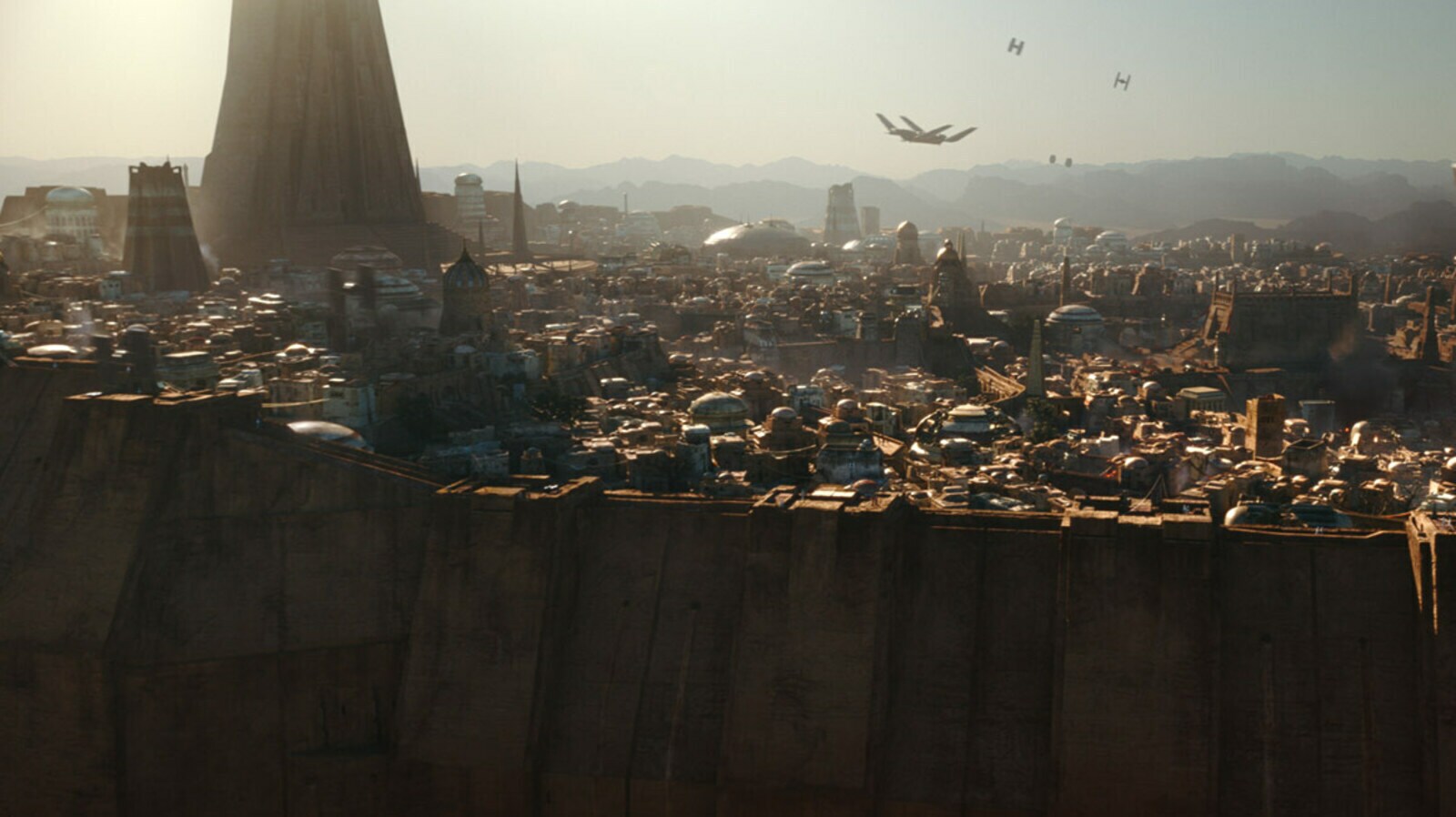
Jedha's crowded security landscape
Pilgrims, civilians, Guardians, partisans, Imperial troops, and intelligence operatives occupy the same streets while institutions classify them differently.
Propaganda completes the classification
An internal file is powerful, but an authoritarian state also needs public categories. News reports, official statements, wanted notices, speeches, and controlled information can turn a police label into a social identity. If resistance is described only as terrorism or criminal disorder, citizens are encouraged to see repression as protection.
Ghorman in Andor Season 2 makes this process explicit. The Empire does not only prepare force. It prepares a story about why force will be necessary. Classification becomes preemptive justification.
Why bureaucratic language feels less violent than violence
Terms like processing, transfer, output, security, order, sector, detention, and resentence sound technical. That technical quality is politically useful. It creates distance between a decision and its human effect. An officer can discuss a population as a problem without describing the fear, pain, or displacement that the policy produces.
This is one reason Andor is so important to the Imperial archive. It shows that authoritarianism does not require every participant to behave like a theatrical villain. A person can contribute to coercion by doing competent office work inside an institution whose categories already define what counts as success.
Read the language
Three questions for any Imperial scene
Suspect, citizen, worker, rebel, criminal, prisoner, officer, alien, refugee, or something else? Who chose the term?
Monitoring, search, detention, forced movement, labor, interrogation, exclusion, violence, or public suspicion?
Family, motive, history, local context, political grievance, sacred obligation, coercion, or the person's own explanation?
The anthropological point: states do not only see people, they format them
No government can know every citizen as a complete person. Institutions use categories because administration requires simplification. The political question is what happens when the categories are difficult to challenge and backed by overwhelming coercive power.
The Empire's classifications are frightening because they can become self-reinforcing. Surveillance finds the behavior it has been told to look for. Resistance to a search becomes evidence of disloyalty. Anger at an arrest becomes disorder. Disorder justifies more security. The category helps create the conduct later used to prove the category was correct.
Source trail
Sources & evidence
The source trail documents the institutional examples used here. The comparative argument about classification is IDS editorial analysis.
- Official DatabankImperial Security Bureau
- Official DatabankDedra Meero
- Official DatabankNarkina 5
- Official DatabankCassian Andor
- Episode Guide“Narkina 5”
- Official SeriesAndor
- Official SeriesStar Wars Rebels
How IDS uses sources: official material supports named events and institutional details. The framework of classification and discourse is IDS analysis. Read the editorial standard →