
Occupation is one of the most important recurring conditions in Star Wars because it connects the saga's largest political claims to ordinary life. A fleet can seize a system, but an occupation has to be lived every day. It must decide who may travel, who can gather, whose property can be taken, which rituals can continue, what work is required, what language appears in official notices, and which forms of disagreement become security threats. Imperial rule therefore becomes most visible not in the Emperor's throne room but in streets, workplaces, temples, farms, checkpoints, prisons, and funerals.
What occupation changes
Power becomes an environment
An occupying regime does not need to issue a dramatic threat every hour. Once soldiers, records, checkpoints, permits, patrols, extraction systems, and local collaborators are established, people begin adjusting their behavior before a direct order is given. The occupation becomes part of the environment in which decisions are made.
That is why Star Wars repeatedly shows occupations through ordinary spaces. Ferrix's streets, Lothal's farms and factories, Jedha's holy city, Aldhani's sacred valley, and Ghorman's civic center all become political because Imperial institutions insert themselves into places that previously carried other meanings.
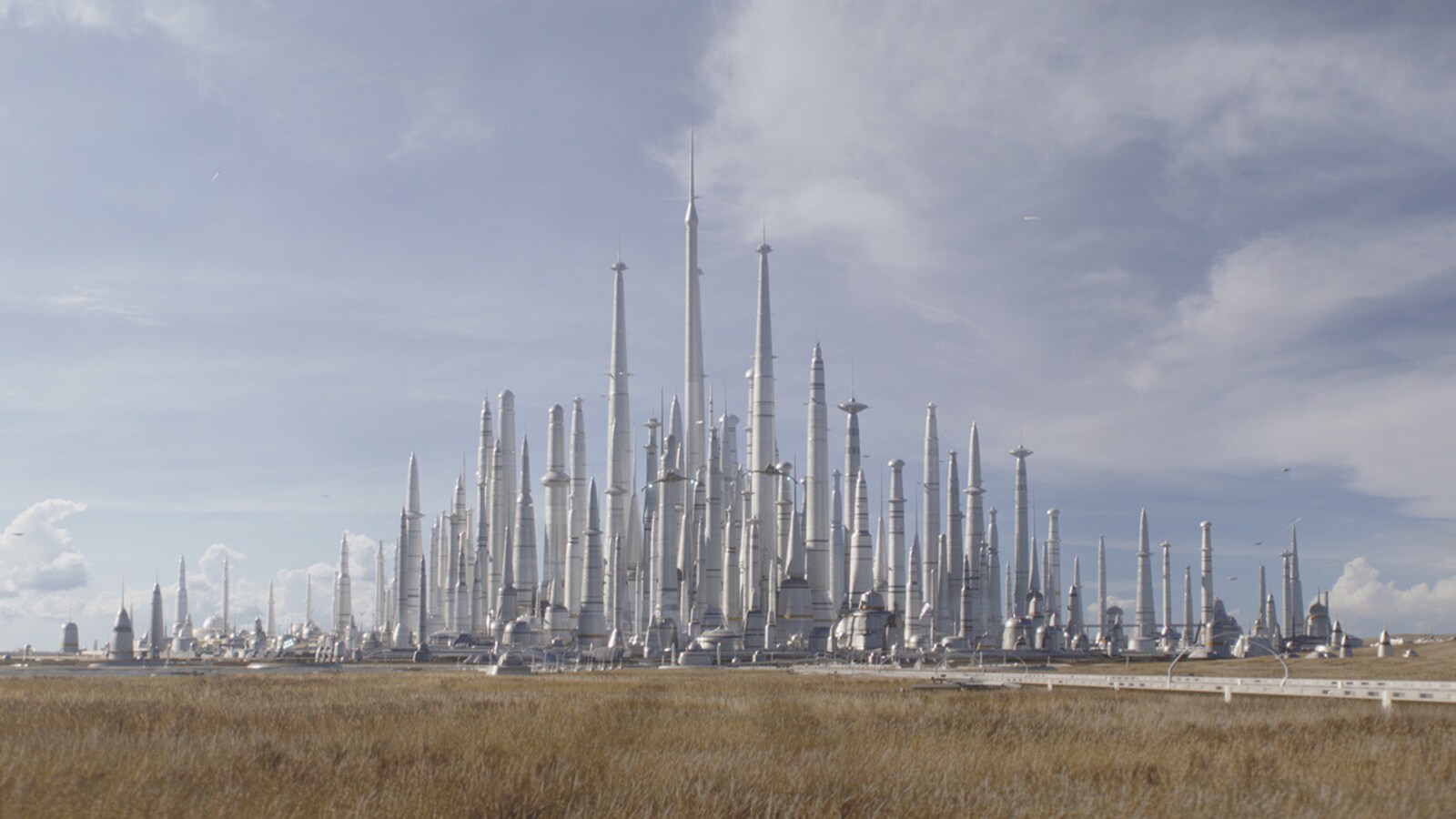
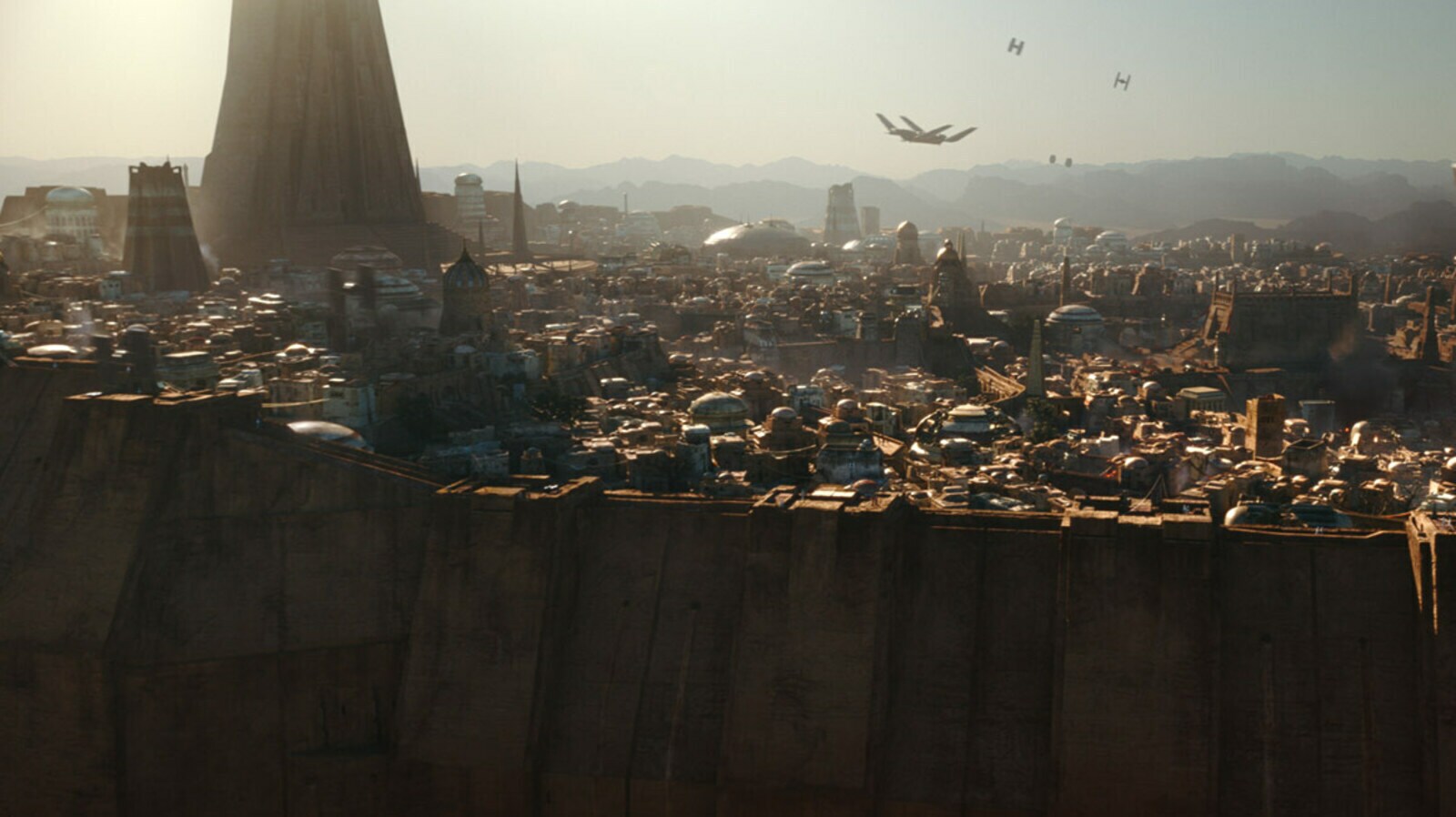
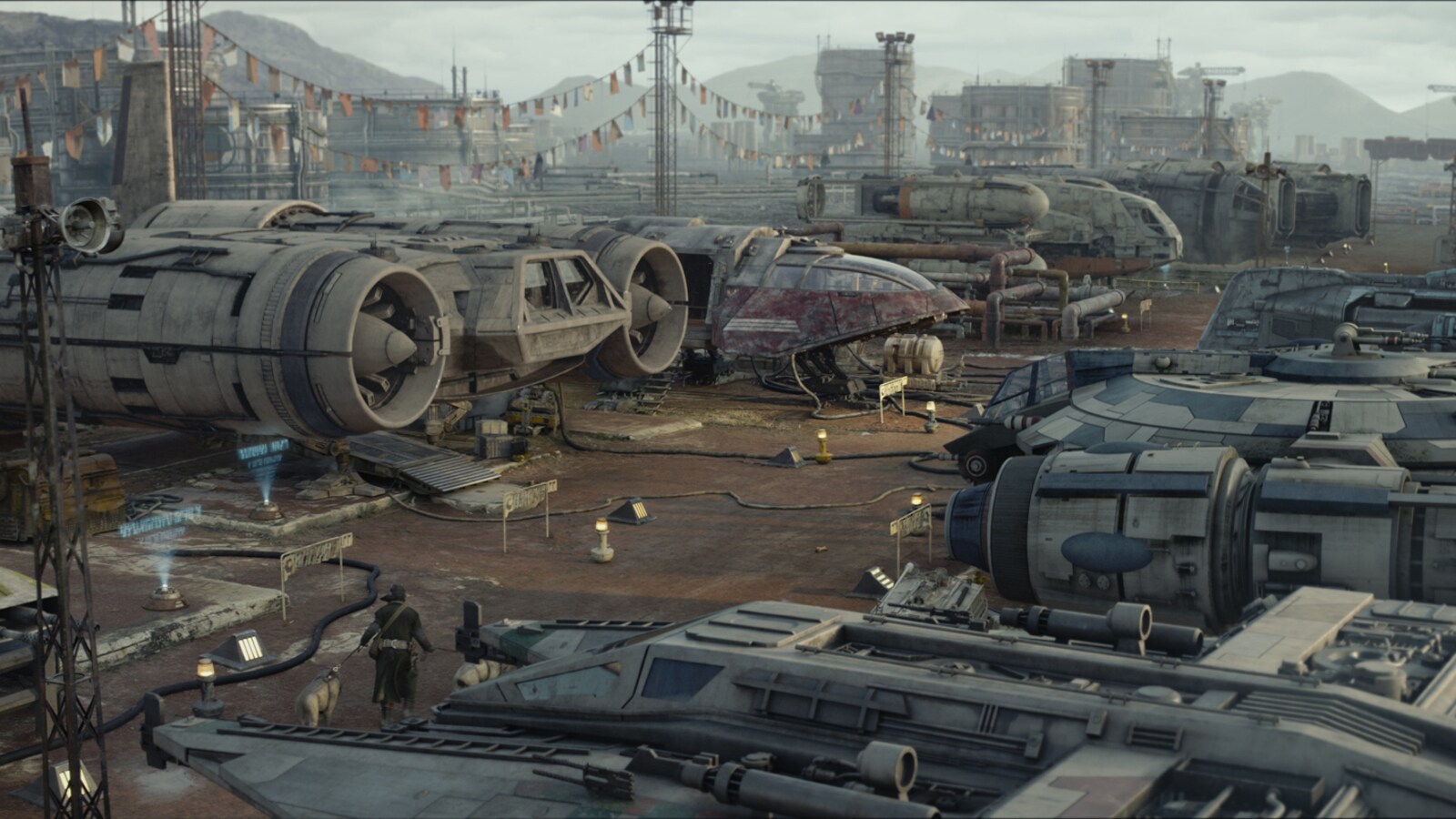
Ferrix: occupation arrives through administration
Ferrix in Andor is useful because Imperial control does not begin there as a fully developed military occupation. The local corporate authority of Preox-Morlana already polices the region. After the Aldhani heist, the Empire responds to wider unrest by expanding direct control, tightening sentencing, and treating local disorder as evidence of a larger political threat. The transition shows how occupation can be built through existing institutions rather than imposed on an empty political landscape.
The effect on Ferrix is visible in the town's social density. People know one another's families, workplaces, routines, sounds, and obligations. That local knowledge initially gives residents ways to frustrate outside control. The banging of metal signals danger. Neighbors conceal information. Workplaces provide cover. But the same density also gives occupiers a map of relationships to exploit. Arrest one person and investigators begin tracing everyone around them.
The funeral on Rix Road: ritual becomes political space
Maarva Andor's funeral is one of the clearest Star Wars examples of how occupation changes the meaning of public assembly. A funeral ordinarily belongs to the community's own moral and ritual order. Under occupation, the number of participants, route of movement, sound, timing, and presence of security forces all become political questions. The Empire tries to regulate the gathering because any large coordinated event can be interpreted as a threat.
The funeral becomes resistance not because funerals are inherently revolutionary, but because Imperial control makes ordinary collective life difficult to separate from politics. The people of Ferrix do not need a formal Rebel command structure to experience the same restriction together. Shared ritual provides the organization, memory, and emotional language through which the crowd can act.
Lothal: development that removes people from their own land
Star Wars Rebels presents Lothal as a world where Imperial occupation is tied to industrial development. Official Star Wars material describes farmers being removed from land while TIE fighter and weapons factories expand. The Empire can therefore present itself as a provider of infrastructure and employment while the same projects redistribute control of land, resources, and labor away from local communities.
This is an important distinction. Occupation does not always destroy economic activity. It may intensify it. The political question is who decides what is produced, who receives the benefits, which landscapes are damaged, and whether local residents have meaningful authority over the transformation. A factory can create jobs and still be part of a coercive system.
Jedha: when sacred landscapes become strategic resources
Rogue One adds another dimension through Jedha. The moon is a major sacred landscape tied to early Force traditions and pilgrimage, yet it is also valuable to the Empire because of kyber. Occupation therefore turns religion, archaeology, extraction, and military security into the same political problem. A pilgrim experiences a sacred city. An Imperial planner sees a resource zone and insurgent environment.
This collision matters because control over sacred places is never only about physical territory. It affects who can worship, who can travel, who can protect relics, and who is allowed to define what a place is for. When the Empire removes kyber from Jedha, it transforms a religious material into an industrial input for the Death Star. Extraction is also reinterpretation: the state changes the object's social meaning by changing what it is made to do.
Aldhani: displacement without a destroyed city
Aldhani in Andor demonstrates a quieter form of occupation. Official descriptions note that the Empire has occupied the world for years, displaced many Dhani, and discouraged the pilgrimage associated with the Eye. The Imperial garrison does not need to erase the Dhani physically to undermine cultural continuity. It can make a journey harder, reduce participation, move people away from a sacred landscape, and wait for tradition to become logistically difficult.
This is one of the most anthropologically useful examples in Star Wars because it shows cultural disruption through administration. A sacred event may still be technically permitted while policy steadily reduces the number of people able to attend. The distinction between a formal ban and practical obstruction matters. Occupation often works through the latter.
Ghorman: controlling the story of violence
Andor Season 2 gives occupation an information war. On Ghorman, the Empire intensifies restrictions, infiltrates opposition, manipulates events, and then uses the resulting violence to support its own account of disorder. The massacre is therefore not only a military act. It is a struggle over classification: who counts as peaceful, who counts as a threat, and whose description of events becomes the official record.
That is a recurring Imperial pattern. A population is pressured until resistance becomes more likely; resistance is then offered as proof that the population required stronger control. The system can create the conditions that justify its own expansion.
Interactive occupation map
Choose a world and see what occupation targets
The same Empire does not produce the same local experience everywhere. Select a case to compare the pressure point, the local institution affected, and the form of resistance that follows.
Community life becomes a security problem
Imperial power reaches Ferrix through policing, surveillance, sentencing, occupation of public space, and the attempt to regulate a funeral procession. The town's strongest resource is also its social density: neighbors can coordinate because they already share work, memory, and ritual.
Watch: public assembly · funerary ritual · neighborhood networks · surveillanceOccupation produces collaborators, intermediaries, and impossible choices
Occupied worlds are never divided cleanly into occupiers and rebels. Local administrators may keep working because their jobs distribute food or medicine. Business owners may cooperate to protect employees. Informants may act from fear, money, ideology, or personal conflict. Some people join resistance immediately. Others avoid politics until state pressure reaches a family member, workplace, or sacred practice.
That complexity is important because collaboration is a relationship, not a single personality type. Imperial power depends on people who translate local life into administrative categories. A security officer who knows the neighborhood, a clerk who processes a permit, or a business owner who supplies a garrison can all help the occupation function without sharing the same motives.
Why resistance grows from ordinary institutions
The Rebel Alliance eventually becomes a military and political coalition, but many of the resistance practices shown in Star Wars begin inside ordinary social networks. Families hide people. Workers sabotage equipment. religious communities preserve sacred knowledge. Local leaders use ceremonies or civic organizations to coordinate. Pilots and mechanics redirect professional skills. Resistance grows because people already possess relationships before anyone calls them rebels.
This helps explain why the Empire can destroy a cell without eliminating rebellion. A cell is an organization. A community is a field of relationships from which new organizations can grow.
Film & television examples
Occupation across the screen
Ferrix
Surveillance, funerary ritual, collective punishment, corporate policing, and the conversion of a town into an occupied security zone.
Lothal
Land dispossession, industrialization, military production, environmental damage, youth resistance, and eventual liberation.
Jedha
Pilgrimage, holy space, kyber extraction, insurgency, street patrols, and the destruction of a sacred city.

Ryloth
Local leadership, military occupation, shifting alliances, family politics, and the difficult boundary between accommodation and resistance.
Questions to carry into other stories
How to recognize occupation even when no one says the word
Look for checkpoints, curfews, restricted zones, permits, patrol routes, or people changing travel habits.
Ask who owns factories, mines, farms, housing, infrastructure, and the products of local work.
Watch funerals, pilgrimages, monuments, news reports, schools, archives, symbols, and official labels.
The anthropological point: occupation is reproduced through routine
The Empire is frightening because spectacular violence and ordinary administration support each other. A massacre terrifies a population, but a permit office, prison shift, patrol route, propaganda broadcast, or factory quota can preserve the result. Occupation survives when extraordinary control becomes ordinary procedure.
That is why the most revealing Star Wars stories about Empire often spend time away from the Emperor. They show people deciding whether to attend a funeral, cross a street, report a neighbor, keep a ritual, take a job, hide a fugitive, or believe a news report. Those decisions are where occupation becomes culture.
Source trail
Sources & evidence
Official Star Wars material grounds the documented places and events below. IDS uses those sources to build a comparative interpretation of occupation.
- Official DatabankFerrix
- Official DatabankLothal
- Official DatabankJedha
- Official DatabankAldhani
- Official SeriesAndor
- Official SeriesStar Wars Rebels
- Official FilmRogue One: A Star Wars Story
- Official FeatureCreating Ghorman and Andor Season 2 worlds
How IDS uses sources: named events, institutions, and places come from official material. Comparative and anthropological claims are editorial analysis. Read the editorial standard →