01 · Orientation
Summary
Jedha is a sacred moon connected to some of the earliest traditions studying the Force. Under Imperial occupation, pilgrimage, local religion, kyber extraction, insurgency, and military violence become inseparable.
02 · Place
Environment and settlement
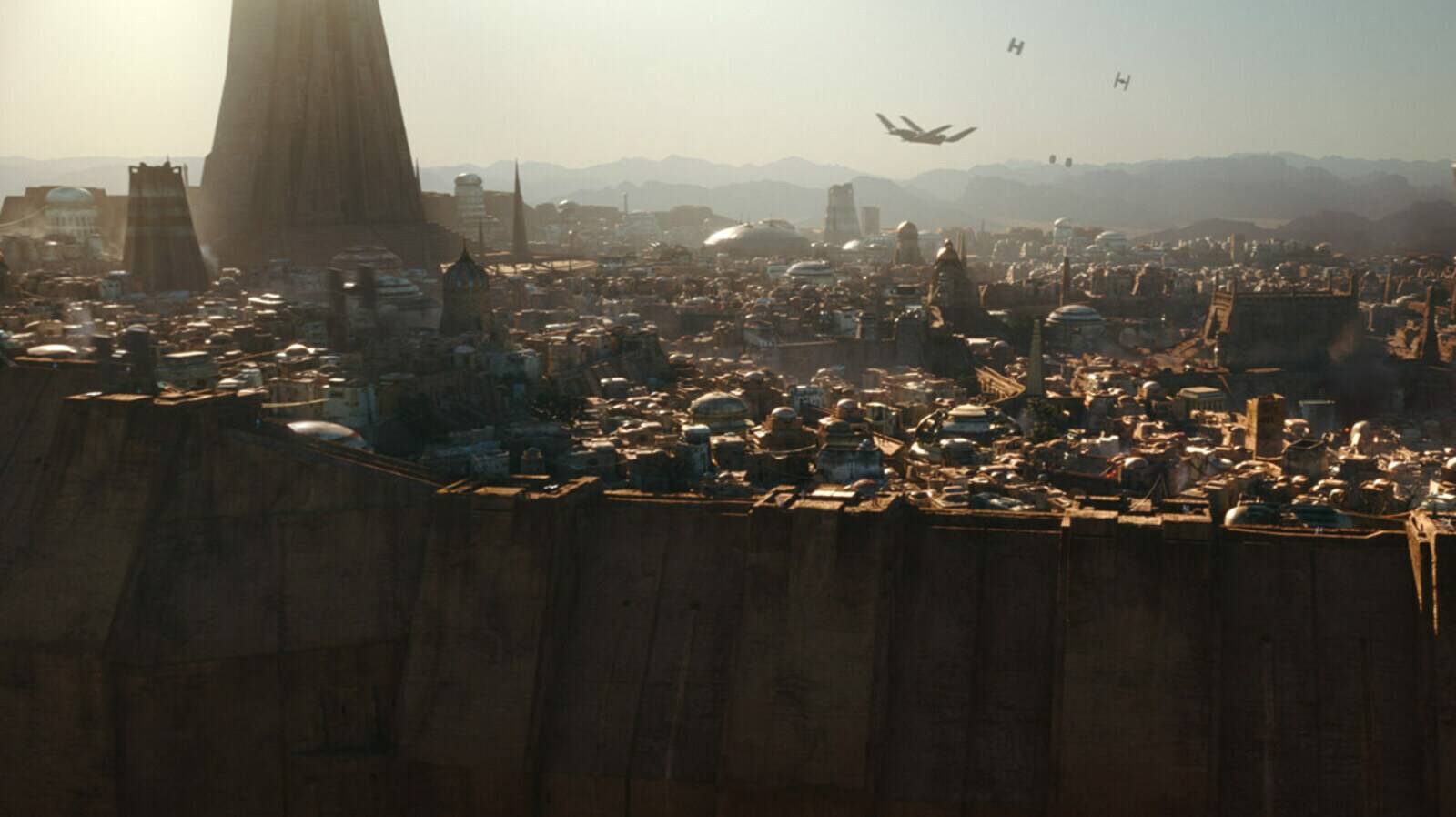
Jedha combines cold desert terrain with ancient settlements and monumental religious sites. The Holy City draws pilgrims and communities associated with the Force, while surrounding landscapes contain resources valued by the Empire.
03 · Society
People and culture
Jedha's importance comes from religious diversity rather than a single centralized tradition. Pilgrims, guardians, monks, merchants, residents, refugees, and armed groups move through the same sacred landscape.
04 · Religion & worldview
Sacred landscape, belief, and moral order
Jedha is one of the galaxy's major pilgrimage landscapes. Multiple Force traditions, the Guardians of the Whills, the Temple of the Kyber, pilgrims, monks, and sacred architecture coexist there. Imperial occupation transforms religion into a question of extraction, policing, and resistance.
05 · Institutions
Politics and power
Imperial occupation transformed a pilgrimage center into a militarized extraction zone. Kyber crystals were removed for the Death Star program, while Saw Gerrera's Partisans fought the occupation through insurgent tactics.
06 · Change over time
Historical significance
Jedha had ancient ties to the Jedi and other Force traditions. During the Imperial era, conflict intensified around the Holy City. The Death Star then fired on Jedha as a weapons test, devastating the area and turning sacred geography into a casualty of Imperial strategy.
Connected archive