
- Date
- 32 BBY
- Continuity
- Canon
- Location
- Mos Espa, Tatooine
The royal ship needed a replacement hyperdrive component after escaping the blockade. The travelers landed on Tatooine and contacted Watto, who had the required parts and held Anakin and his mother in slavery.
A stranded Naboo party
The royal ship needed a replacement hyperdrive component after escaping the blockade. The travelers landed on Tatooine and contacted Watto, who had the required parts and held Anakin and his mother in slavery.
A race that changes one child's future
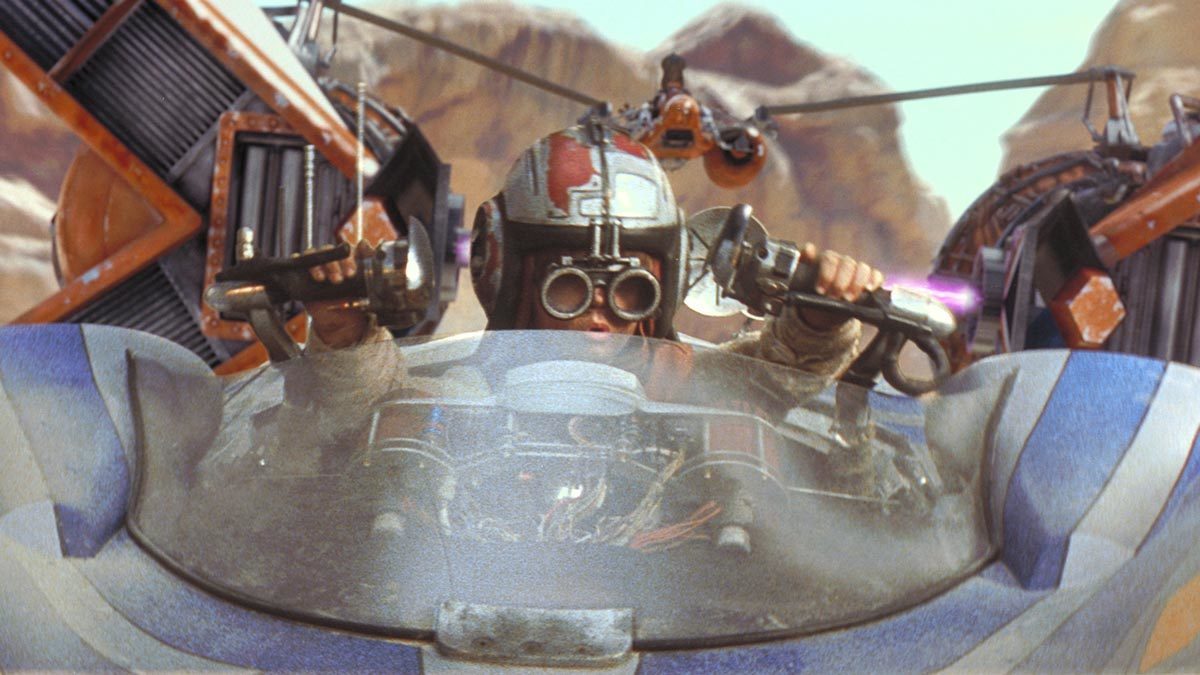
Anakin entered the Boonta Eve Classic in a podracer he had built. Qui-Gon negotiated a wager involving repair funds and the boy's freedom. Despite the danger and interference of other racers, Anakin won.
The incomplete meaning of freedom
Anakin was released from Watto's ownership, but Shmi remained enslaved. He had the opportunity to leave Tatooine and begin Jedi training, accompanied by the fear of losing his mother. The race solved neither the wider system of slavery nor his family's separation.
Anthropological assessment
Anakin's freedom depended on an exceptional private wager. The event demonstrates how social inequality can persist even when an individual escapes it through skill and chance.
Interactive analysis
Choose a research perspective to compare the event's historical and social significance.
Canon chronology / societies and power
A child's victory does not end slavery on Tatooine
The Boonta Eve Classic became important to the Naboo party because their ship required a hyperdrive component they could not purchase normally from Watto. Anakin Skywalker, a child enslaved by Watto along with his mother Shmi, offered a route to the needed repairs through his abilities as a mechanic and podracer. Qui-Gon Jinn negotiated a wager involving the race and Anakin's status. This arrangement placed an extraordinary burden on a child who already faced the hazards of racing and who could not freely determine the conditions of his own labor.
Anakin completed the race after equipment problems, competition from experienced pilots and dangerous interference. His victory secured the agreed release from slavery and allowed him to leave with Qui-Gon for Jedi training. But Shmi was not freed by the same result. This gap is central to the episode: the story of one future hero escaping bondage is not the history of slavery ending in Mos Espa. Anakin's separation from his mother created an enduring emotional conflict that later shaped his decisions. The race should therefore be read alongside the local economy of ownership and gambling, not only as a spectacular feat of piloting.
Children in commercial competition
Anakin's engineering skill made him valuable to adults who controlled money and legal status. Being exceptionally talented did not give him freedom before the wager. The event reveals how economic institutions can exploit competence without recognizing agency.
The limits of an individual rescue
Anakin's emancipation was personally momentous and allowed his Jedi journey to begin. It did not challenge Watto's ownership of Shmi or transform the local political order. Celebrating the winner while omitting those left behind would create a misleading history of liberation.
Did Anakin's victory free both him and Shmi?
No. The wager secured Anakin's freedom, while Shmi remained enslaved on Tatooine. Their separation is a consequential part of the film.
Screen and official reference: Star Wars: The Phantom Menace (1999), Mos Espa and Boonta Eve Classic sequences.. Story evidence and the site's institutional analysis are distinguished. No invented tactical details or unshown dialogue.
Sources and further reading
The Phantom Menace; StarWars.com Anakin Skywalker Databank. Review source background →
Canon · 32 BBY · Source-based archive review
The Boonta Eve Classic: evidence and political anthropology
Documented chronology and participants
Anakin entered the Boonta Eve podrace on Tatooine to help Qui-Gon's party acquire the parts needed to repair the Naboo royal ship. Qui-Gon also arranged a wager with Watto that would free Anakin if the boy won. Anakin survived sabotage and serious hazards, becoming a race victor and gaining freedom. Shmi did not receive the same release, leaving mother and son separated.
Institutions, identities and material life
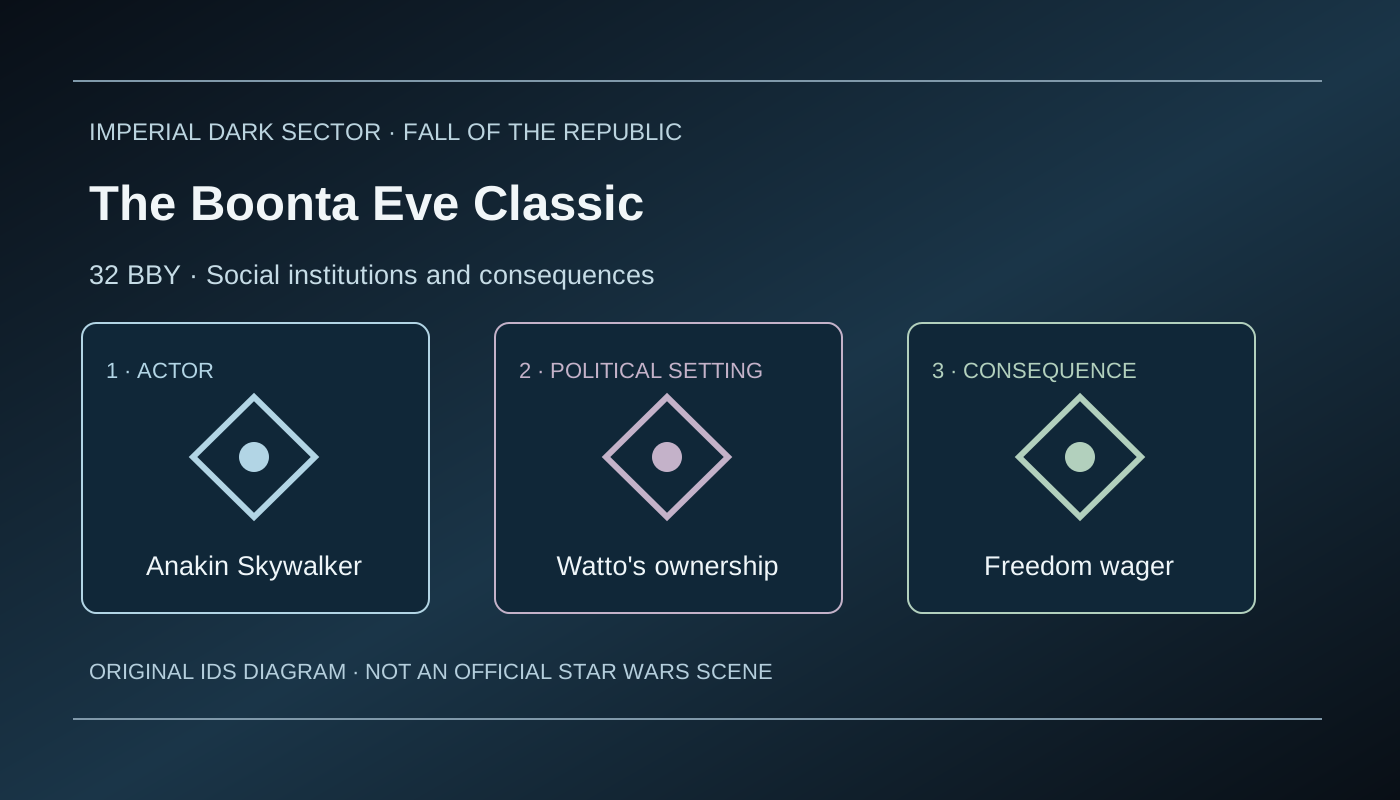
The race highlights the contradiction between a public sporting spectacle and the coercive labor system surrounding one competitor. Watto could stake an enslaved child's freedom because Tatooine allowed people to be treated as property. Winning created a path out of slavery for Anakin but did not reform the system or free his mother.
Source provenance and interpretation
The 32 BBY date is an in-universe chronology placement, not the film, television, or comic publication year. Anthropological interpretation is editorial analysis rather than additional story dialogue.
Test your historical judgment
Two short questions with scoring, corrections, and educational explanations.