
In 14,450 BBY, Republic forces fought at Rucapar on Alsakan during an engagement later remembered as the Cleansing of Rucapar. The battle came roughly fifty years after the Third Alsakan Conflict began. Its best-documented consequence was cultural rather than tactical: the centerpiece of the Alsakan Mosaics, a mountain-scale artwork whose gleaming tiled lanes extended from Rucapar's central square to five surrounding mountains, was destroyed. Later accounts say only remnants of the Mosaics survived the war.
Fifty years into the Third Conflict
The Third Alsakan Conflict began around 14,500 BBY with the Commenor Run Campaign.
By 14,450 BBY, fighting had reached Alsakan itself.
The Cleansing of Rucapar therefore marks a shift from route warfare across Tepasi, Alderaan, and Kattada to violence on one of the rival power centers' homeworlds.
Alsakan
Alsakan was one of the Core's oldest and most powerful worlds.
It sat immediately Rimward of Coruscant on the Perlemian Trade Route and had competed with Coruscant for influence over the Galactic Republic for millennia.
Its wealth, aristocratic traditions, and network of allied worlds made it the center of a durable alternative political bloc.
Rucapar
Rucapar was an ancient city in the Archais region of Alsakan.
It was built among five equidistant mountains.
The city's geography became inseparable from its most famous artwork.
The Alsakan Mosaics
The Alsakan Mosaics were a monumental work of art made from gleaming tiles.
The centerpiece occupied the central square of Rucapar.
From that center, five lanes of mosaic stretched outward to the summits of five mountains surrounding the city.
Art at mountain scale
The work was not a wall decoration or a single plaza floor.
Its design incorporated an entire urban landscape and surrounding mountains.
At that scale, the Mosaics blurred the boundary between artwork, architecture, infrastructure, and geography.
Five lanes to five mountains
The symmetry of five lanes and five equidistant mountains made the work inseparable from Rucapar's physical setting.
Removing the Mosaics from the city would have destroyed much of their meaning.
They were effectively a landscape artwork designed for one specific place.
The centerpiece
The central square contained the focal point from which the five tiled lanes radiated.
That centerpiece was destroyed during the Cleansing.
The sources do not preserve its exact shape, imagery, inscriptions, dimensions, or iconography.
The Mosaics were not necessarily erased completely
The securely documented outcome is destruction of the centerpiece.
Later histories say only traces or remnants of the Mosaics survived the Third Alsakan Conflict.
It is therefore safer to describe the work as catastrophically damaged rather than claim every tile vanished in one engagement.
Republic forces
Kymoodon-era summaries identify Republic forces as responsible for destroying the Mosaics during the battle.
In the context of the Alsakan Conflicts, “Republic” often reflects the Coruscant-aligned side's claim to act for the Galactic Republic as a whole.
That terminology itself carries political meaning in a civil struggle over who represented legitimate Republic authority.
Who gets called “the Republic”?
Alsakan and its allies did not necessarily regard Coruscant's political claims as neutral.
Wars over control of the Republic also became wars over the vocabulary of legitimacy.
Calling one side simply “Republic forces” can reproduce the perspective of the eventual central government.
Why was it called a “Cleansing”?
The source gives the name but does not explain its contemporary meaning.
“Cleansing” can imply military clearance, political purge, destruction, propaganda, or a later historian's label.
Without additional evidence, the term should not be expanded into an undocumented massacre or ethnic purge.
The word is not a casualty report
The ominous name makes it tempting to assume mass killing.
No published summary provides a civilian death toll or states that a population group was systematically exterminated.
The cultural destruction is documented; the human cost remains largely absent from the surviving record.
How much of Rucapar was destroyed?
Later descriptions of Alsakan say Rucapar and the Mosaics were largely destroyed during the Cleansing.
The dedicated event summary is more conservative, naming destruction of the Mosaic centerpiece as the explicit outcome.
IDS therefore distinguishes the secure event detail from broader retrospective descriptions of the city's devastation.
Was the artwork a military target?
No source states that destroying the Mosaics was the operation's original objective.
The artwork may have been deliberately attacked, caught in urban fighting, or destroyed while Republic forces pursued another target.
We cannot determine intent from the surviving evidence.
Why monuments can become targets
Monuments can embody political identity, historical legitimacy, collective memory, and elite power.
Destroying them can therefore have symbolic value even when they have no military function.
That general principle makes deliberate destruction plausible, but plausibility is not evidence of intent in Rucapar.
War inside a monumental city
When fighting enters an old urban center, military and cultural landscapes overlap.
Roads become avenues of advance, public squares become tactical spaces, and monumental structures become cover, landmarks, or targets.
Rucapar's city-scale artwork made cultural damage especially difficult to separate from urban combat.
Cultural heritage in war
The Cleansing is one of the oldest precisely dated examples of heritage destruction in the Star Wars chronology.
Its historical importance survives mainly because a famous artwork was damaged.
This creates a different kind of war record from histories centered on commanders and fleet actions.
Art and political identity
The Mosaics were known explicitly as the Alsakan Mosaics.
Whatever their original iconography, later memory tied them to the identity of the planet itself.
Their destruction therefore became part of how Alsakan remembered the war.
Material memory
Public art stores history in physical form.
People encounter it during ordinary movement through a city, generation after generation.
Destroying such a work removes not only an object but a repeated social relationship with the past.
Only traces survive
Later descriptions say only traces of the Mosaics survived the Third Alsakan Conflict.
Those remnants mattered because fragments can become anchors for reconstruction and memory.
A damaged site may acquire even greater symbolic power after destruction.
Could the Mosaics be reconstructed?
The sources do not describe a full restoration.
Without complete records, rebuilding would raise difficult questions about authenticity: original tile versus replacement, ancient design versus modern interpretation, ruin versus replica.
The absence of a restored original helped turn the Mosaics into lost heritage.
Vicendi remembers them in 10,000 BBY
Nearly four and a half millennia after the Cleansing, the historian Vicendi included the Alsakan Mosaics among the Twenty Wonders of the Galaxy.
Like the Caliginous Automaton of Tomo-Reth, the Mosaics could be culturally important even after their destruction.
Loss became part of their fame.
The Twenty Wonders
Vicendi's list catalogued monumental creations made by sentient beings.
The inclusion of destroyed works made it a canon of memory rather than merely a travel guide.
The Mosaics survived as an idea long after most of the physical work was gone.
A later museum replica
During the Galactic Civil War era, the Figg & Associates Art Museum on Cloud City exhibited a replica of the Alsakan Mosaics in its “Wonders of the Galaxy” collection.
The replica was not the original artwork.
It represented an attempt to make a lost deep-time monument visible to much later audiences.
Replica versus ruin
A replica can preserve visual knowledge while lacking the original site's material history.
Rucapar's five mountains and central square were part of the artwork's meaning.
A museum reproduction could evoke the pattern without reproducing the full landscape experience.
How did the design survive?
The existence of later replicas implies that enough records of the Mosaics survived for artists or curators to reproduce their general form.
The source does not identify whether those records were holos, plans, descriptions, fragments, or archaeological surveys.
The transmission history remains unknown.
A pattern of lost wonders
Only 293 years earlier, the Herglic Crush had destroyed the Caliginous Automaton of Tomo-Reth.
Both the Automaton and the Alsakan Mosaics were later placed among Vicendi's Twenty Wonders.
The early Kymoodon Era therefore survives partly through a catalogue of spectacular things later destroyed.
Belgoth's Beacon
An earlier Alsakan war had already destroyed another later Wonder, Belgoth's Beacon, during the Core Campaigns of the Second Alsakan Conflict.
The repeated loss of monuments shows that the Alsakan wars damaged far more than fleets and governments.
They repeatedly altered the galaxy's cultural landscape.
War remembered through objects
People often remember conflicts through particular ruined places: a bridge, temple, palace, statue, district, or work of art.
Such objects condense enormous wars into something visible and narratable.
The Alsakan Mosaics became one such memory object.
No commanders survive in the summary
Despite the event's precise date and famous cultural loss, no commander is securely named in the standard reference summary.
No unit designation or tactical formation is preserved either.
The archive remembers art more clearly than military leadership.
No casualty figure
We do not know how many soldiers or civilians died at Rucapar.
The absence of a number should not be interpreted as evidence of low casualties.
It is simply a limit of the surviving source tradition.
The war continued for another 150 years
The Cleansing did not end the Third Alsakan Conflict.
Fighting continued until 14,300 BBY.
Rucapar was therefore one devastating episode in a much longer war.
Toward Raxus Prime
The next securely dated endpoint is 14,300 BBY.
During the final stages, the Machinists of Nikato defeated the Duros Red Credit Brigade near Raxus Prime and established Nikato's Bootheel.
That final episode shows how the conflict generated new local political actors far from Rucapar.
War reaches the rival's homeworld
The significance of Rucapar also lies in location.
The opening campaign had spread across worlds on the Commenor Run.
By 14,450 BBY, the Coruscant-aligned Republic war effort was striking inside Alsakan itself.
An escalation in political symbolism
Fighting on Alsakan carried symbolic weight beyond ordinary frontier operations.
The planet was not just an allied system but one of the two poles of the entire rivalry.
Damage to one of its most famous artworks could therefore reverberate through political identity even without a decisive military victory.
The propaganda potential
Alsakani elites could remember the destroyed Mosaics as evidence of Coruscant's brutality.
Coruscant-aligned accounts might frame the same operation as necessary military action.
The surviving reference summaries do not preserve contemporary propaganda from either side, so these are analytical possibilities rather than documented slogans.
The name “Cleansing” shapes later memory
Even without a surviving explanation, the event's name carries moral weight.
Later readers encounter it as something more severe than a neutral “Battle of Rucapar.”
Historical labels influence interpretation long after the people who coined them are gone.
Deep-time source criticism
Fourteen thousand years before the films, documentation is uneven.
A date may survive while motives vanish; a monumental artwork may be described while individual lives disappear.
The Cleansing of Rucapar should therefore be presented with more certainty about what was destroyed than about why it happened.
Canon versus Legends
The Third Alsakan Conflict, Rucapar, the Cleansing, and the Alsakan Mosaics belong to Legends chronology.
Current canon has not re-established this 14,450 BBY event.
The page therefore treats the episode as Legends history even when discussing general themes of war and heritage.
Anthropological assessment
The Cleansing of Rucapar demonstrates that warfare destroys systems of meaning as well as military assets. The Mosaics were embedded in the city, landscape, and identity of Alsakan. Their destruction therefore affected how later generations could experience their own past.
The event also illustrates archival inequality. The artwork is described in vivid physical terms, yet the people who built it, defended it, attacked it, lived beside it, or died near it remain largely anonymous. Monumental objects are often easier for deep-time history to preserve than ordinary lives.
Finally, the battle shows how cultural heritage becomes political. Once the Mosaics were damaged by forces identified with the Republic, their ruins could function as evidence in the long argument between Alsakan and Coruscant over legitimacy, autonomy, and the costs of central power.
What the sources establish
Where the Cleansing fits
Sources and further reading
- Daniel Wallace and Jason Fry, Star Wars: The Essential Atlas, Del Rey, 2009.
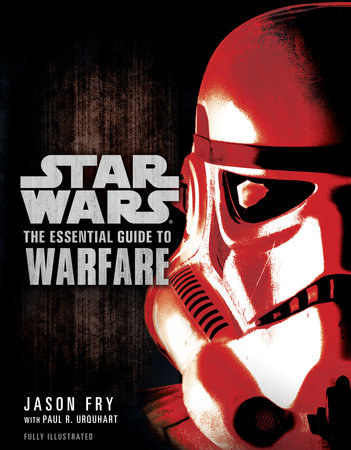
- Jason Fry with Paul R. Urquhart, The Essential Guide to Warfare: Star Wars, Random House, 2012.
- The Jewel of Yavin, Fantasy Flight Games, 2014.
- Random House Worlds, The Essential Guide to Warfare
- Cleansing of Rucapar, Wookieepedia
- Alsakan Mosaics, Wookieepedia
- Third Alsakan Conflict, Wookieepedia