
Around 15,600 BBY, the Second Alsakan Conflict entered one of its most consequential phases: the Core Campaigns. Earlier fighting had moved from the Inner Rim at Porus Vida to the Mid Rim at Gizer. Now major operations reached the Core Worlds and Colonies themselves. The surviving record is still fragmentary, but several facts stand out. Skako and Commenor were attacked during this phase, and Belgoth's Beacon—one of the galaxy's earliest famous hyperspace beacons—was destroyed along the Perlemian Trade Route.
A new phase of the Second Alsakan Conflict
The Second Alsakan Conflict had begun around 16,200 BBY.
By the time of the Core Campaigns, roughly six centuries of warfare had already passed.
The war had expanded steadily through several regions rather than remaining confined to one colonial front.
From the Rimward theaters toward the center
The Second Siege of Porus Vida had taken place in the Inner Rim around 16,100 BBY.
The Gizer Campaign followed in the Mid Rim around 16,000 BBY.
The Core Campaigns brought major fighting back toward the galaxy's oldest and wealthiest regions.
The Core Worlds
The Core Worlds formed the political, economic, and cultural heart of the Republic.
Many of the oldest governments, corporations, universities, noble houses, and major transportation routes were concentrated there.
War in the Core therefore carried different symbolic weight than fighting on distant settlement frontiers.
The Colonies
The Colonies lay immediately beyond the Core and included some of the Republic's earliest settled worlds outside the central systems.
By this era many Colony worlds were wealthy, industrialized, heavily connected, and politically mature.
The Core Campaigns therefore endangered regions whose infrastructure and institutions had developed over many millennia.
Skako is attacked
Skako was one of the worlds attacked during the later years of the Second Alsakan Conflict.
In Legends geography it lay in the Core Worlds along the Hydian Way and was home to the Skakoan species.
The source does not tell us who led the attack, what forces participated, whether the planet was occupied, or how the Skakoans responded.
Do not project Clone Wars Skako backward
Much of the detailed material about Skako comes from thousands of years later, when the world was associated with the Techno Union and Skakoan industrial society.
Those later institutions cannot safely be assumed to have existed in identical form in 15,600 BBY.
The ancient attack should therefore remain distinct from the familiar Clone Wars-era image of Skako.
Commenor is attacked
Commenor was also attacked during this late phase of the war.
The planet lay in the Colonies inside the Slice and occupied a major hyperlane junction involving the Commenor Run, Quellor Run, and Trellen Trade Route.
Its location made it both a commercial center and a strategic transit point.
Why Commenor mattered
Commenor's route connections linked it to Brentaal and to several corridors extending through the Colonies.
A campaign that disrupted Commenor could affect more than one planet.
Transportation, trade, military movement, and information all flowed through the same network.
Belgoth's Beacon
The most famous surviving casualty of the Core Campaigns was not a city or warship but a hyperspace beacon.
Belgoth's Beacon had been commissioned by Borte Belgoth around 25,100 BBY and placed along the Perlemian Trade Route.
By the time it was destroyed, the structure had existed for roughly nine and a half thousand years.
One of the original beacons
Belgoth's Beacon belonged to the early generation of hyperspace navigation infrastructure that helped make long-distance travel reliable.
Its importance was practical before it became historical.
Over millennia, however, the structure accumulated cultural meaning simply because it survived.
The carved faces
The beacon was decorated with carved faces representing a Columi, a cacodemon, and a molator from Alderaan.
Those details transformed a piece of navigation equipment into something closer to a monument.
Function and art were built into the same object.
Destroyed during the Core Campaigns
Belgoth's Beacon was destroyed around 15,600 BBY during the Core Campaigns.
The surviving sources do not identify the weapon, fleet, commander, or exact tactical circumstance responsible for its destruction.
What is clear is that a structure older than the Republic itself was lost to a war between Republic-era political rivals.
The Perlemian Trade Route
The beacon stood along the Perlemian, one of the galaxy's foundational hyperspace corridors.
The route had already appeared repeatedly in the Alsakan conflicts at Kes and other strategic locations.
Its continuing importance made infrastructure along the route vulnerable whenever war moved through the Core.
Infrastructure can become heritage
A structure originally built for transportation can acquire historical value through age, association, and continued use.
Belgoth's Beacon had become more than a technical object by the time of its destruction.
Its loss was both infrastructural and cultural.
A lost Wonder of the Galaxy
Vicendi later included Belgoth's Beacon among the Twenty Wonders of the Galaxy in Arturum Galactinum.
That list was compiled thousands of years after the beacon had been destroyed.
The monument therefore survived in cultural memory even after its physical destruction.
Remembered after destruction
A destroyed monument can sometimes become more symbolically important because it is gone.
Later generations may reconstruct its image, preserve replicas, or treat the lost structure as evidence of a vanished age.
Belgoth's Beacon became part of the Republic's memory of early hyperspace civilization.
War destroys memory as well as armies
The destruction of a historic monument does not merely remove material from the battlefield.
It can erase evidence about technology, artistic practice, engineering, and social values.
The Core Campaigns therefore damaged the historical archive of the galaxy itself.
Why navigation infrastructure becomes a target
Hyperspace beacons guide movement.
Destroying one can disrupt traffic, complicate military logistics, and create uncertainty in a corridor used by fleets and civilians.
Whether Belgoth's Beacon was deliberately targeted for that reason or destroyed incidentally is not preserved.
Strategic target or collateral loss?
The sources do not tell us whether either side intended to destroy the beacon.
It may have been a deliberate strike, collateral damage, or simply caught inside a larger battle zone.
IDS does not convert the monument's importance into an invented motive.
Pressure on the old centers
Fighting in the Core and Colonies signaled that neither side had contained the war in distant territories.
The costs of the rivalry were now reaching systems closer to the Republic's oldest political and economic centers.
This raised the stakes without producing a decisive end.
Still not the final phase
The Core Campaigns did not end the Second Alsakan Conflict.
About a century later, the Duinuogwuin Contention erupted in 15,500 BBY while the Alsakan war was still underway.
Then in 15,480 BBY, the Strontium Raid struck the Republic world of Abhean.
A galaxy with overlapping crises
The Second Alsakan Conflict was not the only major event occurring during its eight-century span.
Other diplomatic, cultural, and military crises unfolded at the same time.
This matters because historical timelines can make separate events look neatly sequential even when people at the time experienced overlapping uncertainty.
The campaign survives as fragments
The Core Campaigns are named as a major phase, but most detailed operations are lost.
We know about attacks on Skako and Commenor and the destruction of Belgoth's Beacon.
We do not have a complete campaign map, order of battle, or decisive engagement that explains how the phase began or ended.
Not one battle
The plural name “Core Campaigns” matters.
It indicates multiple operations across more than one location rather than one isolated clash.
Skako, Commenor, and the Perlemian fighting around Belgoth's Beacon should therefore be treated as pieces of a larger campaign complex.
A war fought through mobility
Across the Second Alsakan Conflict, mobility repeatedly shaped the theaters that became important.
Porus Vida lay at intersecting routes. Gizer sat at a major junction. Commenor was a hyperlane nexus. Belgoth's Beacon stood on the Perlemian.
The pattern shows how deeply military geography depended on transportation infrastructure.
The Republic's oldest networks become vulnerable
By 15,600 BBY, the Republic had spent nearly ten thousand years building interstellar connections.
Those networks created prosperity and political integration.
They also gave armies routes to follow and strategic nodes to attack.
Skako and Commenor were not the same kind of world
Skako was a Core homeworld with unusual environmental conditions and a distinct native species.
Commenor was a Colony world with deep ties to Republic trade and multiple route connections.
The fact that both were attacked shows the Core Campaigns were not limited to one kind of target.
Civilian experience remains largely invisible
The sources do not tell us what happened to ordinary residents of Skako or Commenor during the attacks.
No casualty totals, evacuations, refugee flows, food shortages, or civilian testimonies survive in the summarized ancient record.
That silence is a limitation of the archive, not evidence that civilians were unaffected.
Deep-time warfare compresses detail
The farther an event recedes into the past, the more likely later histories are to preserve only names, dates, major places, and famous losses.
The Core Campaigns survive primarily through that compressed form.
Belgoth's Beacon remains visible because it was already exceptional before it was destroyed.
Why one destroyed object is remembered
Thousands of ships, buildings, and lives may have been lost in the campaign.
Yet the beacon stands out because it had existed for millennia and carried symbolic importance beyond the conflict.
Historical memory is selective, often preserving exceptional monuments more clearly than ordinary destruction.
Toward the Duinuogwuin Contention
The next major dated event in the chronology is not another Alsakan campaign.
In 15,500 BBY, Republic scouts encountered the Duinuogwuin—sentient Star Dragons—near Murkhana and provoked a crisis that reached Coruscant itself.
The Second Alsakan Conflict continued in the background while the Republic faced an entirely different kind of emergency.
Anthropological assessment
The Core Campaigns show what happens when a long colonial and commercial rivalry reaches the infrastructure-rich heart of a civilization. Worlds such as Skako and Commenor mattered not only as populations but as nodes inside dense political and transportation networks.
The destruction of Belgoth's Beacon is especially revealing. A practical navigation structure had accumulated nearly ten thousand years of cultural meaning. War destroyed both a piece of infrastructure and a material link to the galaxy's early hyperspace age.
The campaign also illustrates how archives privilege monuments. We remember the beacon's destruction more clearly than the civilians who lived through the campaign. That imbalance says as much about later historical preservation as it does about the war itself.
What the sources establish
Canon versus Legends
Where the Core Campaigns fit
Sources and further reading
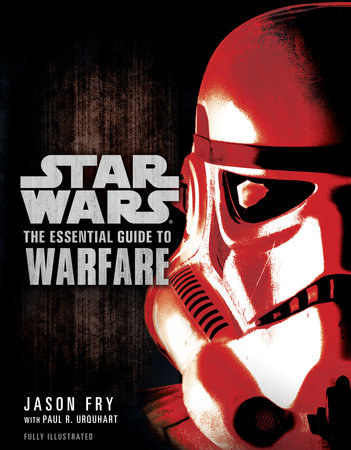
- Jason Fry with Paul R. Urquhart, The Essential Guide to Warfare: Star Wars, Random House, 2012.
- Daniel Wallace and Jason Fry, Star Wars: The Essential Atlas, Del Rey, 2009.
- Random House Worlds, The Essential Guide to Warfare
- Second Alsakan Conflict, Wookieepedia
- Belgoth's Beacon, Wookieepedia
- Skako/Legends, Wookieepedia
- Commenor/Legends, Wookieepedia