
Around 15,400 BBY, the Second Alsakan Conflict ended. It had begun around 16,200 BBY and lasted roughly eight centuries, making it one of the longest sustained episodes in the early rivalry between Coruscant and Alsakan. The outcome preserved in The Essential Guide to Warfare is starkly simple: a draw. Neither side achieved the kind of victory that permanently reordered the Republic. Unlike the First Alsakan Conflict, whose end is tied to a Bureau of Ships and Services intervention and postwar political compromises, the second war has no surviving named peace mechanism.
Roughly eight centuries of war
The Second Alsakan Conflict lasted approximately eight hundred years.
No ordinary individual could have remembered its beginning and end.
The war existed across generations, turning rivalry into an inherited political condition rather than a temporary emergency.
The war had begun around 16,200 BBY
Hostilities returned roughly five centuries after the First Alsakan Conflict ended.
The source does not preserve one dramatic triggering incident.
Instead, the second war emerged from the same unresolved competition over settlement, resources, political influence, noble holdings, and Coruscant-backed commercial networks.
The result: draw
The surviving military chronology calls the outcome a draw.
That means neither Coruscant nor Alsakan secured a decisive political or military victory recognized by the later source.
It does not mean losses were equal, civilians suffered equally, or every territory returned to its earlier status.
What “draw” does—and does not—tell us
A draw is a summary judgment applied by later historians.
It can describe a war in which neither side achieved its main strategic goals even if one side won more individual battles.
Without preserved settlement terms, the word should not be stretched into claims about borders, reparations, prisoners, or political concessions.
No named treaty survives
There is no securely preserved equivalent to the Challat Compromise attached to the end of the second war.
No treaty name, diplomatic conference, neutral broker, or constitutional settlement is identified in the principal summary.
The silence is especially noticeable because the first conflict's conclusion is documented more clearly.
The first war ended differently
The First Alsakan Conflict had ended around 16,700 BBY after BoSS threatened to deny both sides access to the hyperspace-beacon network.
That peace was accompanied by institutional reforms including the Challat Compromise and Corellia's Contemplanys Hermi provision.
No similarly detailed package is preserved for 15,400 BBY.
Why is the second ending less detailed?
The difference may reflect the surviving source tradition rather than the actual historical importance of the settlement.
A real peace would have required some practical arrangement, even if later summaries did not preserve its name.
IDS therefore distinguishes between “no settlement existed” and “no settlement details survive.”
The war's preserved campaigns
The named military chronology includes the Second Siege of Porus Vida, the Gizer Campaign, the Core Campaigns, and the Strontium Raid.
These engagements trace a war that moved through the Inner Rim, Mid Rim, Colonies, and Core Worlds.
The geographic spread helps explain why an eight-century conflict could affect the Republic far beyond the rival capitals.
Second Siege of Porus Vida
Around 16,100 BBY, war returned to Porus Vida.
The Inner Rim world had already been besieged during the First Alsakan Conflict.
Its repeated appearance showed how inherited route geography could expose the same world to violence centuries apart.
The Gizer Campaign
Around 16,000 BBY, the war reached Gizer in the Mid Rim.
Gizer sat at the intersection of the Perlemian Trade Route and the Vaathkree Trade Corridor.
The campaign showed the conflict expanding along the same transportation networks that supported ordinary commerce.
The Core Campaigns
Around 15,600 BBY, major fighting reached the Core Worlds and Colonies.
Skako and Commenor were attacked, and the ancient Belgoth's Beacon was destroyed along the Perlemian.
By then, warfare had reached regions much closer to the Republic's oldest centers of wealth and political authority.
The Strontium Raid
In 15,480 BBY, only about eighty years before the end of the war, Abhean became the site of the Strontium Raid.
The raid demonstrates that military operations continued late into the conflict.
Its target, commander, outcome, and even the origin of its name remain unknown.
The war did not simply fade away centuries early
The Strontium Raid matters chronologically because it occurred very close to the end.
The conflict was still producing named military events in its final century.
The 15,400 BBY conclusion should therefore not be imagined as a purely ceremonial end to a war that had already disappeared long before.
Coruscant survives as capital
The draw did not remove Coruscant from its central position in the Republic.
Coruscant continued functioning as the political capital and the center of a vast network of institutions.
Alsakan had challenged that primacy again without permanently displacing it.
Alsakan survives as a rival power
Alsakan likewise survived the conflict as a major Core World and political center.
The planet retained enough wealth, prestige, noble power, and historical identity to challenge Coruscant again.
A draw preserved the rival itself.
Stalemate reproduces rivalry
A decisive conquest can destroy a political rival. A draw cannot.
Because neither side eliminated the other's capacity to compete, the same rivalry remained available to future generations.
This is one reason the Alsakan Conflicts became a series rather than a single ancient war.
Peace without reconciliation
Stopping military operations is not the same as changing political identity.
Coruscant remained Coruscant. Alsakan remained Alsakan.
Each could preserve its own historical narrative about the conflict without accepting the other's claims.
How a draw can be remembered differently
A later neutral chronology may call the war a draw.
Local traditions could still remember heroic victories, betrayals, massacres, humiliations, or lost opportunities.
Because the surviving source does not preserve those competing memory traditions in detail, IDS avoids assigning one shared interpretation to everyone who lived through the war.
War as a generational institution
An eight-century conflict demands administrative continuity.
Armies must recruit new personnel, governments must finance campaigns, transportation systems must be maintained, and stories about the enemy must be transmitted to people born long after the original grievances.
The war persisted because institutions could outlive individuals.
Most participants inherited the conflict
For nearly everyone fighting late in the war, the beginning of the conflict belonged to ancient history.
They inherited strategic maps, political loyalties, and institutional narratives rather than personal memories of how the war started.
This changes the social meaning of warfare: continuation becomes normal because the conflict predates the living generation.
Noble and corporate interests endure
The Second Alsakan Conflict had been shaped by Alsakani noble holdings and Coruscant-backed megacorporate interests.
Those institutions were capable of surviving leadership changes and transmitting property claims across generations.
Economic continuity helped make political rivalry durable.
Hyperspace routes remain central
Porus Vida, Gizer, Commenor, Belgoth's Beacon, and Abhean all demonstrate the recurring importance of route geography.
The war repeatedly intersected with major corridors and junctions.
Military history followed the infrastructure of interstellar connection.
Infrastructure both restrains and enables war
During the first conflict, BoSS used navigation infrastructure as leverage to help stop fighting.
During the second, the same broad network became a landscape of campaigns, raids, and destruction.
Infrastructure can constrain states because they depend on it, while also enabling armies to move through the galaxy efficiently.
The civilian cost is almost entirely lost
The surviving high-level military chronology does not give a total death toll for the Second Alsakan Conflict.
It does not preserve a refugee total, number of destroyed settlements, economic cost, or demographic impact.
The word “draw” therefore summarizes political outcome while concealing most of the social cost.
A draw is not equality of suffering
Two governments can emerge without decisive victory while particular planets experience catastrophic losses.
Belgoth's Beacon was destroyed. Skako and Commenor were attacked. Porus Vida was besieged again. Abhean was raided.
Those local experiences cannot be reduced to the strategic word “draw.”
The archive favors strategic outcome
Deep-time military histories often compress a long war into start date, end date, major battles, and outcome.
That format privileges states and campaigns over civilians and local communities.
The Second Alsakan Conflict is a particularly clear example because eight centuries fit into only a few surviving named events.
Other crises happened during the war
The Second Alsakan Conflict did not monopolize galactic history.
In 15,500 BBY, the Duinuogwuin Contention erupted after a disastrous first contact near Murkhana and brought hundreds of Star Dragons to Coruscant.
The Republic managed that crisis diplomatically while the older Alsakan war still continued.
Institutions were still being built
The University of Coruscant was founded during the final century of the war.
That juxtaposition matters.
Even during an eight-century conflict, societies continued building educational institutions, conducting exploration, developing technology, and creating cultural life.
The era was not only war
Historical timelines can make long conflicts appear to consume every aspect of society.
In reality, most people would still have lived within families, workplaces, schools, markets, religious communities, and local governments.
The war formed part of their world without necessarily defining every moment of it.
The rivalry will return
The Second Alsakan Conflict's end did not permanently resolve the competition between Coruscant and Alsakan.
Around 14,500 BBY, roughly nine centuries later, the Third Alsakan Conflict began.
The interval was long in individual terms but brief compared with the full history of the Republic.
Nine centuries of peace
The approximately nine-hundred-year interval before the third conflict was longer than the peace between the first and second wars.
Yet it still failed to erase the rivalry.
Political memory can survive periods far longer than individual lifetimes when institutions continue reproducing it.
But the next timeline events come sooner
The next major dated material in the galactic chronology falls around 15,000 BBY, not 14,500 BBY.
That period marks the transition from the Indecta Era into the Kymoodon Era and includes several important political, military, and cultural developments.
The timeline therefore moves forward through that transition before returning to the next Alsakan war.
The Indecta Era approaches its end
The Second Alsakan Conflict ended roughly four centuries before the conventional 15,000 BBY end of the Indecta Era.
The Republic entered the final centuries of the era without this particular Coruscant–Alsakan war actively underway.
That created space for renewed expansion, institutional change, and different conflicts.
What did the Republic learn?
The sources do not provide a formal lessons-learned document from 15,400 BBY.
Later history nevertheless suggests continuing concern with military organization, navigation security, regional autonomy, and the Republic's ability to respond to distant crises.
Those later reforms should be interpreted cautiously rather than attributed automatically to the second war.
A centralized Navy will return
Around 15,000 BBY, the Galactic Senate responded to renewed calls for a centralized Republic Navy.
That happened centuries after the Second Alsakan Conflict ended.
The chronology places the decision close enough to invite comparison but too far away to treat it as a direct documented peace provision.
The failure of finality
The war's greatest political failure may have been that its end was not final.
Neither side won enough to redefine the relationship permanently.
The resulting peace preserved both the Republic's Coruscant-centered order and Alsakan's capacity to contest that order again.
Anthropological assessment
The end of the Second Alsakan Conflict demonstrates how a war can stop without producing reconciliation. A draw ends immediate violence while leaving identities, claims, institutions, and memories intact.
Its eight-century duration also reveals the importance of institutional continuity. Almost no one who experienced the beginning could have experienced the end. The conflict persisted because organizations transmitted reasons to fight across generations.
Finally, the sparse ending reminds us that historical labels are selective. “Draw” is useful for military chronology, but it tells us almost nothing about the lives altered by eight centuries of siege, raids, route disruption, destroyed monuments, and local violence.
What the sources establish
Canon versus Legends
Where the ending fits
Sources and further reading
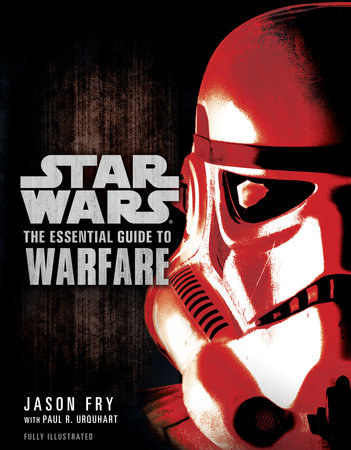
- Jason Fry with Paul R. Urquhart, The Essential Guide to Warfare: Star Wars, Random House, 2012.
- Daniel Wallace and Jason Fry, Star Wars: The Essential Atlas, Del Rey, 2009.
- Random House Worlds, The Essential Guide to Warfare
- Second Alsakan Conflict, Wookieepedia
- 15,400 BBY, Wookieepedia
- Indecta Era, Wookieepedia