
In 15,480 BBY, the planet Abhean became the site of a battle known as the Strontium Raid. It was one of the final named engagements of the Second Alsakan Conflict, occurring roughly eighty years before the war ended in a draw. Abhean remained loyal to Coruscant and sat on the Perlemian Trade Route in the Mid Rim's Maldrood sector. Those facts explain why the world mattered. What they do not explain is the name “Strontium,” the raid's exact objective, who commanded it, how large it was, or who won.
Abhean
Abhean was a terrestrial world in the Abhean system of the Mid Rim's Maldrood sector.
Its strategic importance came from its location on the Perlemian Trade Route, one of the oldest and most important hyperspace corridors in the Republic.
By 15,480 BBY, Abhean was firmly inside the Coruscant-aligned side of the Second Alsakan Conflict.
The Perlemian Trade Route
The Perlemian linked the Core with systems stretching far into the eastern galaxy.
During the Alsakan wars, sections of the route repeatedly became military geography because Coruscant, Alsakan, their allies, and commercial networks depended on it.
Abhean lay directly on that strategic artery.
A Coruscant-controlled section of the route
Later summaries specifically describe Abhean as lying along a portion of the Perlemian controlled by Coruscant during the Second Alsakan Conflict.
That made the world more than a neutral battlefield.
A raid there struck inside a transportation corridor associated with one side of the war.
A Mid Rim battlefield
Abhean belonged to the Mid Rim rather than the Core or Colonies.
The war had already moved through the Inner Rim, Mid Rim, Core Worlds, and Colonies over the preceding centuries.
The Strontium Raid shows that late in the conflict, the fighting still reached far across the Republic's transportation network.
The Maldrood sector
Abhean was located in the Maldrood sector, a region positioned along the Perlemian in the eastern Mid Rim.
Its geography connected it to neighboring systems such as Besh Gorgon and Euceron.
The sector sat near the broad boundary between the regions traditionally called the Slice and the Trans-Hydian.
What does “Strontium” mean?
The surviving source gives the battle its unusual name but does not explain the origin of that name.
It might refer to an operation code, target, resource, vessel, unit, place, or some other lost context.
None of those possibilities is established.
Do not assume it was about the substance strontium
Star Wars later introduced strontium as a material that can be used in fuels and explosives.
That later fact does not prove that the ancient Strontium Raid involved a strontium deposit, strontium weapon, fuel cache, or explosion.
The shared word is not enough evidence to reconstruct the raid's purpose.
What the word “raid” tells us
A raid normally describes a relatively focused offensive intended to strike a target and withdraw rather than permanently occupy an entire region.
That broad military meaning helps distinguish the event from a long siege.
However, the source does not preserve whether the target was a depot, city, fleet base, route installation, government center, shipyard, or something else.
Who carried out the raid?
Abhean was loyal to Coruscant, so an attack by Alsakan or an Alsakani-aligned force would be a reasonable inference.
But the concise published summary does not name the raiding commander or explicitly preserve the attacking formation.
IDS therefore distinguishes the war's opposing sides from the unknown details of this particular raid.
Who won?
No secure outcome survives.
We do not know whether the attackers achieved their objective, whether Republic defenders repelled them, whether infrastructure was destroyed, or whether either side suffered major losses.
The battle is remembered without a surviving victory statement.
A late engagement
The Second Alsakan Conflict had begun around 16,200 BBY.
By the Strontium Raid, the war had lasted roughly seven centuries.
Only about eighty years remained before the conflict ended in another draw.
After the Core Campaigns
The Core Campaigns around 15,600 BBY had brought fighting into the Core Worlds and Colonies.
Skako and Commenor were attacked and Belgoth's Beacon was destroyed.
The Strontium Raid followed about 120 years later, demonstrating that the conflict remained militarily active even after that major campaign phase.
Twenty years after the Duinuogwuin Contention
The raid occurred only twenty years after the Duinuogwuin Contention had devastated parts of Coruscant.
The Republic therefore experienced an external first-contact emergency and renewed internal warfare in close chronological proximity.
Ancient timelines can look orderly on a page even when contemporary institutions faced overlapping crises.
Abhean had already survived an ancient war
Abhean was not new to galactic warfare.
During the Tionese War around 24,000 BBY, it had been the farthest major Republic world along the Perlemian and was conquered by Tionese forces.
By 15,480 BBY, that earlier conquest lay more than eight thousand years in the past.
A repeatedly contested route world
Abhean's recurrence in military history was not necessarily caused by the same political issue each time.
The Tionese War and Second Alsakan Conflict had different causes.
What persisted was the world's route geography.
Routes outlive conflicts
Political enemies change far more rapidly than hyperspace geography.
A world on a major route can remain strategically relevant across wars separated by millennia.
Abhean demonstrates how infrastructure creates long-term military exposure.
Do not project later Abhean backward
Later eras describe important Abhean shipyards, military facilities, and a major naval role.
Those institutions should not automatically be assumed to exist in the same form during the Strontium Raid.
The ancient source does not say the raid targeted the shipyards or a naval base.
The later Abhean Shipyards
In later history, Abhean became associated with major starship manufacturing.
The Abhean Shipyards eventually constructed vessels including the ship later known as the Chu'unthor.
This later industrial significance helps explain Abhean's long-term importance, but it is not evidence for the target of the 15,480 BBY raid.
A future Republic naval hub
Around 15,000 BBY, roughly five centuries after the raid, the Republic re-established a centralized Navy after the institution had largely faded following the Tionese War.
Abhean became a major naval hub in that later reorganization.
The chronological gap matters: the raid preceded that development by centuries.
Did the raid influence the later naval revival?
It is tempting to connect repeated wartime vulnerability at Abhean to the later decision to rebuild the Republic Navy.
No surviving source explicitly makes that causal link.
The later naval revival should therefore be treated as context, not as a documented direct consequence of the Strontium Raid.
The Perlemian as military corridor
The Strontium Raid adds another event to a long pattern of warfare along the Perlemian.
Kes, Belgoth's Beacon, Abhean, and earlier Tionese battles all demonstrate the route's strategic persistence.
The same corridor that integrated the Republic economically repeatedly concentrated military danger.
Trade routes make efficient battle routes
Military forces benefit from the same predictable connections as merchants.
Routes provide access to populated worlds, depots, communications, and neighboring systems.
This is why commercial infrastructure can become strategic infrastructure without changing its physical location.
The civilian record is absent
The surviving account tells us nothing about Abhean's inhabitants during the raid.
There are no preserved casualty figures, evacuation records, refugee accounts, or descriptions of local damage.
The absence of civilian detail is an archival limitation rather than proof that the raid had no civilian effects.
The military record is scarcely better
Even the combatants themselves are poorly preserved at the operational level.
No commander, unit designation, ship class, fleet strength, or tactical maneuver is securely attached to the raid in the published summary.
The name survived more successfully than the battle narrative.
Why does the name survive?
Military histories often preserve event names as anchors even after detailed records disappear.
“Strontium Raid” may once have referred to something obvious to contemporary readers that became meaningless after the supporting context was lost.
The surviving name is therefore evidence of memory and evidence of loss at the same time.
An opaque proper noun
Opaque event names are common in deep history.
They preserve language without preserving explanation.
The responsible response is not to fill the gap with a plausible story, but to make the gap visible.
The end of the war is near
The Second Alsakan Conflict ended around 15,400 BBY, approximately eighty years after the Strontium Raid.
The settlement produced no decisive winner.
Like the earlier conflict, the second war ended in a draw, leaving the Coruscant–Alsakan rivalry available to return again.
Not the last Alsakan war
The end of the Second Alsakan Conflict did not end the larger series of Alsakan Conflicts.
Roughly nine centuries later, around 14,500 BBY, the Third Alsakan Conflict began.
The recurring wars would continue shaping Republic political geography for thousands of years.
Abhean in current canon
Abhean itself exists in current canon.
Modern mapping places the system along the Perlemian route in the Mid Rim, and StarWars.com has referenced Abhean while describing galactic travel toward Wobani.
The 15,480 BBY Strontium Raid, however, remains Legends history.
Strontium in current canon
The substance strontium also exists in current canon and has been described as a hazardous material associated with fuels and explosives.
That is a separate continuity fact from the ancient battle name.
There is no published bridge establishing that the raid received its name because of the substance.
Anthropological assessment
The Strontium Raid is valuable precisely because so little survives. It shows how historical memory can preserve a date, place, and evocative name while losing almost everything people usually want to know about a battle.
Abhean also demonstrates the social power of route geography. Its position on the Perlemian repeatedly pulled the world into conflicts whose political centers were elsewhere.
Finally, the unexplained word “Strontium” is a useful warning against retrospective storytelling. A familiar word can invite modern readers to build a causal explanation that the source itself never gives. Responsible historical reconstruction requires resisting that temptation.
What the sources establish
Canon versus Legends
Where the raid fits
Sources and further reading
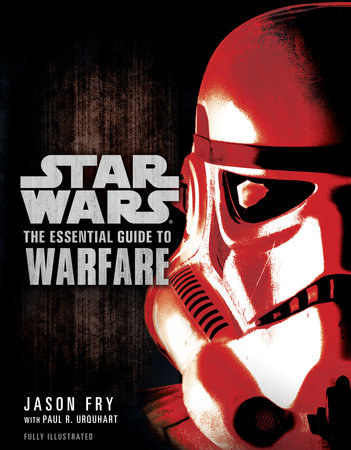
- Jason Fry with Paul R. Urquhart, The Essential Guide to Warfare: Star Wars, Random House, 2012.
- Daniel Wallace and Jason Fry, Star Wars: The Essential Atlas, Del Rey, 2009.
- Random House Worlds, The Essential Guide to Warfare
- StarWars.com, Where in the Galaxy Are the Worlds of Rogue One?
- Abhean/Legends, Wookieepedia
- Second Alsakan Conflict, Wookieepedia
- 15,480 BBY, Wookieepedia