
Around 15,609 BBY, the holowright Peshosloc died. His surviving chronology gives him a life of roughly 153 years, but tells us almost nothing about the circumstances of his death. What survives instead is the scale of his cultural afterlife. Peshosloc had written Xim at Vontor and more than ninety additional holoplays concerning Xim the Despot. Those works were commercially successful, visually extravagant, often historically inaccurate, and repeatedly adapted long after their author's death.
15,609 BBY
Peshosloc's death came near the end of a long life spent in a Republic still consumed by the Second Alsakan Conflict.
Only about nine years later, the preserved military chronology reaches the Core Campaigns around 15,600 BBY.
His lifetime therefore ended while contemporary warfare was moving toward the oldest centers of Republic power.
A life of roughly 153 years
If the surviving birth and death dates are both taken literally, Peshosloc lived for approximately 153 years.
The source does not identify his species, so that lifespan should not be used to assign him one.
In a galaxy of many sentient species, long lives were not inherently exceptional.
The circumstances are lost
No source says where or how Peshosloc died.
There is no preserved account of illness, accident, violence, retirement, or public mourning.
His death survives as a date rather than a narrative event.
The works survive more clearly than the author
Peshosloc's personal biography is fragmentary, but his cultural output remained highly visible.
He wrote Xim at Vontor and more than ninety other holoplays focused on Xim the Despot.
The imbalance is striking: the works survived because they were copied, staged, adapted, and sold, while the person behind them faded from the historical record.
The Despotica after Peshosloc
Peshosloc was only one contributor to the enormous literary and dramatic tradition known as The Despotica.
Yet his commercial success made his contribution unusually influential.
After his death, audiences continued encountering Xim through Peshosloc's dramatic lens.
Adaptations continue after his death
Later eras continued producing holo adaptations from Peshosloc's scripts.
The continued commercial success of those adaptations meant his version of Xim remained culturally active even when Peshosloc himself had become ancient history.
Each revival renewed his influence.
The phrase that survived with the scripts
Peshosloc's agreements required adaptations to identify themselves as based on a true story.
That marketing claim mattered because audiences often interpreted the dramatizations as reliable history.
The label helped fiction borrow the authority of documentary truth.
Error can become durable
Historical inaccuracies are not always corrected by time.
If the inaccurate version is more memorable, easier to stage, or more emotionally satisfying, it may outlive the careful reconstruction.
Peshosloc's Xim dramas became a case study in how error can harden into tradition.
Peshosloc changes Xim's face
A later StarWars.com essay on Xim states that artists following Peshosloc's popular accounts portrayed the Despot with a charred face and artificial optics in ruined eye sockets.
That image was a romantic invention created thousands of years after Xim's death.
Yet repetition made it seem historically familiar.
The authentic Xim disappears
Later scholars struggled to find any contemporary portrait of Xim untouched by later artistic conventions.
Representations showed him bald, long-haired, bearded, armored, regal, scarred, or cybernetic.
Peshosloc's cultural success contributed to a larger condition in which the historical person became nearly impossible to separate from accumulated imagery.
Cultural afterlife
An author's cultural afterlife begins when works continue acting in society after the author can no longer revise, explain, or control them.
Peshosloc's scripts were restaged by people with different technologies, politics, audiences, and artistic expectations.
The works became traditions rather than private property of one creator.
The limit of authorial control
Peshosloc could require a subtitle while alive, but he could not control every interpretation across subsequent millennia.
Later producers could modernize visual language, alter performances, and emphasize different themes.
Once a story enters shared culture, its creator's authority over meaning becomes limited.
A canon inside the fictional galaxy
The Despotica functioned as a cultural canon inside Star Wars itself.
Later scholars, artists, and audiences knew Xim partly through accumulated works written long after his lifetime.
Peshosloc therefore occupied a position similar to influential dramatists whose historical plays shape real-world public memory.
Popular history versus academic history
Academic historians and popular entertainers often answer different questions.
Historians ask what evidence supports a claim. Dramatists ask what makes a compelling scene.
When audiences treat the second product as if it were the first, entertainment can become a substitute archive.
Ximology inherits the problem
Later scholarly study of Xim—often called Ximology—had to contend with centuries and millennia of dramatization.
Researchers could not simply collect stories about Xim and assume they were independent evidence.
They had to ask which details originated in later works such as Peshosloc's.
Peshosloc becomes a source to criticize
Ironically, a writer who distorted Xim's history became important to historians.
His works were evidence not necessarily for Xim's era, but for the society that remembered Xim thousands of years later.
Source criticism requires asking what a document can reliably tell us, rather than dismissing it merely because parts are inaccurate.
Spectacle survives
Peshosloc's oversized starship battles, exploding moons, and system-spanning wars were designed to be memorable.
Spectacle gave the stories a sensory scale appropriate to a legendary tyrant.
That same scale made the imagery easy to preserve in later popular culture.
Emotion survives too
Peshosloc's popularity was not attributed only to explosions.
His work succeeded because it gave audiences emotional stories rather than treating them as unsophisticated consumers.
That emotional accessibility helped the scripts remain adaptable.
The market preserves what sells
Cultural preservation is not controlled only by archives.
Markets preserve works too. A script that continues generating profitable adaptations is copied, restored, translated, and circulated.
Peshosloc's commercial success helped secure his longevity.
Translation extends the legacy
Peshosloc wrote in Mid-Galactic Standard.
Audiences in much later eras would therefore encounter his work through linguistic modernization or translation.
Every translation extended his reach while also creating another opportunity for reinterpretation.
Media technology changes around the story
The technologies used to stage Peshosloc's works would have changed enormously over thousands of years.
Early holodrama, later sensoriums, immersive media, and other entertainment forms could all present the same underlying story differently.
The narrative survived by changing form.
Historical memory is political even without state sponsorship
Peshosloc's works were commercially successful entertainment rather than securely documented government propaganda.
But popular depictions of rulers and wars still carry political meanings.
They teach audiences what tyranny looks like, who counts as civilized, which victories deserve celebration, and which enemies become caricatures.
Different peoples remember Xim differently
Later accounts note that Xim meant different things to different populations.
Tionese communities could treat him as a symbol of lost power. Hutts remembered him through Hutt victory. Descendants of enslaved peoples remembered the terror attached to his empire.
Peshosloc's dramas entered a memory landscape already divided by perspective.
No single memory of Xim
Even Peshosloc's commercial dominance did not create one universally accepted Xim.
Different species, regions, scholars, and artists continued producing competing interpretations.
His importance lay in making one version exceptionally widespread.
His death during the Second Alsakan Conflict
Peshosloc died while the Second Alsakan Conflict was still active.
His own society therefore lived with contemporary warfare while consuming dramatized stories about wars from roughly ten thousand years earlier.
The parallel invites interpretation, but the sources do not say whether Peshosloc intentionally used Xim to comment on Coruscant and Alsakan.
Do not turn coincidence into intent
It would be tempting to read Xim at Vontor as allegory for the Second Alsakan Conflict simply because Peshosloc lived during it.
No surviving source establishes that intent.
IDS therefore treats the wartime context as cultural background, not proof of political allegory.
Nine years later: the Core Campaigns
Approximately nine years after Peshosloc's death, the preserved chronology reaches the Core Campaigns around 15,600 BBY.
Those campaigns brought major Second Alsakan fighting into the Core Worlds and Colonies.
The timeline therefore shifts immediately from cultural memory back to contemporary war.
What Peshosloc actually left behind
He did not leave a known empire, political office, military command, or school of government.
He left stories.
Those stories proved capable of shaping how later civilizations visualized a ruler who had been dead for thousands of years before Peshosloc was born.
Anthropological assessment
Peshosloc's death demonstrates that cultural influence is not bounded by biological life. His authority after death did not depend on command or law. It depended on repeated reproduction of stories.
His legacy also exposes the relationship between media, commerce, and historical memory. The versions of the past that survive are not always those with the strongest evidence. They may be the versions most profitable to remake and easiest to remember.
Finally, Peshosloc shows why historians must study cultural distortion rather than merely eliminate it. An inaccurate holoplay can tell us little about the actual face of Xim while revealing enormous amounts about what later societies wanted Xim to mean.
What the sources establish
Canon versus Legends
Where Peshosloc's death fits
Sources and further reading
- Michael Kogge, Xim Week: The Despotica (Part III: Xim at Vontor), former StarWars.com/Hyperspace feature.
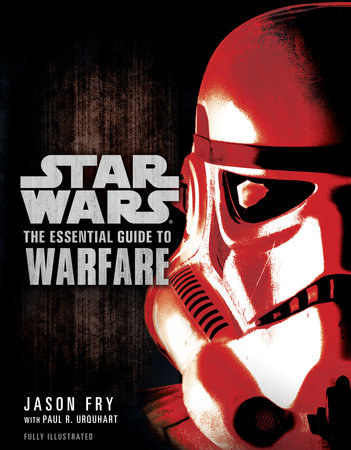
- Jason Fry with Paul R. Urquhart, The Essential Guide to Warfare: Star Wars, Random House, 2012.
- StarWars.com, The Essential Guide to Warfare Author's Cut, Part 3: Xim the Despot
- 15,609 BBY, Wookieepedia
- Peshosloc, Archivum