
- World
- Tatooine
- Campaign
- Great Hunt
- Outcome
- Official victory
- Problem
- Survivors remain elsewhere
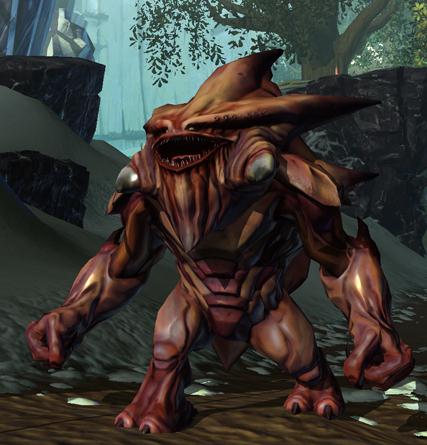
In 3993 BBY, Jedi hunters led by figures including Duron Qel-Droma, Shaela Nuur, Guun Han Saresh, and Cale Berkona tracked terentateks across Tatooine. One Jedi died during the final cave hunt, but the team killed the remaining beasts and burned their bodies. The Jedi Council then declared the Great Hunt officially complete.
3993 BBY · Legends · Postwar evidence
The Tatooine hunt reaches its official conclusion
Source-supported history
Duron Qel-Droma, Shaela Nuur, Guun Han Saresh and Cale Berkona hunted terentateks on Tatooine after successful expeditions elsewhere. At a remote cave one member of the Jedi party was killed, while Berkona was badly injured. The surviving team overcame the last beast they found and destroyed its remains, and the Jedi Council subsequently declared the Great Hunt concluded.
Institutions, identity and consequences
An official declaration of success can be meaningful even when it does not prove every hidden threat has been eliminated. The Jedi could publicly mark the end of a costly campaign, while the knowledge that survivors remained on Korriban led to an unpublicized mission. The comic Shadows and Light recounts both the Tatooine ending and the later secret task, making it a stronger original narrative source than generic creature encyclopedias.
Did the deaths on Tatooine end the terentatek threat across the galaxy?
No. The Jedi declared the Hunt complete but continued seeking surviving creatures, including on Korriban.
Source basis: Joshua Ortega and Dustin Weaver, Shadows and Light, Star Wars Tales 23 (2005). Review the publication reference and source trail →. The hero image is original IDS symbolic artwork, not a frame or cover from that source. Specific panels or page references should be checked against the original edition.
Public victory and private uncertainty
The Jedi announced success after the Tatooine operation.
Almost immediately, new intelligence showed that the biological threat remained.
Bodies are burned
The hunters destroyed the remains of terentateks after killing them.
This practice treated the creatures as dangerous Sith material rather than ordinary animal carcasses.
An official ending that proves incomplete almost immediately
The Tatooine operation mattered because the Jedi Council treated it as sufficient evidence that the Great Hunt had succeeded. The declaration created administrative closure: teams could be demobilized, resources redirected, and the campaign entered into institutional memory as finished.
Within roughly a week, evidence of surviving terentateks on Korriban undermined that certainty. The difference between public victory and private intelligence became part of the campaign's real ending.
Explore this entry
Did the Jedi truly eliminate all terentateks?
No. Surviving creatures were discovered almost immediately after the official conclusion, and terentateks appeared again in later periods.
Why burn the bodies?
The hunters treated the remains as dangerous Sith-associated material rather than ordinary carcasses, reflecting the campaign's security logic.
Anthropological assessment
The Tatooine cleansing shows how institutions declare endings even when uncertainty remains.
Public closure can coexist with private continuation of security operations.
After the Great Sith War / source-critical history
The public endpoint of the Great Hunt
After several years of terentatek hunting, Duron Qel-Droma, Shaela Nuur, Guun Han Saresh and their companions moved through the Tatooine desert to locate remaining targets. A final confrontation in a cave ended with another Jedi casualty, after which the survivors burned the dead beasts. That success allowed the Order to announce the Great Hunt as complete. The declaration itself is historically important because it distinguished the official end of a campaign from the uncertain distribution of remaining dangers.
Almost immediately the Council received information suggesting that some terentateks remained on the Sith world of Korriban. Rather than openly reopen the campaign, leaders sent an experienced group on a secret mission. The shift created two versions of the same organizational history: a public story of victory and a restricted continuation. Tatooine was a genuine tactical success, but it was not proof of universal eradication across the galaxy.
Did the Council's declaration mean the Jedi had checked every planet?
No. The subsequent confidential Korriban mission established that the public end of the Hunt did not match complete certainty about survivors.
Primary and reference record: Star Wars Tales #23, Shadows and Light; SWTOR Galactic History 63. This is Legends history. Claims about private thoughts, precise unnamed casualties and unsupported sequences are not invented.
3993 BBY · Legends · Source audit
Tatooine: why an official victory was not the end of the Great Hunt
The event established by the sources
Jedi hunters including Duron Qel-Droma, Shaela Nuur, Guun Han Saresh and Cale Berkona tracked surviving terentateks on Tatooine in 3993 BBY. The predators were dangerous remnants of earlier Sith activity. In the final cave engagement, one Jedi died while the surviving hunters defeated the creature and destroyed its remains. The Council officially ended the Great Hunt after a prolonged campaign across several worlds. Yet evidence of surviving beasts soon led it to send a smaller team on another mission.
Institutions, culture and power
An institution must decide when an operation is complete, even when perfect certainty is impossible. The Council's declaration allowed a public narrative of victory, but it was not a biological proof that terentateks had vanished everywhere. This is an example of how administrative closure differs from empirical completeness. Hunters, commanders and local residents might all have understood the risk differently. The later secret expedition should therefore be narrated as a continuation under new conditions, not proof that the Tatooine hunters failed to accomplish anything.
Where the evidence stops
Do not claim that the Jedi exterminated every terentatek. Subsequent Legends narratives preserve surviving populations. The story shows one of the hunters dying but should not assign a name absent an explicit source.
Check your interpretation: Did the Council's declaration establish the biological extinction of all terentateks?
Correction and insight: No. A subsequent secret mission targeted survivors on Korriban, and later periods still include these creatures.
Source trail: Joshua Ortega and Dustin Weaver, Shadows and Light, Star Wars Tales 23 (2005); Great Hunt reference chronology. Source bibliography ↗. Publication-page verification is still required.
Sources and further reading
- “Shadows and Light,” Star Wars Tales 23.